
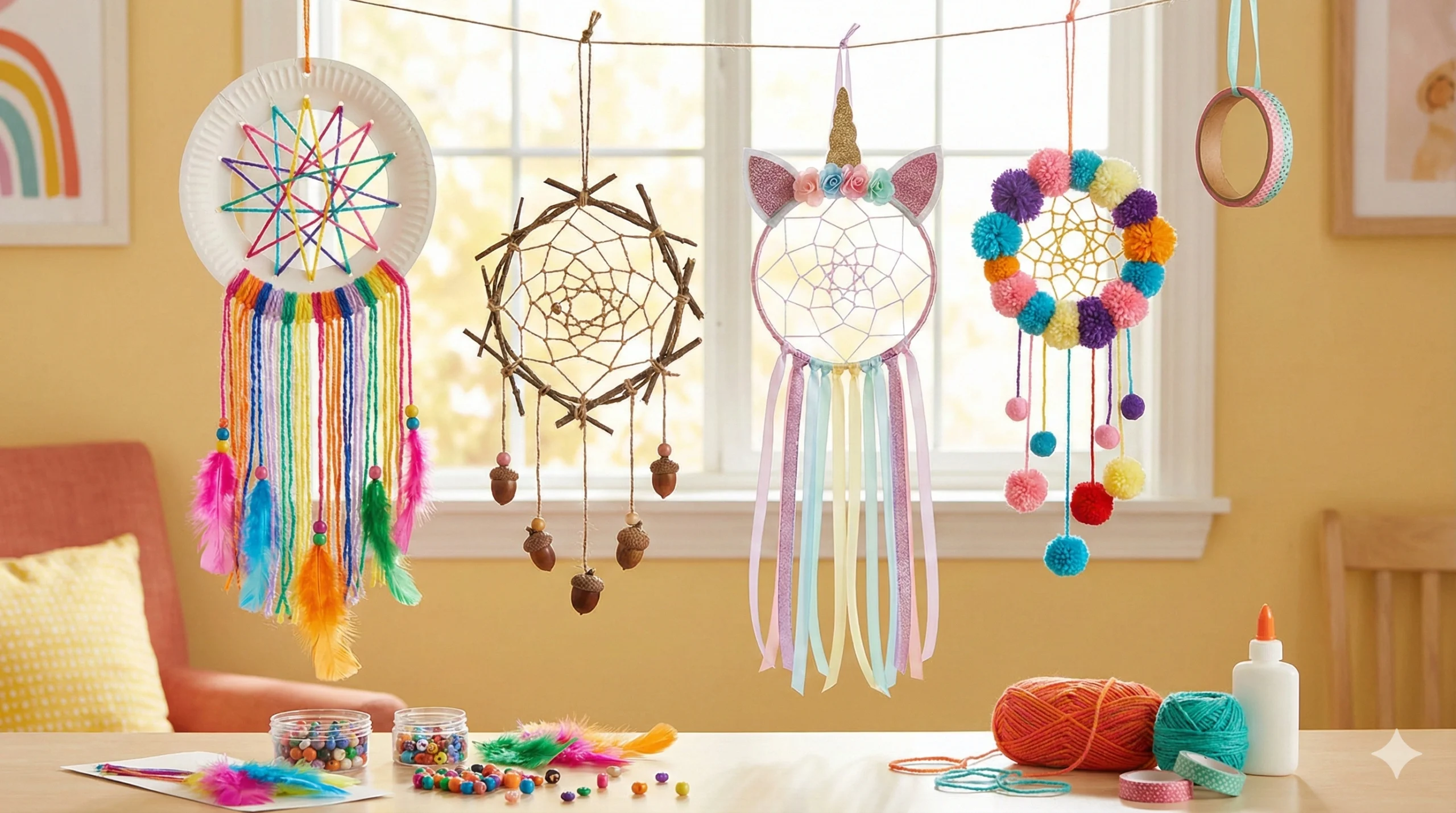
Do you remember your dreams when you wake up? Most of the time, even if the details are fuzzy, we remember the feeling. Was it an adventure? A funny moment? Or was it something scary? Dreams are a universal part of the human experience, but for children, bad dreams can sometimes make bedtime a struggle.
With World Dream Day coming up on September 25th, there is no better time to tackle the “nightmare monsters” than by crafting a beautiful, protective talisman.
Enter the Dream Catcher.
This engaging guide will walk you through the history, meaning, and supplies needed for this craft, followed by 10 creative DIY Dream Catcher ideas ranging from simple paper plate crafts for toddlers to intricate designs for pre-teens.
What is a Dream Catcher? Understanding the Legend
Before we dive into the glue and glitter, it is important to understand what we are making. A dream catcher is more than just a pretty wall hanging; it is a protective talisman rooted in history.
Originating from Native American cultures, specifically the Ojibwe people, the dream catcher was traditionally used for young children. Parents and grandparents would hang them above cradles or beds to act as a filter for the night air.
The Legend of the Spider Woman
The meaning behind the dream catcher is beautiful and perfect for storytelling while you craft. The legend speaks of Asibikaashi (Spider Woman), who took care of the children and the people of the land. As the Ojibwe nation spread to the corners of North America, it became difficult for Asibikaashi to reach all the children.
So, the mothers and grandmothers began weaving magical webs for the children, using willow hoops and sinew. The belief is simple: the night air is filled with both good and bad dreams.
- Bad Dreams: These get caught in the intricate web. When the morning sun hits them, they perish and disappear.
- Good Dreams: These know the way through. They pass through the center hole and slide down the soft feathers to the sleeping child below.
Do Dream Catchers Actually Work?
This is a question inquisitive kids often ask: “Is it real magic?”
From a scientific perspective, there is no evidence that a hoop and string can physically alter brain waves during REM sleep. However, the answer isn’t a simple “no.”
The Power of Belief (Placebo Effect): For children suffering from night terrors or anxiety about the dark, a dream catcher works as a powerful psychological tool. It provides a tangible sense of safety. When a child believes they are protected, they relax. A relaxed child sleeps more soundly and is less likely to have stress-induced nightmares. So, in a very real way, they do work!
The Essential Supply List
One of the best things about this craft is that it is highly customizable. You can use items found in nature, upcycled trash, or store-bought craft supplies.
The Basics:
- The Hoop: Traditional ones use willow branches. For DIYs, you can use metal rings, embroidery hoops, paper plates (cut out), or even recycled cardboard.
- The Web: Artificial sinew, wax nylon string, embroidery floss, wool yarn, or hemp thread.
- The Decor: Feathers (real or paper), wooden beads, plastic gemstones, pompoms, buttons, and fabric scraps.
- Tools: Scissors, craft glue (or a hot glue gun for adults), and small binder clips (to hold string in place while weaving).
10 Creative DIY Dream Catcher Projects for Kids
Here are ten distinct styles of dream catchers you can make. We have arranged them from “easiest” (for toddlers) to “more detailed” (for older kids).
1. The Classic Paper Plate Catcher
This is the perfect entry-level project for preschoolers who are still developing fine motor skills.
- How to make it: Cut the center out of a paper plate so you are left with a sturdy ring. Use a hole punch to create holes around the perimeter. Give your child a long piece of yarn and let them “sew” through the holes in any pattern they like. Hang feathers and beads from the bottom.
- Why it works: It requires no complex knotting, just simple threading.
2. The Nature Walk Dream Catcher
Perfect for the autumn season or Earth Day. This project encourages getting outside first.
- How to make it: Go on a nature walk and collect three or four flexible twigs or sticks. Instead of a circle, tie the sticks together to form a triangle or a square. Use natural twine to wrap the corners. Weave the web using jute string.
- Decoration: Instead of plastic beads, use acorns, pinecones, dried leaves, or interesting stones with holes in them.
3. The Unicorn Dream Catcher
Unicorns are timelessly popular. This version adds a magical, fantasy element to the room.
- How to make it: Wrap a wooden embroidery hoop in white or pastel ribbon. Cut ears and a horn out of stiff glitter felt and glue them to the top of the hoop.
- The Tail: Instead of feathers, tie long strips of pastel tulle, lace, and ribbon to the bottom to mimic a unicorn’s mane or tail. Add paper flowers across the top to hide the glue spots.
4. The “No-Weave” Doily Catcher
Weaving the web is the hardest part for children. This hack solves that problem instantly.
- How to make it: Find an old lace doily (you can often find these at thrift stores or dollar stores). Stretch the doily inside an embroidery hoop. The lace pattern acts as the “web” instantly!
- Decoration: Let the kids focus on painting the hoop and decorating the hanging strands with beads and feathers. This is great for instant gratification.
5. The Pom-Pom Explosion
If your child loves color and texture, this is the one to choose. It helps brighten up drab walls.
- How to make it: Use a standard hoop. When weaving the web, thread small, colorful pompoms onto the yarn as you go.
- The Drop: For the hanging part, make large DIY yarn pompoms and hang them at varying lengths. It creates a soft, fluffy look that is very comforting for a bedroom.
6. The Heart-Shaped Wire Catcher
Who says dream catchers have to be round?
- How to make it: Take an old wire coat hanger and bend it into the shape of a heart. Wrap the wire tightly with thick yarn or fabric strips to cover the metal completely.
- The Web: Weave a simple web inside. This shape is a sweet gift for Valentine’s Day or Mother’s Day.
7. Upcycled CD Dream Catcher
This is a shiny, futuristic take on the traditional craft, perfect for kids who love sparkles.
- How to make it: Use an old CD or DVD as the center. The shiny surface reflects light (symbolizing the morning sun destroying bad dreams).
- Assembly: Punch holes around the edge of a paper plate or cardboard ring. Suspend the CD in the middle using string, so it looks like it is floating. Hang streamers from the bottom.
8. The Washi Tape Bangle Catcher
Do you have old plastic bangles or bracelets that you don’t wear anymore? They make perfect mini dream catchers.
- How to make it: Wrap the plastic bangle in colorful Washi tape. Because the hoop is small, the weaving goes very fast.
- Use: These are too small for a wall, but they make adorable backpack charms, keychains, or ornaments for the rearview mirror of a car.
9. The Fabric Scrap “Boho” Catcher
This is a messy, shabby-chic style that requires zero weaving skills.
- How to make it: Take a hoop. Instead of a web, take long strips of scrap fabric (lace, denim, cotton). Tie them to the top of the hoop and pull them taut to the bottom, tying them off there. Fill the whole circle with vertical strips.
- Result: It looks like a “wall of ribbon.” It’s very stylish and uses up leftover craft scraps.
10. The Beaded Spider Web
This project focuses on the legend of the spider.
- How to make it: Follow the traditional weaving method (looping the string over the hoop, then looping it over the previous string).
- The Twist: Add a single large black bead or a charm that looks like a spider somewhere in the web. This honors the origin story of Asibikaashi.
Where to Place Your Dream Catcher
Once you and your child have completed your masterpiece, the final step is deciding where to put it. According to tradition and practicality, here are the best spots:
- Above the Bed (Ideal): This is the traditional placement. It allows the dream catcher to filter the air directly above the sleeper.
- The Window: Native Americans believed the morning sun was required to “burn away” the bad dreams caught in the web. Placing it in a sunny window ensures it gets cleansed every morning.
- The Door: Hanging it on the bedroom door acts as a guardian, preventing negative energy from entering the room in the first place.
Conclusion
Making a DIY dream catcher is more than just a way to pass a rainy afternoon. It is an opportunity to teach children about different cultures, discuss their fears and dreams, and develop their fine motor skills.
Whether you choose a simple paper plate version or a complex beaded design, the result is a personalized item that makes your child feel safe and loved. So, grab your supplies, talk about the “Spider Woman,” and get ready to catch some good dreams!