
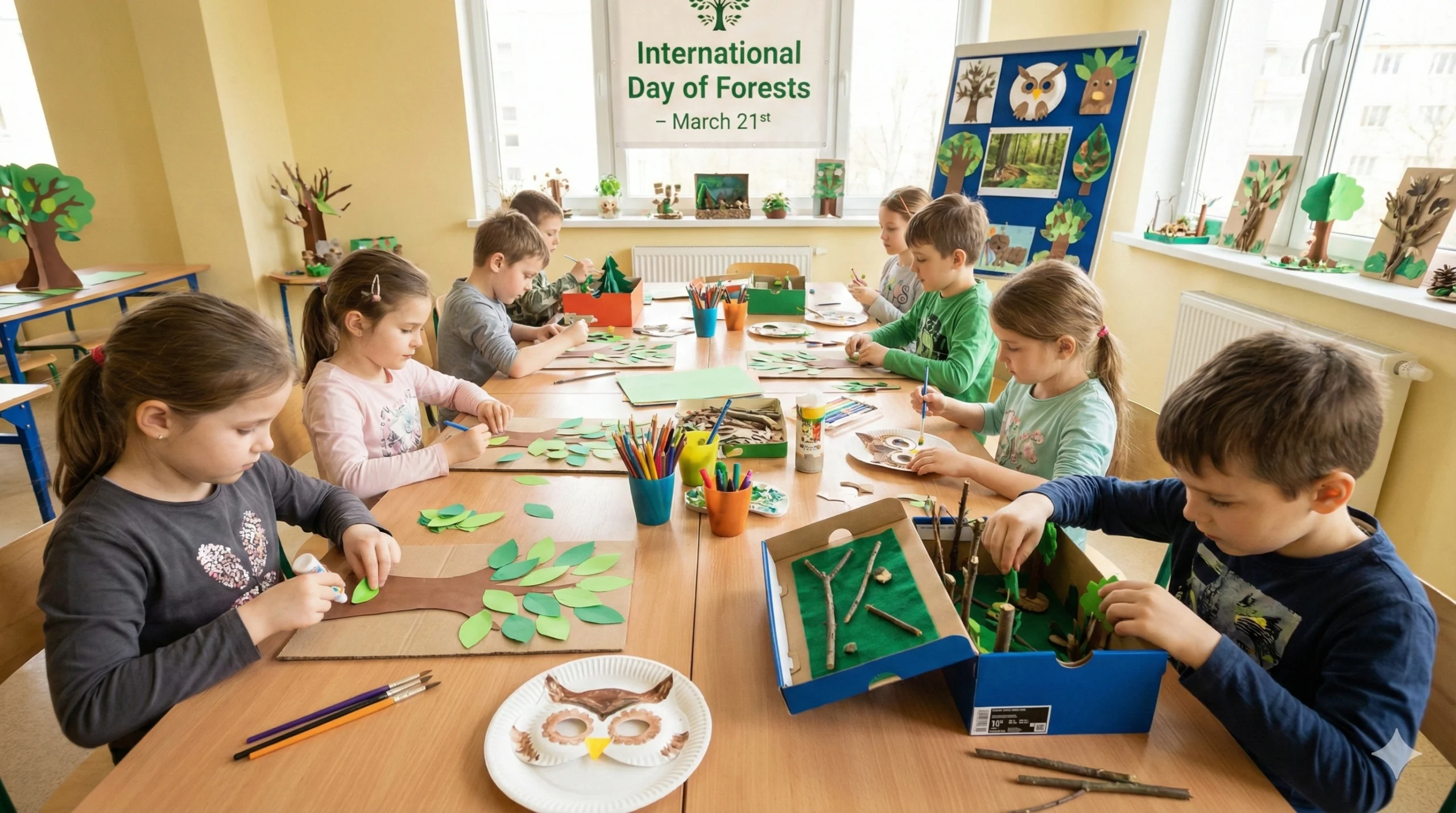
The forests are calling! With the International Day of Forests arriving every year on March 21st, there is no better time to celebrate the lungs of our planet. Whether you are a teacher planning a classroom theme or a parent looking for a rainy day activity, these fascinating forest crafts for kids are the perfect way to bring the outdoors in.
I often feel that with every passing generation, children lose touch with nature just a little bit more. While kids of our grandparents’ generation spent nearly all day climbing trees and exploring woods, today’s children often spend their time in front of screens.
Maintaining a relationship with nature is essential for a child’s development. It gives them a sense of wonder about the natural world, of which they are a vital part. It teaches them the art of co-existing peacefully and understanding that every creature—from the mighty oak to the tiny ant—has its place.
With the International Day of Forests approaching, let’s go on a virtual adventure. Here are 10 amazing forest-themed crafts that teach creativity, biology, and the importance of conservation.
1. The Standing Paper Tree Forest
What is the most defining feature of a forest? The trees, of course! To start our list, we are celebrating the immense diversity of flora with a colorful paper craft.
Why it’s great: It teaches children that forests aren’t just green; they change colors with seasons and come in many shapes.
How to make it:
- Materials: Green, yellow, and orange construction paper, scissors, glue stick.
- The Trunk: Cut a strip of brown cardstock and fold it into a triangular prism or a cylinder to create a sturdy base.
- The Foliage: Have kids cut out different shapes—cloud shapes for oaks, triangles for pines, and drooping shapes for willows.
- Assembly: Glue the foliage to the trunks. Arrange them on a table to create a dense forest. You can even talk about “canopy layers” while doing this!
2. 3D Shoebox Forest Diorama
We thoroughly enjoyed making this 3D forest diorama. It is a classic school project for a reason—it allows for depth and storytelling.
How to make it:
- Materials: An old shoe box, acrylic paints, printable animal cutouts or small plastic toys, real twigs, and moss.
- Background: Paint the inside of the box blue (sky) and green (background trees).
- Layers: This is the important part. Paste darker green paper trees in the back and lighter ones in the front to create depth.
- The Inhabitants: Add a monkey swinging from a string “vine” or a bear hiding in a cardboard cave.
- Pro Tip: Use real moss or dried tea leaves on the floor of the box to simulate the forest floor.
3. Sensory Felt Forest Board
Here is a simple, open-ended craft project perfect for toddlers and preschoolers. Felt is a wonderful tactile material that sticks to itself, meaning you don’t need messy glue.
How to make it:
- Materials: A large sheet of brown felt (the ground) or blue felt (the sky), and various scraps of green felt.
- The Shapes: Pre-cut triangles, circles, and oval shapes from the green felt.
- The Play: Let the child arrange the “trees” on the background board. Because nothing is glued down, they can move the forest around, creating a new landscape every time. It’s a great way to teach spatial awareness and sizes (big trees vs. little trees).
4. Paper Bag Woodland Animal Puppets
If you would like to have some fun with the fauna of the forest, try making puppets! Paper bags are a staple in crafting because they naturally form a mouth when your hand is inside.
How to make it:
- Materials: Brown paper lunch bags, colored paper, markers, glue.
- The Fox: Paint the bag orange. Add a white triangle on the chest and pointy ears.
- The Owl: Keep the bag brown. Draw feather textures on the tummy and add large, round eyes.
- The Raccoon: Add a black “bandit mask” around the eyes and a striped tail to the side.
- Activity: Once the glue dries, have the kids put on a puppet show about how the animals share the forest.
5. Textured Collage: The Forest Floor
This project is excellent for primary school children who are learning about the different layers of the rainforest or deciduous forest.
How to make it:
- Materials: Old magazines, tissue paper, glue, cardstock.
- The Concept: Instead of drawing, kids must find colors in magazines that match the forest. Look for greens, browns, and sky blues.
- Tearing: Have the kids tear the paper (great for fine motor skills) and paste it to create a mosaic.
- The Lesson: Focus on the “Forest Floor.” Add bugs, fallen leaves, and mushrooms to show that the ground is just as alive as the trees.
6. Mixed-Media “Real Nature” Scene
This project is a wonderful use of mixed materials to create a lifelike forest. It bridges the gap between the outdoors and the art table.
The Preparation: Start with a nature walk. Collect twigs, fallen leaves, interesting pebbles, and acorn caps. The Craft:
- Use a sturdy piece of cardboard as a base.
- Use playdough or clay to stand the twigs up like trees.
- Glue the acorn caps as “toadstools.”
- This tactile experience helps kids understand the textures of the forest—rough bark, smooth stones, and crunchy leaves.
7. The Enchanted Magical Forest
We have all read stories about enchanted forests and wished we could visit one. While we can’t travel to fairyland, we can create our own version!
How to make it:
- Materials: Glitter, cotton balls, pastel-colored paper (pink, purple, teal).
- The Twist: Who says trees have to be green? In a magical forest, trees can be purple with silver trunks!
- Details: Use cotton balls to create “mist” on the forest floor. Use glitter glue to make “fairy dust” trails. This craft encourages pure imagination and storytelling.
8. Forest Animal Headbands & Crowns
Bring the forest inside your home by gathering your friends and pretending to be different forest animals.
How to make it:
- Materials: Strips of cardstock (measured to head size), staples, construction paper.
- Deer: Add tree-branch-shaped antlers.
- Bear: Add rounded ears.
- Rabbit: Add tall, long ears.
- The Game: Set a time limit where kids can only “speak” in the language of their animal. The bears must growl, and the owls must hoot. It’s a hilarious way to learn about animal sounds.
9. Recycled Cardboard Forest Stand-Ups
This is the ultimate eco-friendly craft. It shows us how to put together scraps of cardboard leftover from cereal boxes or delivery packages to create a standing structure.
How to make it:
- The Engineering: Cut out tree shapes from thick cardboard.
- The Stand: Cut a slit in the bottom center of the tree trunk. Cut a second piece of cardboard to act as a stabilizer and cut a slit in the top of that one. Slide them together (interlocking) so the tree stands up on its own.
- Decorate: Paint them with tempera paint. This is a great engineering challenge for older kids to see how tall they can make their trees without them tipping over.
10. Nocturnal Forest Art (Black Paper Art)
Forests can be a scary place in the dark, but they are also beautiful. This craft focuses on the animals that wake up when the sun goes down.
How to make it:
- Materials: Black construction paper, white/yellow chalk or oil pastels.
- The Technique: Draw the trees in white chalk on the black paper. It creates a ghostly, moonlit effect.
- The Eyes: Draw pairs of yellow or red glowing eyes peering out from the dark branches.
- The Animals: Draw bats, owls, and moths. This is a great opportunity to teach the word “Nocturnal.”
Why Forests Matter: Educational Facts for Kids
While you are waiting for the paint to dry, use this time to talk to your kids about why we are making these crafts. Forests are not just pretty places; they are the lifeline of our planet.
Here are some kid-friendly facts to share:
- The Lungs of the Earth: Did you know that the Amazon Rainforest alone produces about 20% of the Earth’s oxygen? Trees breathe in the carbon dioxide we breathe out and give us fresh oxygen in return.
- Medicine Chest: More than 25% of the medicines we use today originate from plants found in rainforests. The cure for a future disease might be hiding in a leaf right now!
- Home Sweet Home: 80% of the world’s land animals and plants live in forests. When we cut down trees, these animals lose their homes.
- People Live There Too: It’s not just animals; over 300 million people live in forests worldwide, including many indigenous tribes who know the secrets of the woods better than anyone.
- The Sad Truth: We are losing nearly 6.6 million hectares of forest area per year, mostly due to human activity like farming and building.
Conclusion
Celebrating the International Day of Forests is about more than just one day in March. It is about instilling a lifelong respect for nature. By engaging in these crafts, children learn to observe the details of trees, appreciate the variety of wildlife, and understand the importance of conservation.
So, gather your scissors, your recycled cardboard, and your imagination. Let’s make a forest today!