
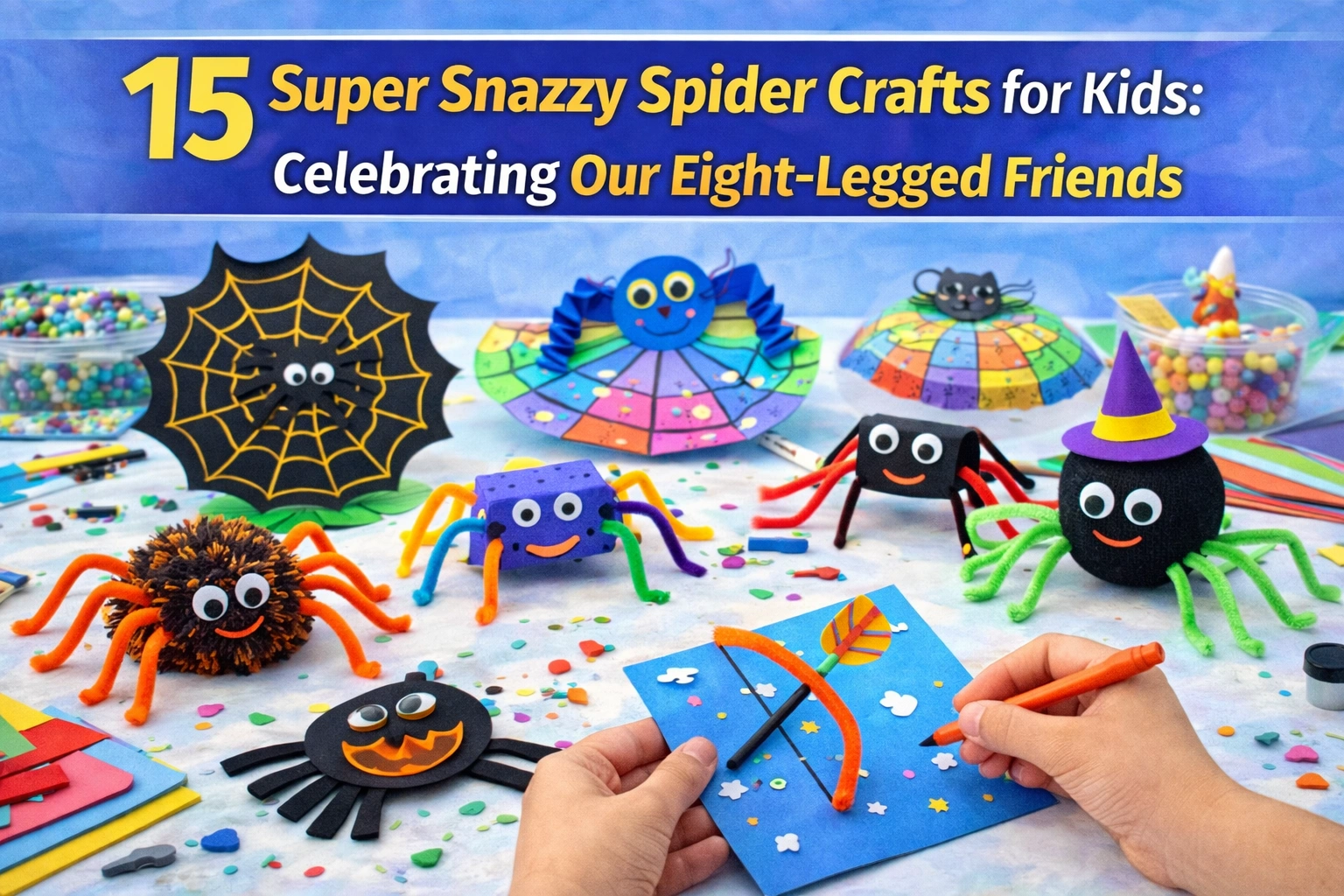
We often celebrate grand, majestic animals like tigers, elephants, and pandas, dedicating entire months to their conservation. Yet, very few people think about protecting the tiny, scurrying creatures that often give us the “heebie-jeebies.” Believe it or not, spiders are a vital part of our ecosystem, so much so that March 14th is officially recognized as Save a Spider Day!
While spiders are a staple of spooky Halloween decor, they deserve appreciation year-round. Beyond the webs and the creeping legs, spiders are the unsung heroes of the natural world. If you are looking for a way to teach children about biodiversity—or if you just want some “snazzy” decorations for October—these 15 spider crafts for kids are the perfect place to start.
Why Should We Save the Spider?
Before we dive into the glue and pipe cleaners, it is important to understand why these arachnids are worth celebrating. Teaching kids the “why” behind the craft makes the activity much more impactful.
- Pest Control: Spiders are nature’s exterminators. They prey on insects that carry diseases, such as flies and mosquitoes, and they protect our food by eating pests that attack crops.
- The Food Chain: They serve as a crucial food source for other animals, including birds, reptiles, and small mammals.
- Pollination: As they move from plant to plant, some spiders inadvertently help in the pollination process.
- Environmental Indicators: Because spiders are sensitive to habitat changes, scientists study them to understand the health of our environment.
15 Creative Spider Crafts for Kids
1. The “Very Busy Spider” Paper Plate Craft
Inspired by Eric Carle’s classic children’s book, The Very Busy Spider, this craft is perfect for toddlers. Paint a paper plate black and let it dry. Use a white crayon or silver marker to draw a web pattern across the plate. Attach a small black circle (the spider) in the center.
- Learning Moment: Read the book alongside the craft to talk about persistence and hard work.
2. Gigantic Paper Plate Wall Spiders
For a bold Halloween decoration, use two large paper plates stapled together to create a 3D body. Use long strips of black construction paper, folded accordion-style, for the legs. Attach four on each side and add giant googly eyes.
- Display Tip: Tape these to the corners of your living room ceiling for a festive “infestation.”
3. Pipe Cleaner & Bottle Cap Spiders
This is a great upcycling project. Take a plastic bottle cap (black or painted black) and poke four small holes on each side. Thread half-length pipe cleaners through the holes and bend them to look like jointed legs.
- Skill Level: Excellent for developing fine motor skills and hand-eye coordination.
4. Pine Cone Forest Spiders
Go on a nature walk and collect pine cones. Use them as the “fuzzy” body of the spider. Wrap brown or black pipe cleaners around the center of the pine cone to create the legs. These look wonderfully rustic on a bookshelf.
5. Handprint Spider Keepsakes
Paint both of your child’s palms black (excluding the thumbs). Press them onto a piece of paper so the palms overlap in the center and the fingers point outward. The eight fingers become the spider’s legs!
- Memory Tip: Add the date and the child’s age to the corner of the paper.
6. Beaded Spider Ornaments
Using thin floral wire, have kids string colorful beads to create the legs. Twist the wire around a large wooden bead (the body). These “snazzy” spiders shimmer in the light and look great hanging from a houseplant.
7. Spider Web Weaving (Fine Motor Craft)
Cut a large circle out of cardboard and notch the edges. Have the kids “weave” a web using white yarn or string by going back and forth across the notches. Once the web is done, clip a clothespin spider onto it.
8. Egg Carton “Creepy Crawlies”
Cut a single cup out of an egg carton and paint it black. Poke four holes on each side for pipe cleaner legs. These are lightweight and perfect for kids to “scuttle” across the floor.
9. Pompom Spider Rings
Glue a medium-sized black pompom to a small plastic ring or a loop of pipe cleaner. Add tiny red beads for eyes. Kids can wear their “pet” spider all day long!
10. Spoon Spider Puppets
Paint a wooden or plastic spoon black. The bowl of the spoon becomes the spider’s body. Wrap pipe cleaners around the “neck” of the spoon for legs. This is a fantastic tool for interactive storytelling.
11. Glittery Spider Web Suncatchers
Draw a web shape with white glue on a piece of wax paper and sprinkle it with silver glitter. Once it dries completely, peel it off. It becomes a flexible, translucent web that sticks to windows.
12. Rock Painted Spiders
Find smooth, round stones. Paint them black and add neon-colored legs and eyes. These make great “pet rocks” or garden markers.
13. Duct Tape “Sticky Web” Game
Create a web shape across a doorway using masking tape or duct tape (sticky side facing the kids). Have them throw “flies” (cotton balls) at the web to see how many the spider “catches.”
14. Origami Spider (Advanced)
For older children, try the Japanese art of paper folding. Folding a spider requires precision and patience, resulting in a sleek, geometric art piece.
15. Cupcake Liner Spiders
Flatten out a black cupcake liner. Glue it to a piece of paper and draw eight legs stretching out from the edges. Add googly eyes and some “sparkle” glue for a glamorous spider.
Materials Checklist for Your Spider Craft Station
Before you begin, ensure you have these “snazzy” essentials ready:
- The Basics: Black paint, markers, white glue, and safety scissors.
- Recyclables: Paper plates, egg cartons, bottle caps, and cardboard.
- Texture: Pipe cleaners (chenille sticks), pompoms, and cotton wool.
- Details: Googly eyes (various sizes), silver glitter, and white yarn.
- From Nature: Pine cones and smooth rocks.
Creative Learning: A Quick Spider Fact Table
| Feature | Fact for Kids |
| Leg Count | All spiders have 8 legs (insects only have 6!). |
| Silk Strength | Spider silk is actually stronger than steel of the same thickness. |
| Eye Count | Most spiders have 8 eyes, but they still can’t see very well! |
| Habitat | Spiders live on every continent except Antarctica. |
Use these facts to engage your kids while they work on their projects:
Conclusion: From Scary to Snazzy
Whether it is for Save a Spider Day or a spooky Halloween party, crafting spiders is a wonderful way to blend art with education. These 15 ideas show that spiders don’t have to be frightening—they can be colorful, fuzzy, and even “snazzy!”
By creating these eight-legged masterpieces, children learn to appreciate the smaller parts of our world. They begin to see the spider not as a pest to be feared, but as a helpful neighbor that keeps our gardens healthy and our homes free of buzzing flies.