
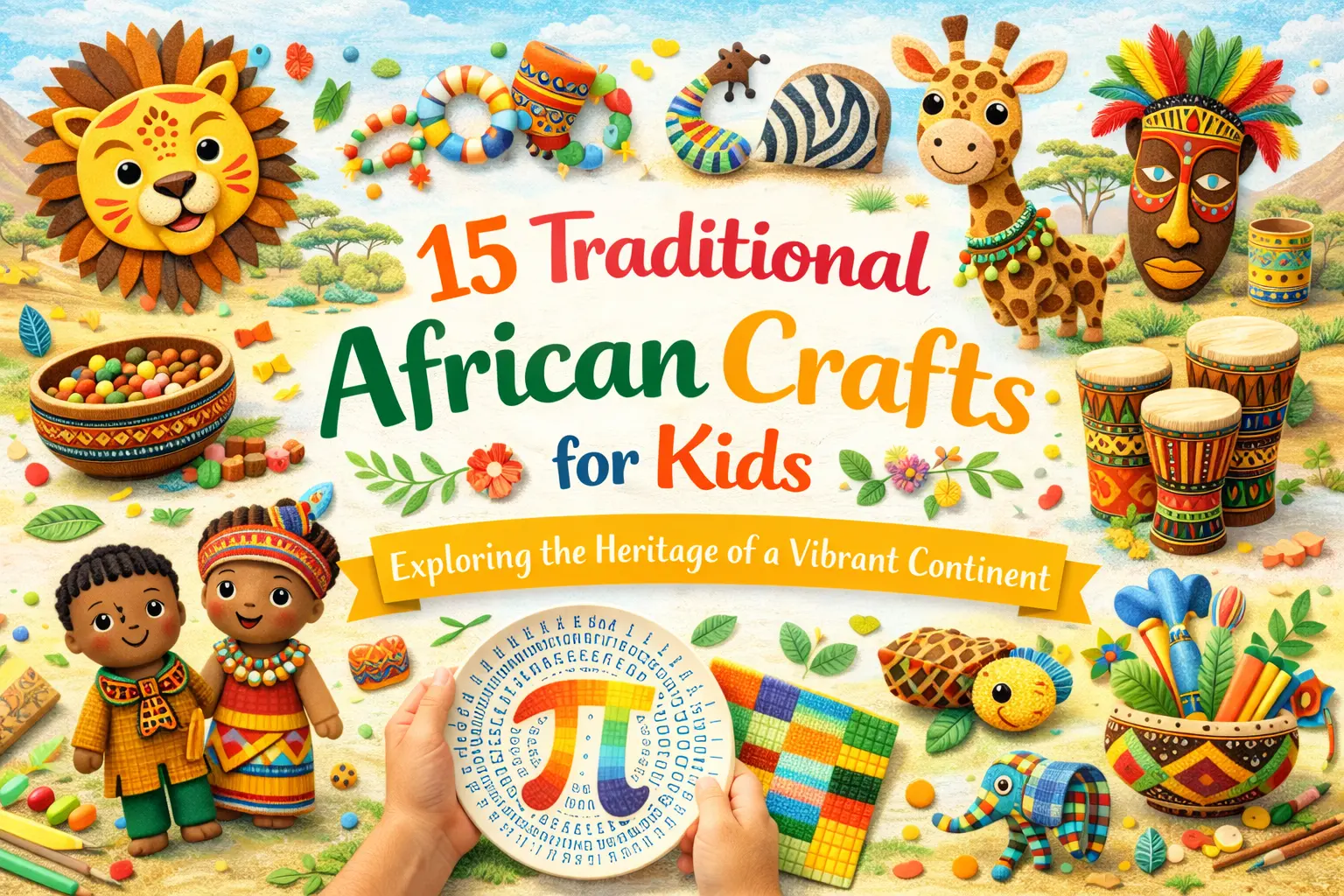
Africa is a continent of staggering diversity, boasting 54 countries, thousands of languages, and a rich tapestry of artistic traditions that have influenced the entire world. For many of us, our first introduction to this gorgeous landscape was through the lens of stories like The Lion King. We marveled at the “Circle of Life” and adopted the carefree philosophy of Hakuna Matata.
However, beyond the cinematic savannahs lies a deep well of culture, history, and craftsmanship. From the intricate geometric patterns of Ndebele house painting to the rhythmic pulse of djembe drums, African art is a celebration of community, spirituality, and storytelling.
Engaging children in traditional African crafts is a wonderful way to foster global awareness and appreciation for these cultures. Whether you are supplementing a history lesson or simply looking for a colorful afternoon project, these 15 crafts offer a hands-on journey across the African diaspora.
The Power of Storytelling Through Art
In many African cultures, art is rarely “just for decoration.” It often serves a functional or ceremonial purpose. A mask might be used in a dance to honor ancestors, or a specific fabric pattern might tell the story of a person’s status or lineage. As kids work on these projects, they aren’t just making “stuff”—they are participating in a legacy of visual storytelling.
Recommended Reading for Young Explorers
Before you start crafting, consider reading one of these beautiful books to provide context:
- Too Small Tola by Atinuke (Life in modern-day Lagos)
- Africa, Amazing Africa: Country by Country by Atinuke
- The Water Princess by Susan Verde
- Deep in the Sahara by Kelly Cunnane
- Ayo’s Adventure by Ain Heath Drew
1. Traditional African Heritage Masks
Masks are perhaps the most famous form of African art. Used in rituals and celebrations, they often represent spirits, animals, or mythological heroes.
- The Materials: Cardboard, paint (earth tones like ochre, black, and white), and raffia or yarn.
- The How-To: Cut an oval or elongated face shape from a cardboard box. Use additional cardboard scraps to build up a 3D nose and brow.
- The Detail: Paint bold, symmetrical patterns. Glue raffia around the edges to represent hair or a beard.
2. Kente Cloth Paper Weaving
Originating from the Ashanti people of Ghana, Kente cloth is a royal and sacred fabric. Each color has a meaning: gold for royalty, green for harvest, and blue for peace.
- The Materials: Brightly colored construction paper (yellow, red, green, black).
- The How-To: Fold a black piece of paper in half and cut slits (don’t go all the way to the edge). Cut long strips of the other colors.
- The Activity: Weave the colored strips through the black base to create a vibrant, geometric pattern.
3. Ndebele Inspired House Painting
The Ndebele people of South Africa are famous for painting their homes with striking, colorful geometric designs. This was traditionally done by the women of the community.
- The Materials: A small cardboard box (like a milk carton) and markers or acrylic paint.
- The How-To: Paint the box white first to act as a canvas.
- The Detail: Use black markers to draw thick outlines of triangles, rectangles, and zig-zags. Fill them in with bright, contrasting colors.
4. DIY African Djembe Drums
The djembe is a rope-tuned skin-covered goblet drum played with bare hands, originally from West Africa.
- The Materials: Two large disposable cups, packing tape, and construction paper.
- The How-To: Tape the bottoms of the two cups together.
- The Detail: Decorate the cups with African patterns. Stretch a piece of balloon or heavy paper over the top of one cup and secure it tightly with a rubber band to create the drumhead.
5. Maasai Beaded Necklaces
The Maasai people of Kenya and Tanzania are world-renowned for their intricate beadwork. The colors and patterns of the beads can indicate a person’s age or social status.
- The Materials: A large paper plate, paint, and colorful beads or dry pasta.
- The How-To: Cut the center out of a paper plate and make a slit so it can be worn around the neck.
- The Detail: Paint the plate a solid base color, then glue beads in concentric circles to mimic the layered look of traditional Maasai jewelry.
6. Egyptian Papyrus Paper Craft
While technically North African, the Egyptian tradition of papyrus making is a fascinating look at early communication.
- The Materials: Brown paper bags, glue, water, and white paper.
- The How-To: Tear the brown paper bags into strips. Dip them in a mixture of glue and water.
- The Process: Lay the strips in a vertical layer, then a horizontal layer over them. Once dry, it creates a textured surface perfect for drawing hieroglyphics.
7. Mancala: The Ancient Strategy Game
Mancala is one of the oldest games in the world, with roots deep in African history.
- The Materials: An empty egg carton and 48 small “seeds” (beans, pebbles, or beads).
- The Activity: Paint the egg carton in bright colors.
- The Play: Research the rules of “Oware” or “Kalah” and let the kids engage in a friendly match of strategy and counting.
8. Adinkra Symbol Stamps
The Adinkra symbols of Ghana represent concepts or aphorisms. For example, the “Sankofa” bird represents learning from the past.
- The Materials: Potatoes or sponges and fabric paint.
- The How-To: Carefully carve simple Adinkra shapes into a potato half.
- The Detail: Dip the “stamp” into black paint and press it onto a plain white t-shirt or piece of fabric to create your own symbolic textile.
9. Zulu Beaded Safety Pins
Modern Zulu beadwork often takes the form of “love letters,” where colors convey messages between friends and family.
- The Materials: Safety pins and small seed beads.
- The How-To: Thread beads onto the “needle” side of a safety pin in specific color patterns.
- The Finish: Hook several beaded pins onto a larger pin or a necklace to create a piece of wearable art.
10. African Savannah Silhouette Art
This project captures the breathtaking sunsets that inspired The Lion King.
- The Materials: Watercolors (red, orange, yellow) and black construction paper.
- The How-To: Paint a “sunset” gradient on white paper.
- The Detail: Cut out black silhouettes of acacia trees, elephants, and giraffes. Glue them onto the sunset background for a dramatic effect.
11. Recycled Wire Art (Galimoto)
In many African countries, children make their own toys out of discarded wire and scraps. These are called galimotos.
- The Craft: Use colorful pipe cleaners (a safer alternative to wire for kids) to twist and bend into the shapes of bicycles, cars, or animals.
12. African Clay Pinch Pots
Pottery has been a staple of African utility and art for millennia.
- The Craft: Use air-dry clay to form a “pinch pot.” Once dry, use a stylus or toothpick to carve geometric patterns into the sides before painting.
13. Mud Cloth (Bògòlanfini) Inspired Art
From Mali, “mud cloth” is dyed using fermented mud.
- The Craft: Use brown kraft paper and a white paint marker. Draw lines, dots, and squares to mimic the traditional patterns of the Bamana people.
14. Senegalese Coil Baskets
Senegal is famous for its bright, coiled baskets made from local grasses and recycled plastic strips.
- The Craft: Use thick yarn and a bundle of pipe cleaners. Wrap the yarn tightly around the pipe cleaners and coil them into a small bowl shape, sewing the coils together as you go.
15. The “Tree of Life” Baobab Craft
The Baobab tree is an iconic symbol of the African landscape, often called the “Upside-Down Tree.”
- The Craft: Use a brown paper bag. Twist the bottom to form the trunk and the top into thick, gnarled branches. Add small green tissue paper leaves to the tips.
Why Cultural Crafting Matters
When kids engage with African crafts, they learn that art is a global language. They begin to see the similarities in how all humans celebrate life, family, and nature. It moves the conversation beyond stereotypes and into a space of respect and admiration for the ingenuity of African artisans.
Conclusion
From the rhythmic beat of the djembe to the intricate weave of a Kente cloth, African traditions offer a world of inspiration. These 15 crafts are a gateway for your children to explore a continent that is as rich in history as it is in color. Happy crafting!