
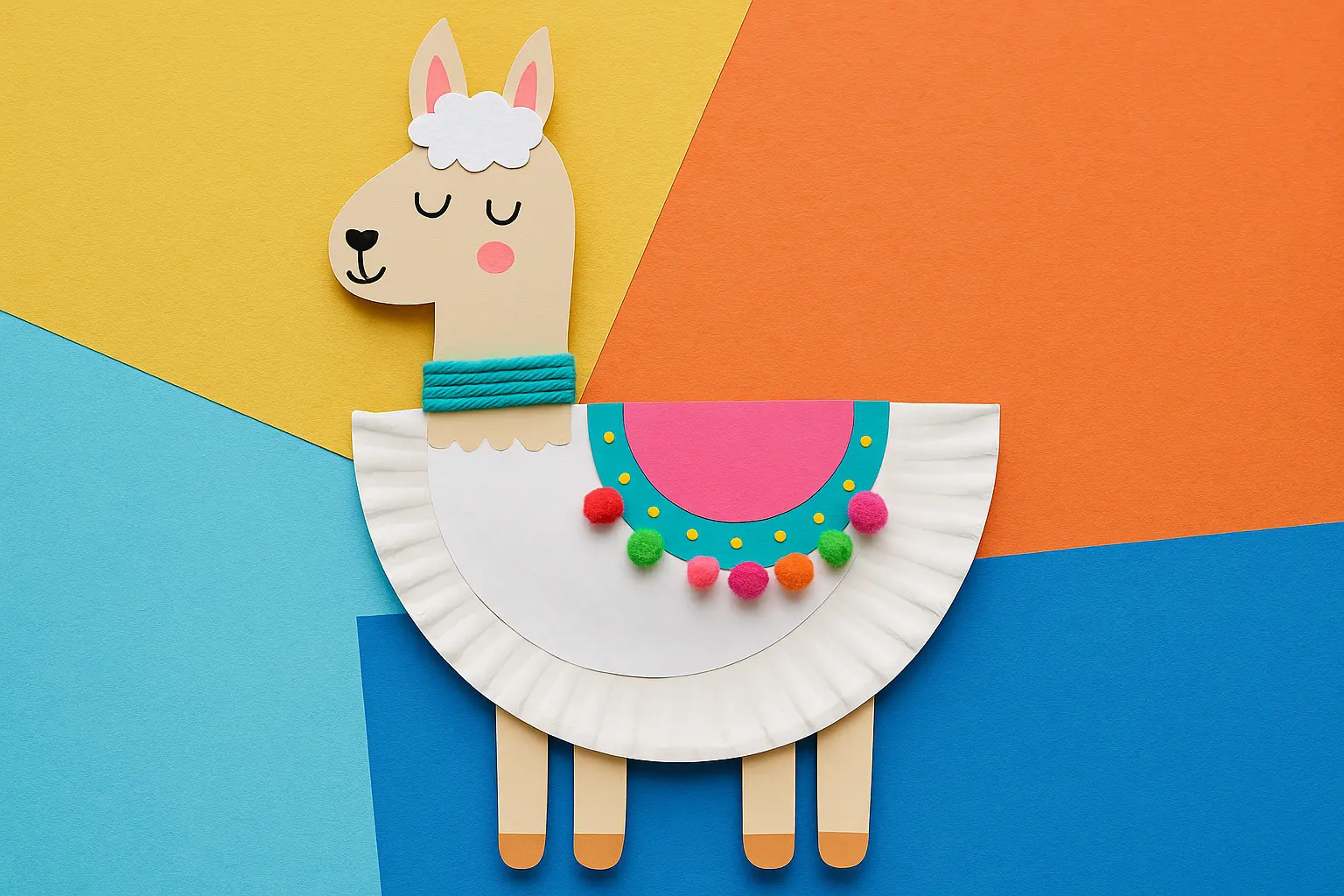
Llamas are not only adorable—they also fascinate children for many reasons. They have expressive faces, long eyelashes, and fluffy fur that make them look cartoonish even in real life. Beyond their cuteness, llamas are known for their intelligence and gentle nature. They learn quickly, observe human behavior, and even respond to emotions.
Crafting a llama helps kids:
- Learn about different animals
- Express creativity through decorations
- Explore color combinations
- Develop hand–eye coordination
- Practice cutting, pasting, and assembling
This simple activity also opens the door to fun llama-themed books, stories, puppet shows, and pretend play.
Supplies You Will Need
You only need basic craft materials that are usually found in most classrooms and homes:
- Paper plate
- Craft papers (assorted colors)
- Cardstock paper
- Pompoms
- Yarn
- Pencil
- Scissors
- Craft glue
- Black and pink marker
Optional supplies for added creativity:
- Glitter stickers
- Googly eyes
- Decorative beads
- Colored felt pieces
These materials make the craft customizable, letting each child create a unique llama.
Step-by-Step Guide to Making the Paper Plate Llama
Step 1: Prepare Your Template
Before starting, create a simple llama template including the head, ears, snout, neck, and legs. You can draw your own outline or print a basic shape to trace. This allows kids to focus on decorating rather than worrying about drawing shapes.
Step 2: Trace & Cut the Llama Parts
Using colored craft papers:
- Trace the head, ears, snout, legs, and neck on light-colored cardstock
- Cut semicircles for the saddle decoration using bright colors
- Cut a fluffy hairpiece from white textured paper or plain craft paper
Choose soft beige, cream, or light brown tones for the llama’s body parts.
Step 3: Assemble the Llama’s Head
Place the ear pieces inside the larger outer ear cutouts and glue them. Attach the hairpiece between the two ears at the top of the head. Stick the snout cutout toward the lower center of the face.
Step 4: Add the Llama’s Facial Features
Using markers:
- Draw the eyes
- Add a small nose
- Draw a gentle smile
- Add cute blush dots on the cheeks with a pink marker
This gives the llama a friendly, adorable expression.
Step 5: Attach the Long Neck
Glue the head onto the top of the neck piece. Llamas are known for their long, graceful necks, so make sure it stands tall.
Step 6: Decorate the Neck with Yarn
Wrap colorful yarn around the neck two to three times for a warm, scarf-like effect. Kids can choose bright colors, braided yarn, or multi-colored strands for extra charm.
Step 7: Prepare the Paper Plate
Use the paper plate as the llama’s body. Keep it plain or paint it in soft pastel colors like peach, white, cream, or pale yellow. Allow it to dry before moving to the next step.
Step 8: Create the Saddle
Use the semicircle shapes to build a vibrant saddle:
- Layer different colors
- Add small pompoms
- Decorate the edges with glitter or drawn patterns
- Stick the semicircles onto the plate
The saddle should stand out with festive, colorful details.
Step 9: Attach the Llama Parts to the Body
Glue the llama head and neck to the top of the plate. Attach the legs to the bottom half so they appear to be stepping forward.
Step 10: Add Final Decorations
Kids can:
- Glue tiny pompoms along the saddle
- Add tassels using yarn
- Stick small stars, beads, or decorative dots
- Draw patterns on the plate
This final touch makes each llama unique and vibrant.
Tips for Making the Craft More Fun
- Use textured papers or fabric scraps for a fluffy effect
- Let kids choose bright Andean-inspired color combinations
- Add googly eyes for extra cuteness
- Punch a hole and add ribbon to hang the llama as wall art
- Turn the llama into a puppet by attaching a stick at the back
Learning Benefits of This Craft
Beyond being fun, the craft supports:
- Creativity – Kids choose patterns, colors, and decorations
- Fine motor development – Cutting, gluing, wrapping yarn
- Observation skills – Understanding llama features
- Sensory exploration – Using textured materials like yarn and pompoms
- Cognitive skills – Following instructions step-by-step
It also encourages storytelling. Kids often name their llama, create backstories, or use it in pretend play.
Ways to Use the Finished Llama Craft
You can use the completed llama in many creative ways:
- Classroom wall decoration
- Birthday party craft display
- Children’s room décor
- Puppet for storytelling
- Craft for animal-themed lessons
- Gift tag or greeting card decoration
- Photo prop for kids
Because the design is flat and lightweight, it can even be added to scrapbooks or framed.
Creative Variations Kids Can Try
Rainbow Llama
Use rainbow yarn and bright colored papers to create a festival-themed llama.
Winter Llama
Add a tiny paper scarf, snowflakes, and a blue-white saddle.
Desert Llama
Use warm earth tones with cactus decorations around the paper plate.
Party Llama
Add glittery stars, party hats, and pompom garlands.
Kids love having the freedom to customize, and simple changes can make each craft project look brand new.
Final Thoughts
This Pretty Paper Plate Llama Craft is a fun, engaging, and educational activity that encourages kids to explore their imagination while enjoying hands-on creativity. With simple materials and easy steps, children can design a llama that reflects their personality and artistic style. Whether done at home, in school, or at a craft event, this project brings joy, learning, and lots of color to any day.