
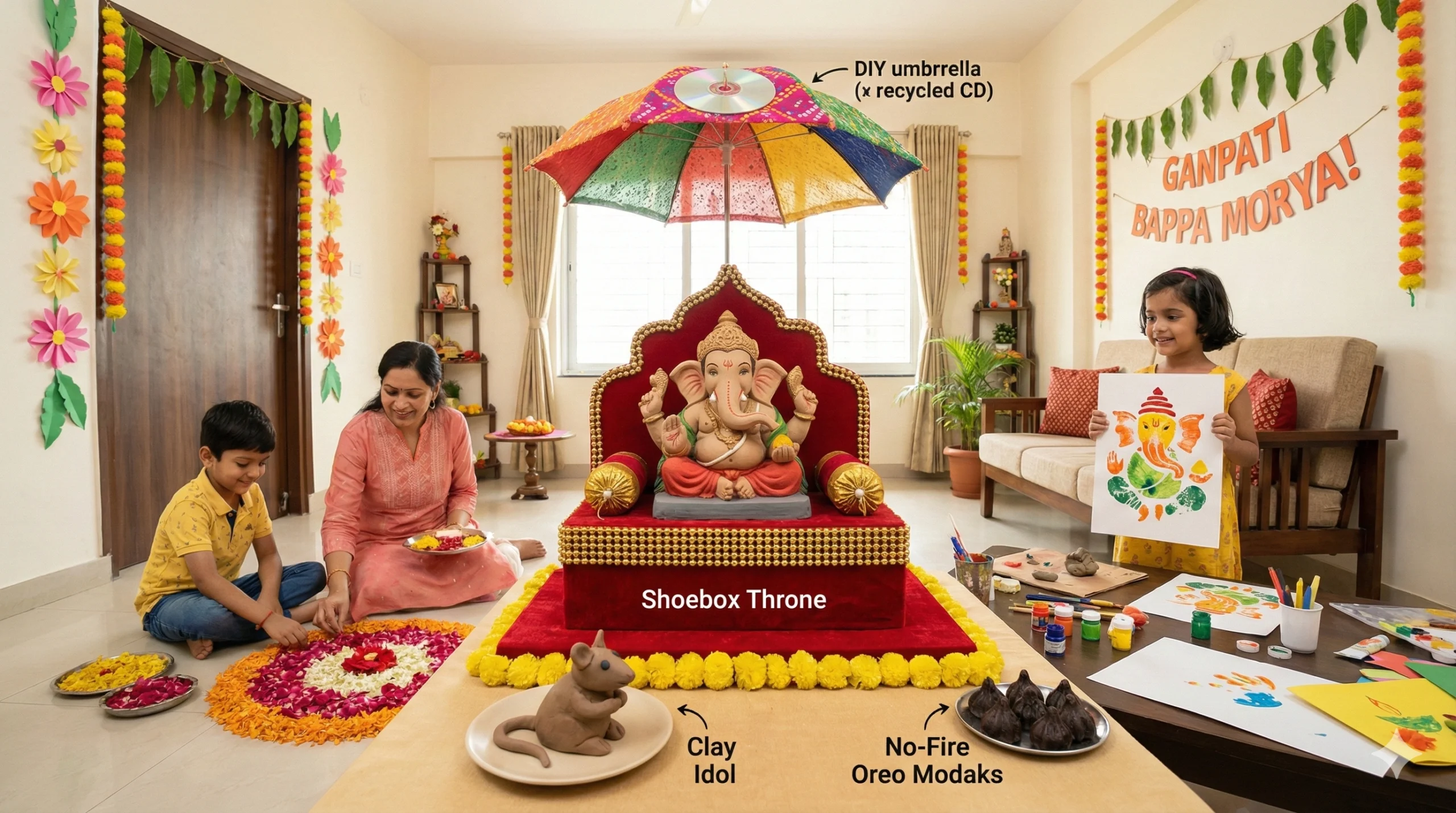
The chant that reverberates through the streets of India brings with it a wave of joy, devotion, and creativity. Ganesh Chaturthi is not just a religious festival; it is an emotion, especially for children who adore the chubby, elephant-headed God, Lord Ganesha.
Known as the remover of obstacles (Vighnaharta) and the God of wisdom, Ganesha is a favorite among kids because of his friendly demeanor, his love for sweets (Modaks), and his unique vehicle, the mouse (Mushak).
If you are looking to make Ganesh Chaturthi 2025 memorable for your little ones, you have come to the right place. Beyond the prayers, this festival offers a fantastic opportunity to bond with your children through arts, crafts, and cultural learning.
Here is your ultimate guide to 21 Ganesh Chaturthi crafts and activities that mix tradition with fun, creativity, and eco-consciousness.
What is Ganesh Chaturthi? A Quick Guide for Kids
Before diving into the glue and glitter, it is essential to set the context for the children.
Ganesh Chaturthi, also known as Vinayaka Chaturthi, marks the birth of Lord Ganesha. It is a ten-day festival where clay sculptures of the deity are welcomed into homes and temples. The festival is a riot of colors, music, and devotion, particularly in the state of Maharashtra, where the celebrations are nothing short of spectacular.
When is Ganesh Chaturthi in 2025?
Mark your calendars!
- Start Date: Wednesday, August 27, 2025.
- Ganesh Visarjan (Immersion): Saturday, September 6, 2025 (Anant Chaturdashi).
The “Green” Ganesha Initiative
As parents and educators, we have a responsibility to teach children about protecting nature. Lord Ganesha is often regarded as the protector of nature. Therefore, this guide focuses heavily on Eco-friendly Ganesh Chaturthi ideas. We encourage using biodegradable materials like clay (Shadu mati), paper, and natural colors instead of Plaster of Paris (PoP) or thermocol, which harm our water bodies.
21 Fun Crafts and Activities for Kids
Let’s dive into the activities! We have categorized them to help you plan your ten-day celebration.
Category 1: DIY Ganesha Idols & Modeling
1. The Eco-Friendly Clay Ganesha Nothing beats the satisfaction of making your own idol. You don’t need to be a sculptor! Use natural river clay or terracotta clay.
- Activity: Guide your child to make balls of different sizes—a big one for the stomach, a slightly smaller one for the chest, and a medium one for the head. Use coils for the trunk and ears.
- Tip: Use water to smooth out the joints. Stick two peppercorns for eyes!
2. Playdough Ganpati (For Toddlers) For younger kids who might find clay messy or hard to handle, homemade playdough is perfect.
- Activity: Make non-toxic playdough using flour, salt, water, and food coloring. Let them shape a colorful, temporary Ganesha.
3. The Leaf Ganesha Art This is a beautiful way to connect with nature.
- Activity: Collect Peepal leaves or Betel leaves. The shape of a Peepal leaf naturally resembles Ganesha’s face with the trunk. Arrange different leaves on a cardstock paper to form the body and face of the deity.
4. Vegetable Print Ganesha
- Activity: Use ladies’ fingers (okra) or cut potatoes dipped in paint to create a silhouette of Ganesha on a chart paper. This helps with fine motor skills and pattern recognition.
Category 2: Decorating the Pandal (Home Decor)
5. DIY Decorative Umbrella (Chhatri) Ganesha always sits under a beautiful umbrella.
- Activity: Take an old CD or a round piece of cardboard. Make a slit to the center and fold it into a cone shape. Decorate it with lace, sequins, and mirrors. Attach a chopstick or straw as the handle.
6. Shoebox Throne (Makhar) Instead of buying a thermocol temple, make one!
- Activity: Upcycle an old shoe box. Open it up, paint it gold or red, and line it with velvet paper. Let the kids stick beads and artificial flowers to create a royal throne for their clay idol.
7. Paper Flower Garlands (Haar)
- Activity: Teach kids how to make simple paper flowers or tissue paper scrunch-flowers. String them together using a needle and thread to create a fresh garland that never wilts.
8. The Mushak (Mouse) Craft Don’t forget Ganesha’s vehicle!
- Activity: Use a walnut shell or a halved egg carton cup. Paint it gray or brown. Add a tail using wool and ears using paper. Place it near the Ganesha idol.
9. Toran (Door Hanging) Making
- Activity: Cut mango leaf shapes out of green felt or paper. Decorate them with glitter glue. String them together to hang at the entrance of your home or the puja room.
Category 3: Sensory Art & Rangoli
10. Flower Petal Rangoli Powder colors can be messy for little ones.
- Activity: Draw a simple outline of a flower or Ganesha on the floor. Give the kids bowls of marigold and rose petals. Let them fill the design. It is a great sensory activity.
11. Pulses and Grains Mosaic
- Activity: Draw Ganesha on a stiff piece of cardboard. Use glue to stick different lentils (yellow dal, green moong, kidney beans) to fill in the picture. It creates a beautiful, textured, earth-toned art piece.
12. Ganesha Mask Making
- Activity: Use a paper plate. Cut out holes for eyes. Attach a paper trunk and big ears. Let the kids paint it pink or yellow. Attach an elastic string. They can wear this while listening to stories!
Category 4: Culinary Fun (Kid-Friendly Recipes)
13. No-Fire Oreo Modaks Modaks are Ganesha’s favorite, and kids love Oreos.
- Recipe: Crush Oreo biscuits (remove cream first). Mix the crumbs with a little milk to make a dough. Use the cream as the filling. Shape them into modaks using a mould. It’s delicious and requires no stove!
14. Coconut Ladoo (Snowballs)
- Recipe: Mix desiccated coconut with condensed milk. Let the kids roll them into balls and roll them again in dry coconut powder. These look like little snowballs and are perfect offerings (Prasad).
15. Chocolate Ganesha Coins
- Activity: Melt some chocolate and pour it into Ganesha-shaped silicone moulds. Let it set in the fridge. A sweet treat for the sweet-toothed God!
Category 5: Learning & Culture
16. Storytelling Session: The Elephant Head
- Activity: Sit down and narrate the story of how Ganesha got his elephant head. Explain the values of obedience (listening to his mother Parvati) and forgiveness.
17. Learn the ‘Jai Ganesh’ Aarti
- Activity: Music helps memory. Teach them the simple verses of the Ganesha Aarti. Use claps or a small pair of cymbals (manjira) to keep the rhythm.
18. Ganesha Scavenger Hunt
- Activity: Hide items related to Ganesha around the house (a modak, a lotus flower, a picture of a mouse, a picture of the moon). Give them clues to find the items.
19. Read Books on Indian Mythology
- Activity: Invest in colorful illustrated books like Amma Tell Me About Ganesha or similar titles. Reading together strengthens the parent-child bond.
20. The “Seed Ball” Ganesha (Visarjan at Home) This is the ultimate eco-friendly lesson.
- Activity: When making the clay Ganesha (Activity #1), put seeds (spinach or tulsi) inside the clay.
- Visarjan: On the final day, instead of going to the ocean, place the idol in a pot of soil and water it. As the clay dissolves, the seeds will sprout. Teach your kids that Ganesha is returning to nature in the form of a plant.
21. Hibiscus Flower Dissection (Science meets Tradition)
- Activity: The red Hibiscus is Ganesha’s favorite flower. Use this opportunity to show kids the parts of a flower (petals, stamen, pollen). It’s a mini botany lesson amidst the festivities!
Conclusion: Making Memories, Not Just Crafts
Ganesh Chaturthi is about more than just rituals; it is about welcoming positivity into our homes. By engaging in these crafts, you are not only keeping your children busy but also passing down rich cultural traditions and values. You are teaching them patience, creativity, and the importance of caring for the environment.
Whether you make a simple paper plate idol or an elaborate clay sculpture, remember that devotion lies in the intent, not the perfection of the art.
So, gather your supplies, play some devotional music, and get ready to welcome Bappa with open arms and creative hands.
Ganpati Bappa Morya! Mangal Murti Morya!
Frequently Asked Questions (FAQ)
Q: Is the clay used for Ganesha safe for kids? A: Yes, natural air-dry clay or river clay (Shadu Mati) is generally safe. However, always supervise younger children to ensure they don’t put it in their mouths.
Q: How can I explain the immersion (Visarjan) to a sensitive child? A: Explain it as a cycle of nature. Just like water turns to clouds and comes back as rain, Ganesha comes in the form of an idol and returns to nature to mix with the earth, promising to come back again next year.