
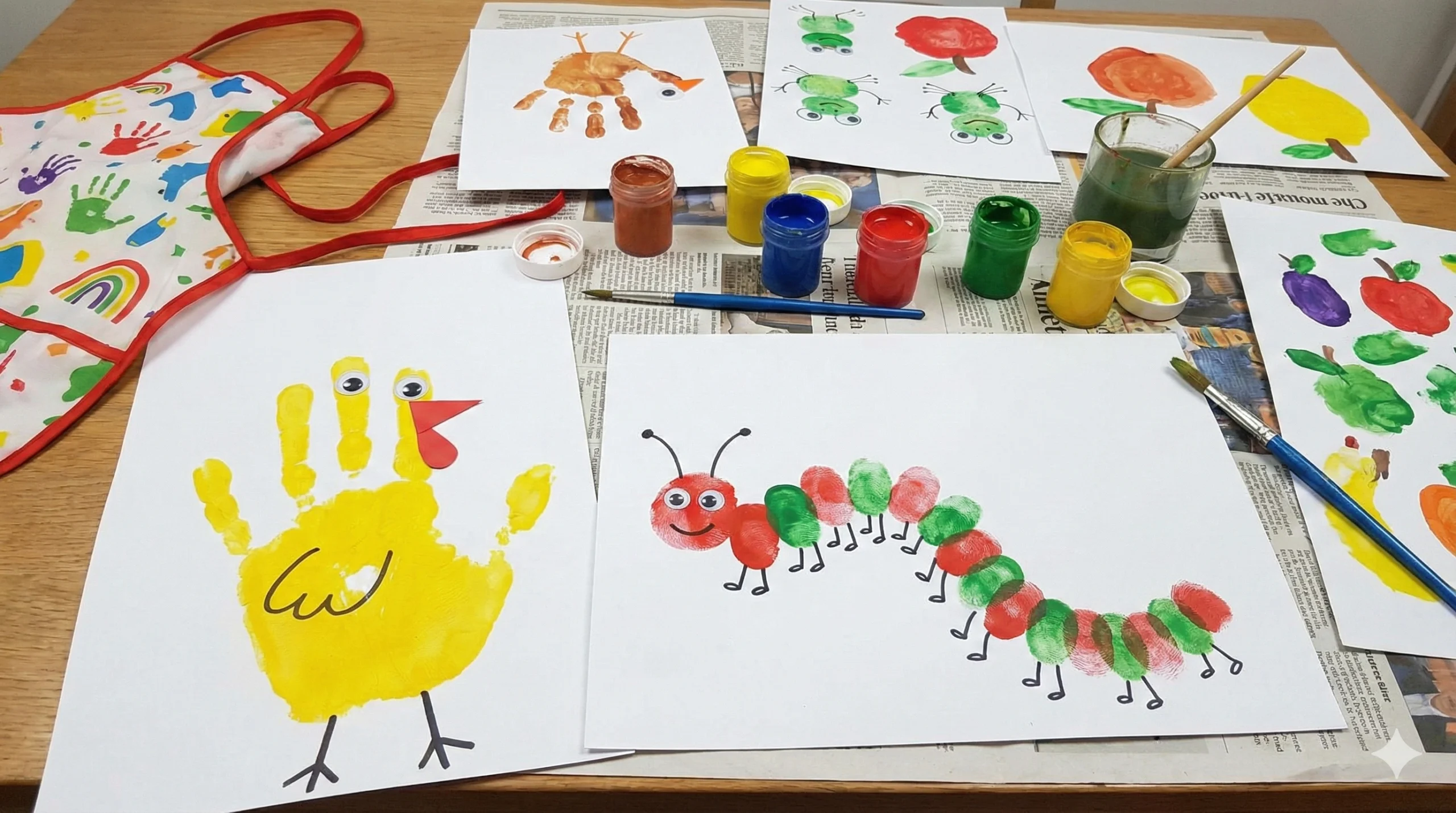
There is something undeniably magical about capturing a child’s handprint in paint. It is a moment frozen in time—a snapshot of tiny fingers and palms that seem to grow bigger by the day. But beyond the sentimental value, handprint and fingerprint art creates a fantastic opportunity for sensory play, creativity, and fine motor skill development.
If you have been looking for the perfect rainy day activity or a way to channel your toddler’s boundless energy, you have come to the right place. Today, we are diving deep into the world of “messy art” with two star characters: The Handprint Chicken and the Fingerprint Caterpillar.
But that is not all. Drawing inspiration from the incredible creativity found in the arts and crafts community, we will also explore variations like thumbprint frogs, handprint birds, and even cultural art like a Handprint Ganesha.
Grab your aprons and your washable paints—let’s get artsy-craftsy!
Before we dip our brushes into the paint, it is important to understand why these crafts are so beneficial for young children (ages 2-6). This isn’t just about making a mess; it is about learning.
- Sensory Integration: Feeling the cold, wet texture of paint on the skin helps children process tactile sensations. It desensitizes children who might be “tactile defensive” and delights those who seek sensory input.
- Fine Motor Skills: While the handprint is a gross motor action, adding the details—like googly eyes, beaks, and legs—requires precision and pincer grasp control.
- Creativity and Imagination: Turning a simple handprint into a chicken, a fish, or a monster teaches abstract thinking. It helps children see that one shape can represent many different things.
- Emotional Bonding: This is a collaborative effort. The parent guides the hand, and the child trusts the parent. It is a shared experience that builds connection.
Project 1: The Barnyard Handprint Chicken
This is a classic craft that is perfect for Easter, farm-themed learning weeks, or just for fun. The shape of the hand naturally lends itself to a bird, with the thumb acting as the head and the fingers as the tail feathers.
Supplies You Will Need:
- White or Yellow Washable Tempera Paint: Non-toxic is a must!
- Construction Paper: Blue or green backgrounds work best to make the colors pop.
- Markers: Orange and Black (or Sharpies for the adult).
- Googly Eyes: Small or medium size.
- Red Paint or Red Marker: For the wattle and comb.
- A Paper Plate: To pour the paint onto.
Step-by-Step Instructions:
- Prepare the Canvas: Lay down your construction paper. If you are working with a toddler, tape the corners of the paper to the table so it doesn’t slide around.
- Paint the Hand: Squeeze a generous amount of paint onto the paper plate. Dip the child’s hand into the paint or use a sponge brush to coat their palm and fingers. Tip: Tickle their palm a little to make them laugh—it relaxes the hand for a better print!
- The Press: Guide the child’s hand to the paper.
- Orientation: Make sure the fingers are spread slightly apart (these are the tail feathers). The thumb should be sticking up or out to the side (this is the neck/head).
- Press down firmly on the palm and each finger.
- The Lift: Lift the hand straight up to avoid smearing the paint.
- Dry Time: Let the paint dry completely. This is a great time to go wash hands!
- Add the Details:
- The Beak: Draw a small orange triangle on the tip of the thumbprint.
- The Comb: Use red paint or a marker to draw the bumpy comb on top of the thumb.
- The Eye: Glue a googly eye on the thumb.
- The Legs: Draw two stick legs coming down from the bottom of the palm. Don’t forget the chicken feet!
- The Wing: Once dry, you can draw a little curve in the center of the palm to represent the wing.
Project 2: The Very Hungry Fingerprint Caterpillar
Inspired by the beloved children’s book, this craft focuses on patterns and counting. It uses fingerprints rather than the whole hand, which is great for children who might be intimidated by covering their whole hand in paint.
Supplies You Will Need:
- Green and Red Paint: Two shades of green add extra depth!
- White Paper.
- Black Marker.
- A paintbrush.
Step-by-Step Instructions:
- The Head: Start by dipping the child’s thumb into the red paint. Press it onto the left side of the paper. This is the caterpillar’s face.
- The Body: Now, switch to the index finger and the green paint.
- Press the green finger next to the red thumbprint, slightly overlapping it.
- Continue making a line of green fingerprints, curving them up and down to look like a crawling caterpillar.
- Educational Twist: Count the circles as you go! “One circle, two circles, three circles…”
- Dry and Decorate: Once the paint is dry, use the black marker.
- Draw two little antennae on the red head.
- Draw tiny L-shaped legs on every green circle segment.
- Add eyes and a mouth to the red face.
Exploring More “Artsy-Craftsy” Variations
The world of handprint art doesn’t stop at farm animals. Based on some amazing ideas trending in the creative community, here are three more variations to fill your gallery wall.
1. The Handprint Peacock or Bird
Similar to the chicken, but colorful!
- The Method: Paint the palm blue (the body) and paint each finger a different color (green, yellow, purple, orange).
- The Print: When you press the hand down, keep the fingers spread wide.
- The Detail: Once dry, the thumb becomes the peacock’s head. Add a crest on top and draw “eyes” on the colorful finger feathers to mimic peacock patterns.
2. Thumbprint Frogs on a Log
This is a minimalist craft that produces adorable results.
- The Method: Draw a long brown log horizontally across your paper.
- The Print: Have your child dip their thumb in green paint and make prints “sitting” just above the log.
- The Detail: Once dry, draw long, folded frog legs coming off the sides of the thumbprint. Add two big eyes on top of the print. You can even draw a long red tongue catching a fly!
3. The Handprint Ganesha (Cultural Art)
This is a beautiful way to celebrate culture through art.
- The Method: This one is unique. You usually place the hand upside down (fingers pointing down).
- The Shape: The palm becomes the face/head. The thumb acts as the trunk curving to the side. The fingers act as the crown or decoration.
- The Detail: Decorate with glitter, draw the tusks, and add the Om symbol. It is a respectful and creative way to introduce children to festivals.
4. Handpainted Fruits
If you want to move away from animals, try fruit!
- Pineapple: Yellow thumbprints covering an oval shape, with green handprints at the top for the leaves.
- Grapes: Purple thumbprints clustered together in a triangle shape with a drawn vine.
- Strawberries: A red heart-shaped handprint (two hands with palms touching) with green painted fingertips for the leaves.
5 Tips for a Stress-Free Painting Session
Let’s be honest: paint + kids = potential chaos. Here is how to keep the “artsy” without the stress.
- Prep is Key: Have damp paper towels or baby wipes sitting right next to the art station before you open the paint.
- Dress for the Mess: Use an old oversized t-shirt as a smock.
- Tape it Down: Tape the paper to the table. When a child pulls their sticky hand up, the paper will lift with it if it’s not secured, ruining the print.
- One Color at a Time: If you are doing a multi-colored hand (like the peacock), paint one finger at a time with a brush rather than dipping the whole hand in different puddles.
- Embrace Imperfection: Smudges happen. A double-print happens. Turn the “mistake” into a cloud, a bush, or a rock. This teaches resilience and adaptation.
Conclusion
Whether you are making a clucking chicken, a crawling caterpillar, or a festive Ganesha, the goal of these artsy-craftsy sessions is not perfection—it is connection. These simple handprint projects provide a wonderful snapshot of your child’s growth.
Years from now, you won’t remember the paint smudge on the table, but you will treasure the piece of paper with that tiny, adorable handprint. So, clear the table, break out the colors, and let your imagination run wild!