
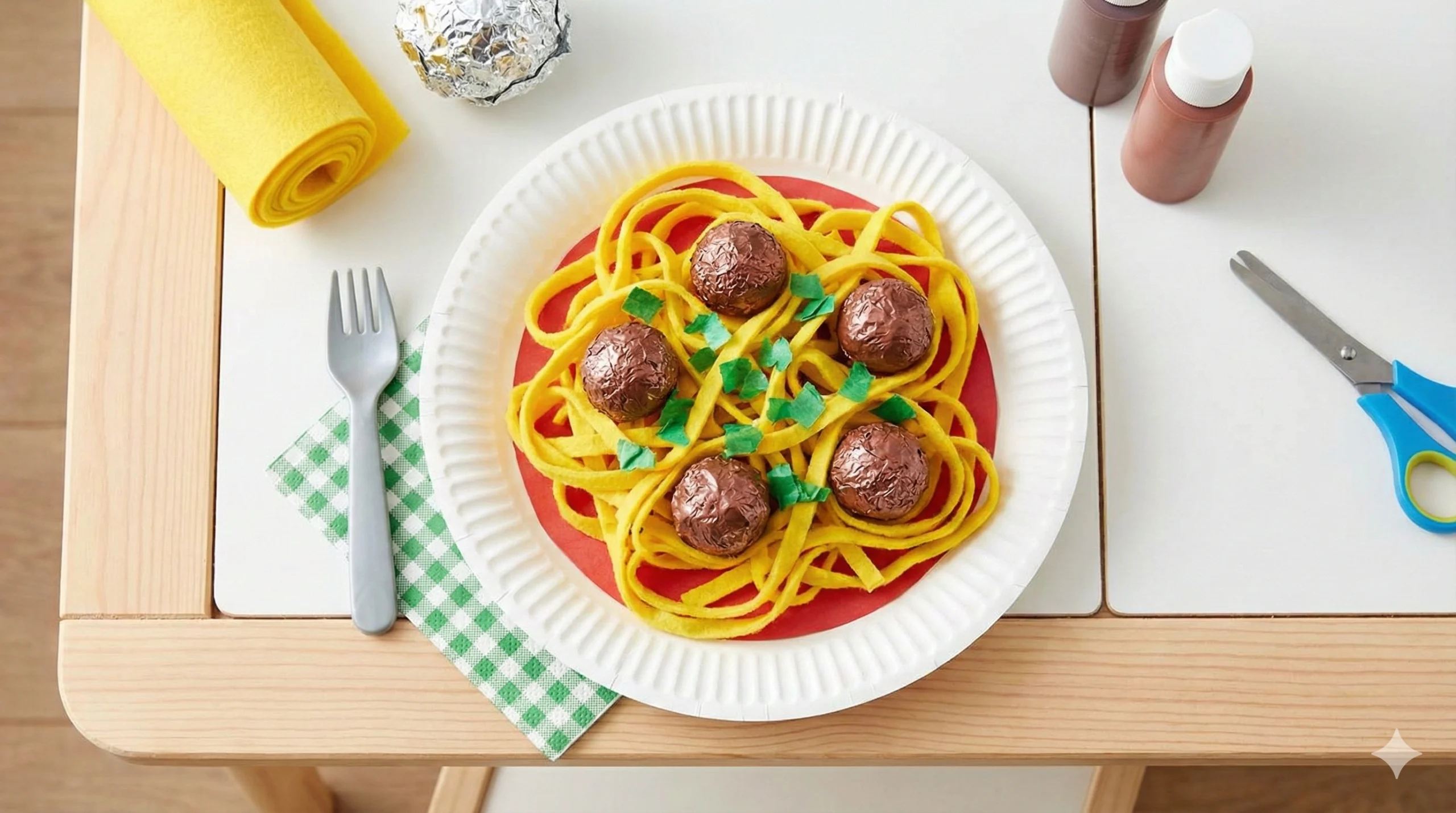
There is one universal truth in the world of parenting and teaching: kids absolutely love pasta. Whether it is covered in cheese, butter, or a rich tomato sauce, spaghetti is the ultimate comfort food for little ones. But do you know what is even better than eating spaghetti? Making a version that never spoils, never makes a mess on the carpet, and provides hours of imaginative entertainment!
Welcome to the ultimate guide on creating a Pretend Play Spaghetti and Meatballs Craft.
This isn’t just a simple paper project; it is a sensory-rich activity that results in a durable toy for your child’s play kitchen. If you have been looking for a way to spark creativity, improve fine motor skills, and engage in some hilarious restaurant role-play, you have found the perfect recipe. Forget the calories and the boiling water—today, we are cooking with creativity!
Why Pretend Play Food Matters
Before we dive into the supplies and steps, let’s talk about why this specific craft is such a fantastic choice for your children or students.
1. Enhancing Fine Motor Skills: This project involves cutting long strips (steady hand), scrunching aluminum foil (hand strength), and painting (coordination). It is a hidden workout for the small muscles in the hands that are essential for writing later on.
2. Boosting Imaginative Play: Once the craft is done, the playing begins. Pretend play, or dramatic play, is crucial for social and emotional development. When a child pretends to be a chef or a waiter, they are practicing vocabulary, empathy, and social interaction.
3. Sensory Engagement: We are using felt, foil, and tissue paper. These materials offer different textures—soft, crinkly, and smooth. Sensory play helps build nerve connections in the brain and encourages scientific thinking and problem-solving.
The Ingredients: Materials Required
To cook up this masterpiece, you don’t need a trip to the grocery store. You likely have most of these “ingredients” in your craft drawer or kitchen pantry.
Here is what you will need:
- Thin Yellow Felt Sheet: Felt is superior to paper for the “noodles” because it is floppy and durable. It mimics the texture of cooked pasta perfectly. If you don’t have felt, thick yellow yarn is a great alternative.
- Aluminum Foil: This is the secret ingredient for realistic, textured meatballs.
- Paper Plate: The canvas for our meal. A standard white paper plate works best.
- Red and Green Craft Paper: For the rich tomato sauce and garnishes.
- Green Tissue Paper: This adds a lovely, leafy texture for the basil or spinach.
- Maroon and Brown Paint: Acrylic or poster paint works well. We want a “meaty” color.
- Scissors: Child-safe scissors for the kids, and perhaps sharper fabric scissors for the adult to help with the felt.
- Liquid Glue or a Glue Stick: To hold the sauce in place.
- Paintbrushes: For basting our meatballs.
Step-by-Step Instructions: Cooking Up Creativity
Ready to get cooking? Follow this recipe for the perfect craft pasta.
Step 1: Boiling the Pasta (Cutting the Felt)
The foundation of any good spaghetti dish is the noodle. Take your sheet of yellow felt. If you are doing this with younger children, you might want to draw straight lines on the felt with a ruler first to guide them.
Carefully cut long, thin strips from the felt. They should be about the width of a fettuccine noodle (approx. 0.5 cm to 1 cm wide). Don’t worry if they aren’t perfectly straight; real handmade pasta has character!
- Tip: If you want a really full plate, you will need to cut quite a few strips. Keep going until you have a nice pile of “noodles.”
Step 2: Forming the Meatballs
Now for the most fun part of the project—making the meatballs! This step is excellent for sensory feedback because of the sound and feel of the foil.
Tear off a sheet of aluminum foil. Cut or rip the foil into strips or squares. There is no precise science here, but strips about 2 inches wide work well. Hand the foil pieces to your child and ask them to scrunch them up into tight balls.
- Why Foil? You might be wondering why we don’t just use clay or paper. Foil provides a distinct, uneven texture that looks exactly like ground meat once it is painted. Plus, it is lightweight!
Aim for about 3 to 5 meatballs per plate. Make sure they are squeezed tight so they don’t unravel during playtime.
Step 3: Simmering the Meatballs (Painting)
It is time to cook the meat! Place your foil balls on a messy mat or a sheet of newspaper. Mix your maroon and brown paint to create a delicious “cooked meat” color. If you only have bright red, mix in a little green or black to darken it up.
Paint the foil balls completely. Because foil is non-porous, the paint might act a little slippery. A thick coat is good here. The crinkles in the foil will catch the paint in different ways, adding amazing depth and realism. Set these aside to dry completely. (Pro-tip: Do this step early so they are drying while you work on the rest).
Step 4: Preparing the Marinara Sauce
While the meatballs are drying, let’s get the sauce ready. Take your red craft paper. We aren’t looking for perfect geometric shapes here. We want a “splat” shape. Cut out a wavy, organic blob shape that is smaller than the paper plate but large enough to sit under the pasta. This represents the pool of delicious tomato sauce at the bottom of the bowl.
Glue this red shape directly onto the center of your paper plate.
Step 5: The Garnish (The Secret Ingredient)
No gourmet dish is complete without some greens. Take your green craft paper or green tissue paper.
- Method A (Paper): Cut tiny little leaf shapes to look like basil.
- Method B (Tissue): Tear small bits of green tissue paper and crumple them slightly. This looks like cooked spinach or oregano.
Set these aside to sprinkle on top at the very end.
Step 6: Plating the Dish
Now comes the assembly line!
- The Base: You have your paper plate with the red sauce base glued on.
- The Pasta: Take your pile of yellow felt strips. Apply some glue to the red sauce base on the plate and arrange the felt strips on top. You want them to look messy and tangled—just like real spaghetti! You don’t need to glue every single strand down; leaving some loose adds to the play value.
- The Meatballs: Once the paint is dry on your foil meatballs, apply a generous amount of glue to the bottom of each one and nestle them into the felt pasta.
- The Topping: Sprinkle your green paper “herbs” over the meatballs and pasta. You can add a few dots of glue to keep them in place.
How to Play: The Fun Doesn’t Stop at Crafting
Congratulations! You have created a mouth-watering masterpiece. But don’t just put it on a shelf. Here is how to maximize the value of this craft through play.
1. The Italian Restaurant
Set up a dining area with a tablecloth. Have your child create a menu using paper and crayons. They can be the waiter, taking your order, and then the chef, “cooking” this plate and serving it to you. This builds confidence and social skills.
2. Math with Meatballs
For younger toddlers, use the plate for counting practice. “How many meatballs are on the plate?” “If I eat one meatball, how many are left?” “Can you add two more basil leaves?”
3. Picnic Party
Combine this craft with other pretend food items. Grab a teddy bear and have an indoor picnic. Encourage your child to “feed” the bear and narrate what the bear thinks of the food.
Variations of the Craft
Do you want to switch up the recipe? Here are a few ways to modify this craft based on what you have at home:
- The Yarn Method: If you don’t have yellow felt, use thick yellow yarn or wool. It looks just like spaghetti.
- Paper Mache Meatballs: If you are out of foil, you can scrunch up brown paper lunch bags into balls.
- The Cheese Topping: Want to add parmesan? Cut tiny, tiny snippets of white yarn or white paper and sprinkle them over the top for a cheesy finish.
- Different Pasta Shapes: Instead of long strips, cut little bow ties (farfalle) out of the felt for a different pasta dish!
Frequently Asked Questions (FAQs)
Q: Is this craft suitable for toddlers? A: Absolutely! However, an adult should handle the scissors. Toddlers will excel at scrunching the foil and “plating” the food. It is a great sensory activity for ages 3 and up.
Q: How do I store this craft? A: Unlike real food, this stores easily! Because it is made on a paper plate, you can stack it with other pretend food items in a toy bin. If the felt gets dusty, a quick roll with a lint roller cleans it right up.
Q: Can we use paper instead of felt for the noodles? A: You can, but paper tends to crease and tear easily during play. Felt or yarn provides a much longer-lasting toy that can withstand the “forks” and “spoons” of enthusiastic little eaters.
Q: What kind of glue works best? A: For gluing the foil meatballs to the felt, a strong liquid craft glue (PVA) or a hot glue gun (used by an adult) works best. For the paper parts, a standard glue stick is perfectly fine.
Conclusion
Making a Spaghetti and Meatballs Craft is more than just a way to kill an hour on a rainy afternoon. It is an opportunity to bond with your children, spark their imaginations, and create a toy that they will cherish because they made it.
In a world of plastic toys and screens, there is something incredibly grounding and satisfying about making pretend food from scratch. It teaches children that they have the power to create their own fun using simple materials.
So, grab that yellow felt, raid the kitchen drawer for aluminum foil, and get ready to serve up the best (inedible) meal of your life. Bon Appétit!