
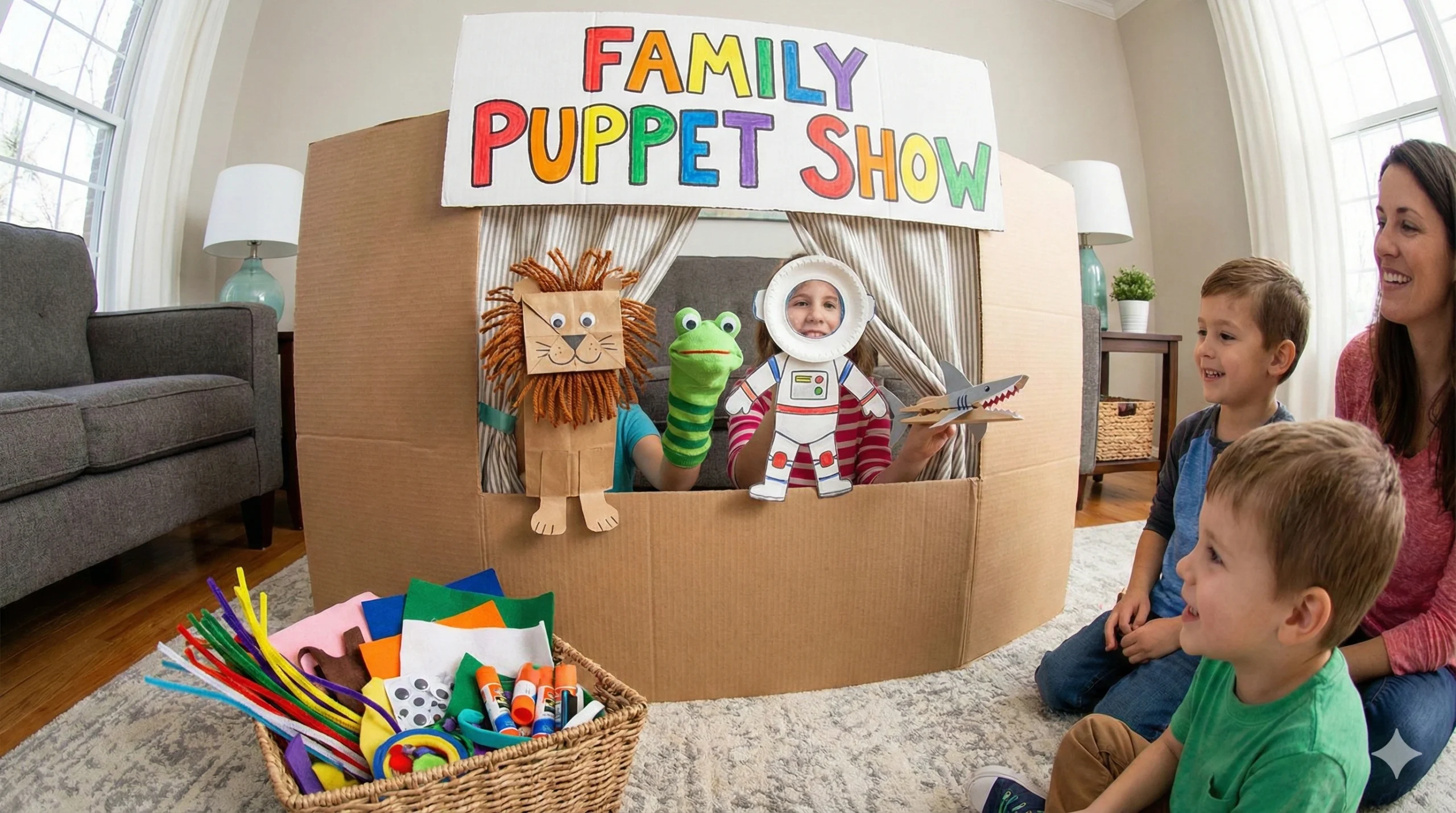
In an era dominated by streaming services, tablets, and video games, the simple joy of tactile play often gets lost. When we think of entertainment today, our minds immediately jump to the latest web series or animated movie. But if we dial back the clock—way back to around 3000 B.C.—we find a form of entertainment that has captivated human imagination for millennia: Puppets.
Puppetry is more than just a toy; it is an ancient art form that combines storytelling, craftsmanship, and performance. For parents and educators, puppets offer a golden opportunity to get kids off screens and into a world of imagination. Whether you are looking to kill time on a rainy weekend, enhance a school lesson, or simply bond with your children, making DIY puppets is the perfect solution.
In this guide, we will explore the history of puppets, their developmental benefits, and provide a massive list of 45 Fun and Easy DIY Puppets for Kids that you can make with simple household supplies.
The Magic of Puppetry: A Global Tradition
Before we dive into the glue and glitter, it is worth teaching children about the rich history they are participating in. Puppetry is an important cultural pillar across the globe. It is not just child’s play; in many cultures, puppets hold deep symbolic meaning and are used to preserve history and folklore.
Nearly every country has a famous puppet tradition:
- United Kingdom: The slapstick comedy of Punch and Judy.
- Japan: The intricate and dramatic Bunraku puppets.
- Indonesia: The shadow-casting Wayang puppets.
- India: The colorful string Kathputhlis of Rajasthan.
- Philippines: The giant Higantes puppets used in festivals.
With World Puppetry Day celebrated annually on March 21st, there is no better time to introduce your children to this global art form. But you don’t need to be a master craftsman to start; you just need some paper, glue, and a little creativity.
Why Make Puppets? The Developmental Benefits
Aside from being fun, puppet making is an educational powerhouse. Here is why you should encourage this activity:
- Fine Motor Skills: Cutting, gluing, and manipulating small materials strengthens hand-eye coordination.
- Emotional Expression: Shy children often find it easier to express feelings through a puppet character than speaking directly.
- Storytelling: Creating a script for a puppet show enhances vocabulary and narrative structure skills.
- Confidence: Performing in front of family members boosts self-esteem.
45 Fun and Easy DIY Puppets for Kids
We have curated a list of 45 amazing puppet ideas, categorized to help you find exactly what you need. From holidays to heroes, there is a puppet here for every occasion.
Section 1: Paper and Hand Puppets (The Essentials)
These are the bread and butter of DIY puppetry. Using simple construction paper and cardstock, you can create vibrant characters.
1. The Classic Paper Clown Nothing says “circus” like a clown. Using bright construction paper, accordian-fold the arms and legs to give them a bouncy, springy effect. This is a great starter project to teach kids about folding techniques.
2. Uncle Sam Patriotic Puppet Perfect for the Fourth of July or history lessons. Create a tall top hat with stripes and a white beard using cotton balls. This puppet is great for teaching kids about national symbols.
3. Farm Animal Friends For toddlers learning their animal sounds, a set of farm puppets is essential. Create a Cow, Pig, and Chicken using simple shapes (ovals and circles). Attach them to popsicle sticks so little hands can hold them easily while singing “Old MacDonald.”
4. Woodland Creatures Mini-Set Move from the farm to the forest. Use brown and orange felt or paper to create a Fox, Raccoon, Deer, and Owl. These are excellent for autumn-themed storytelling.
5. DC & Marvel Inspired Superheroes You don’t need a big budget to have Batman or Superman in your house. Cut out the iconic logos and capes from colored paper. These puppets are great for empowering kids to invent their own “save the world” scenarios.
6. Super Dad Puppet The real superhero doesn’t wear a cape—he changes tires and makes pancakes. For Father’s Day, have your child create a puppet version of their dad. Use yarn for hair and draw on glasses or a beard to match!
7. Gingerbread Cookie Characters You can’t catch them! These brown paper puppets are perfect for Christmas. Decorate them with white paint markers to look like icing. They are durable and can be stored away for next year’s holiday season.
8. Simple Dog and Frog Hand Puppets Using a folded paper technique (similar to a fortune teller or “cootie catcher”), you can create puppets that actually open and close their mouths. Green for the frog and brown/spotted for the dog.
9. The Snowman Puppet (Olaf Style) If you have a Frozen fan at home, a snowman puppet is non-negotiable. Use white paper circles and stick arms. Since snowmen come apart, you can use velcro dots to make the puppet “rebuildable.”
10. Springtime Insect Garden Bugs don’t have to be scary. Create colorful Ladybugs, Bumblebees, and Butterflies. Glue them to green craft sticks to simulate them flying over the grass.
Section 2: Storybook and Fairytale Puppets
Bring bedtime stories to life by acting them out.
11. Little Red Riding Hood Set This is a “two-in-one” opportunity. You can make Red Riding Hood, the Grandma, and the Big Bad Wolf. It teaches children about character roles—protagonists and antagonists.
12. Halloween Spooky Set Get ready for October 31st with a cast of spooky characters. A white tissue Ghost, a green Witch, a black Cat, and a Vampire. Use glow-in-the-dark paint for extra effect during a nighttime puppet show!
13. Easter Celebration Trio Create a fluffy Sheep (using cotton balls), a yellow Chick (using feathers), and the Easter Bunny. These make adorable props for Easter basket photos.
14. Split Pin Motion Puppets Also known as “articulated puppets.” By using brass fasteners (split pins) at the joints (shoulders, knees, hips), you can make puppets that dance and move their limbs. Santa Claus or an Elf are great choices for this style.
15. Garden Gnomes Gnomes are whimsical and fun. Focus on the tall, pointy hats and big bushy beards. These are great for “guarding” the puppet theater stage.
16. Cultural Festival Puppets (Lord Ganesha) Celebrate diversity by making puppets from different cultures. For the Indian festival of Ganesh Chaturthi, create an elephant-headed deity puppet. Use sequins and glitter to mimic traditional jewelry.
Section 3: Interactive and Moving Puppets
These puppets require a little more engineering but offer a huge payoff in playability.
17. The Dog Marionette A marionette is controlled from above by strings. You can make a simple dog using two toilet paper rolls (one for the head, one for the body). Connect the feet with strings to a crossbar stick. It’s easier than it looks and fascinates children!
18. Paper Plate Frog with Mouth Fold a paper plate in half. Paint the outside green and the inside pink (for the mouth). When you open and close your hand, the frog “talks.” Add a long curled red paper strip for a tongue catching flies!
19. Clothespin “Chomping” Puppets Print out an animal face and cut it horizontally across the mouth. Glue the top half to the top clip of a clothespin and the bottom half to the bottom clip. When you squeeze the pin, the mouth opens! This works great for Sharks, Crocodiles, and Dogs.
20. Pipe Cleaner Finger Puppets Wrap pipe cleaners around your finger in a spiral. Glue a pom-pom on top for a head. These “Wiggly Jiggly” puppets are great for fine motor skills and fit perfectly in a pocket.
Section 4: The Ultimate Paper Bag Puppet Collection (Ideas 21-45)
The humble brown paper lunch bag is the MVP of the puppet world. The bottom flap of the bag naturally serves as a face/mouth structure. Here are 25 quick-fire ideas to transform paper bags into an entire universe of characters:
21. The Royal Family: King, Queen, Prince, and Princess (use gold foil for crowns). 22. The Monster Mash: Three-eyed aliens and furry monsters using yarn scraps. 23. Community Helpers: Firefighter, Police Officer, Doctor, and Nurse. 24. The Zoo: Lion (yarn mane), Elephant (trunk attached to the flap), and Zebra. 25. Ocean Life: Octopus (cut the bottom of the bag into tentacles) and Jellyfish. 26. Robots: Use aluminum foil and buttons to create a metallic look. 27. Dinosaurs: T-Rex and Triceratops with sharp paper teeth. 28. Family Members: Make puppets that look like Grandma, Grandpa, and siblings. 29. Pirates: Eye patches and bandanas drawn with markers. 30. Astronauts: White bags with drawn-on helmets. 31. Mermaids: Use the bag for the torso and attach a paper tail at the bottom. 32. Dragons: Add paper flames coming out of the mouth flap. 33. Unicorns: A paper cone horn and rainbow yarn hair. 34. Scarecrows: Perfect for fall; use straw or yellow paper for stuffing. 35. Ninjas: Use black construction paper to cover the bag, leaving only a slit for eyes. 36. Turkeys: A Thanksgiving staple using handprints for tail feathers. 37. Reindeer: Add antler cutouts to the top of the bag. 38. Bears: Brown paint and round ears make a quick Teddy Bear. 39. Birds: Layer colorful paper feathers all over the bag. 40. Vampires: A black paper cape glued to the back adds drama. 41. Zombies: Green paint and “googly” eyes of different sizes. 42. Leprechauns: Green hats and orange beards for St. Patrick’s Day. 43. Penguins: Black bags with a white oval tummy. 44. Owls: Large eyes and a beak on the flap. 45. Yourself!: Give kids a mirror and have them paint their self-portrait on a bag.
How to Host Your Own DIY Puppet Show
Once you have crafted your characters, the fun is just beginning. Hosting a puppet show is a great weekend activity.
1. Build the Stage: You don’t need fancy wood. A cardboard box with a rectangle cut out of the side works perfectly. Alternatively, drape a blanket over a tension rod in a doorway, or simply have the kids hide behind the sofa.
2. Write the Script: Encourage your children to write a short story. It needs a beginning, a middle (a problem), and an end (the solution). For younger kids, re-enacting a favorite book is a great start.
3. Add Sound Effects: Use pots and pans for thunder, crinkle paper for rain, or play music from your phone to set the mood.
4. The Performance: Invite family members, set up chairs, and maybe even make some popcorn. Applaud loudly—this builds the child’s public speaking confidence!
Conclusion
Puppetry is a timeless tradition that bridges the gap between art and play. By creating these 45 DIY puppets, you aren’t just making toys; you are building memories, developing essential skills, and sparking a creativity that screens simply cannot replicate.
So, gather your paper bags, your glue sticks, and your imagination. It’s time to raise the curtain and let the show begin!
Frequently Asked Questions (FAQ)
Q: What is the best glue to use for puppets? A: For paper puppets, a standard glue stick is less messy and dries fast. For puppets using buttons, yarn, or heavier materials, liquid white glue (PVA) or a low-temperature hot glue gun (used by adults) works best.
Q: What age group is appropriate for puppet making? A: Puppet making is versatile! Simple paper bag puppets are great for toddlers (ages 2-4) with help. Hand puppets and marionettes are excellent for school-aged children (ages 5-10) who can handle scissors and detailed decoration.