
Everyone loves an underdog story. We cheer for the character who faces immense challenges, overcomes impossible odds, and emerges stronger and more beloved than ever. While we usually see this in movies, there is a country that embodies this spirit perfectly: Vietnam.
Vietnam is a nation that has weathered storms of colonization, war, and economic hardship. From French colonization in the 1800s to the conflicts of the mid-20th century, the Vietnamese people have faced struggles that would break many. Yet, they didn’t just survive; they thrived. Since the “Doi Moi” reforms of the mid-1980s, Vietnam has transformed into one of the most dynamic, welcoming, and culturally rich destinations on the planet.
Today, Vietnam is a jewel of Southeast Asia. Cities like Ho Chi Minh City, Hanoi, and Da Nang are buzzing with energy, ancient traditions, and modern innovation. On September 2nd, the country celebrates Vietnam National Day, marking the declaration of independence in 1945.
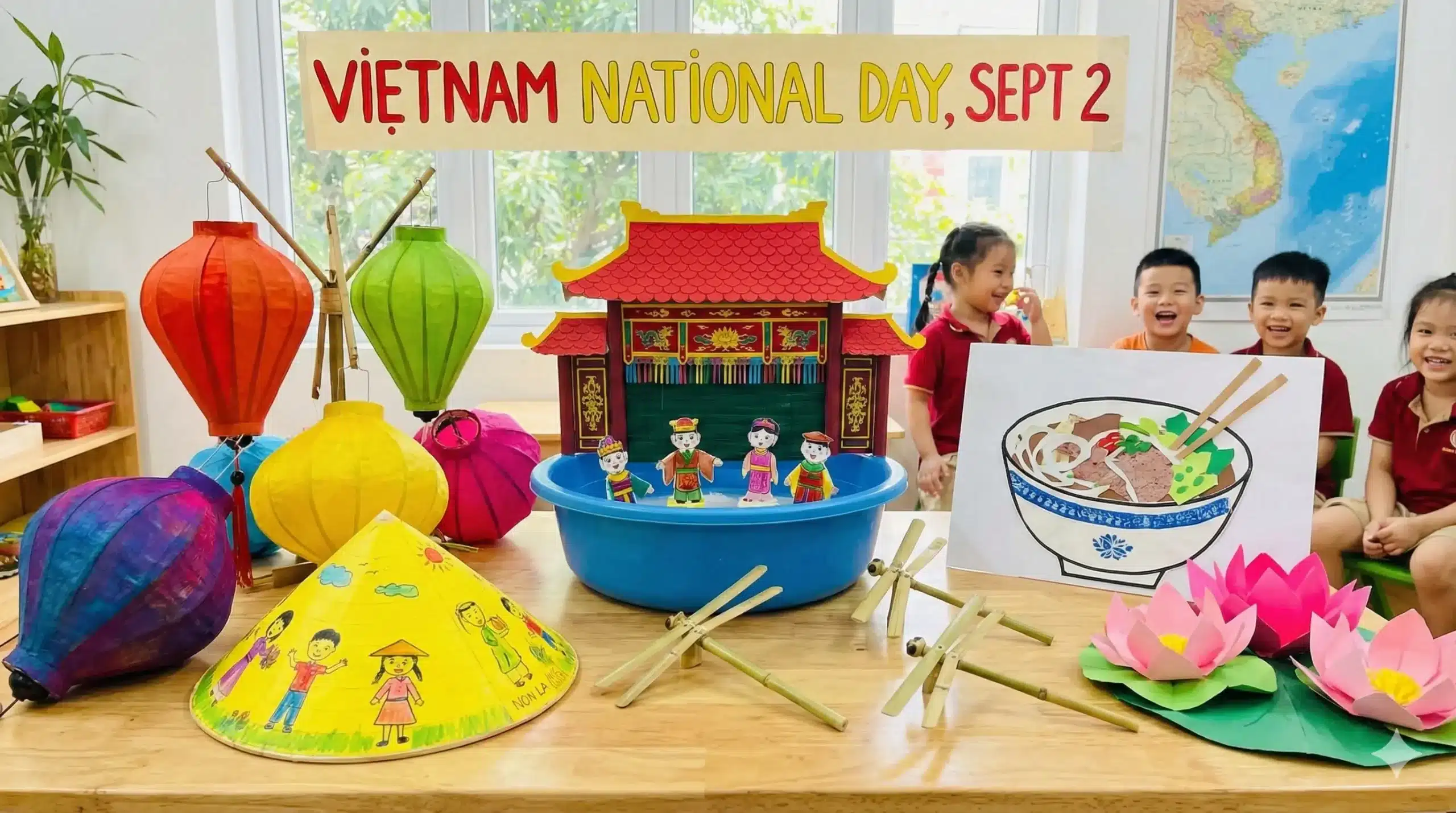
What better way to teach the next generation about resilience, beauty, and global culture than by exploring this amazing country? Here are 15 vibrant Vietnam crafts for kids that blend creativity with educational fun, perfect for celebrating National Day or expanding your geography curriculum.
Why Teach Kids About Vietnam?
Before we dive into the glue and glitter, it is important to understand the why. Vietnam provides a unique window into Asian heritage that is distinct from its neighbors like China or Japan.
- Resilience: The history of Vietnam teaches children that you can rebuild and succeed after hard times.
- Biodiversity: From the limestone karsts of Ha Long Bay to the Mekong Delta, the geography is diverse.
- Artistic Tradition: Vietnamese art includes unique forms like water puppetry, silk painting, and lacquerware that are fantastic for inspiring young artists.
15 Vibrant Vietnam Crafts for Kids
We have curated a list of projects that range from simple paper crafts for toddlers to more intricate designs for older children. Each craft is an opportunity to learn a specific aspect of Vietnamese culture.
1. DIY Non La (Conical Hat)
The Non La is perhaps the most recognizable symbol of Vietnam. Legend says a goddess wore a giant hat made of four large leaves to protect the people from a deluge of rain.
- The Craft: Use a large circle of yellow or beige cardstock. Cut a single slit from the edge to the center. Overlap the edges to form a shallow cone and secure with staples or glue.
- Decorate: Have kids draw traditional designs like bamboo, lotus flowers, or rice paddies on the hat. Punch holes on the sides and add a ribbon chin strap.
- Lesson: Discuss how the conical shape protects farmers from both the scorching sun and heavy tropical rains.
2. Hoi An Paper Lanterns
The ancient town of Hoi An is famous for its Lantern Festival, where thousands of colorful silk lanterns light up the night.
- The Craft: Use colored construction paper or tissue paper. Fold a rectangular sheet in half lengthwise and cut slits along the fold (stopping an inch from the edge). Unfold and glue the short ends together to form a tube. Push the top down slightly to make the sides flare out.
- Decorate: Add gold glitter or tassels to the bottom.
- Lesson: Explain that lanterns represent luck, happiness, and wealth in Vietnamese culture.
3. Shoebox Water Puppet Theater (Mua Roi Nuoc)
Water puppetry originated in the rice paddies of the Red River Delta. Farmers would stand in waist-deep water to perform with puppets for entertainment.
- The Craft: Take a shoebox and cut out the top and front to create a stage. Paint the inside blue to represent water. Create puppets (dragons, farmers, fish) on cardstock and attach them to long chopsticks or skewers.
- Play: Unlike normal puppets controlled from above, these are controlled from the bottom. Have kids slide the sticks through slots in the bottom or side of the box to make the puppets “swim.”
- Lesson: This teaches the importance of rice farming and how art is created from the environment.
4. The Golden Star Flag Mosaic
The Vietnamese flag is bright red with a large yellow five-pointed star in the center.
- The Craft: This is great for toddlers. Draw a star in the center of a red piece of paper. Provide children with torn bits of yellow paper (or yellow tissue paper balls). Have them glue the yellow bits inside the star and red bits outside.
- Lesson: The red symbolizes the blood and revolution, while the five points of the star represent the five classes of society: intellectuals, farmers, workers, businesspeople, and soldiers.
5. Bamboo Dragonfly (Chuon Chuon Tre)
If you visit Vietnam, you will see souvenir shops filled with balanced bamboo dragonflies.
- The Craft: Use popsicle sticks (craft sticks). Glue two sticks horizontally across a vertical stick to form wings. Add a small weight (like a hidden coin or clay) to the “nose” of the dragonfly.
- Balance: If weighted correctly, the dragonfly will balance on the tip of your finger! Paint them in vibrant colors.
- Lesson: Discuss the physics of balance and how bamboo is an essential material in Vietnamese life, used for everything from building houses to making chopsticks.
6. Paper Lotus Flower
The Lotus is the national flower of Vietnam. It grows in muddy water but rises above the surface to bloom beautifully, symbolizing purity and optimism.
- The Craft: Cut teardrop-shaped petals out of pink and white paper. Glue them in layers around a yellow circular center. You can stack multiple layers to create a 3D effect.
- Lesson: The lotus is a powerful metaphor for the Vietnamese spirit—rising beautifully despite difficult surroundings.
7. “Bowl of Pho” Collage
Pho (noodle soup) is Vietnam’s most famous culinary export.
- The Craft: Cut a semi-circle from a paper plate to act as the bowl. Have kids cut “noodles” from white yarn or paper strips. Cut out shapes for toppings: green paper for basil/cilantro, brown ovals for beef/tofu, and red circles for chili.
- Assembly: Glue everything into the paper bowl.
- Lesson: Talk about the ingredients. Rice (for noodles) is the staple food of Vietnam.
8. Ao Dai Paper Dolls
The Ao Dai is the elegant traditional dress of Vietnam, consisting of a long split tunic worn over trousers.
- The Craft: Print a basic doll outline. Provide kids with patterned origami paper or fabric scraps to design their own Ao Dai. The tunic should flow down to the ankles, with slits on the sides up to the waist.
- Lesson: The Ao Dai is worn by students and teachers alike and is a symbol of Vietnamese grace and beauty.
9. Dong Ho Folk Art Printing
Dong Ho paintings are traditional woodblock prints that originated in Dong Ho village. They use natural colors made from burnt bamboo leaves, gravel, and flowers.
- The Craft: Recreate the woodblock technique using Styrofoam trays (from veggie packaging). Have kids use a dull pencil to etch a design (like a pig or a rooster) into the foam. Roll paint over the foam and press it onto paper.
- Lesson: This is an ancient method of mass-producing art for the Lunar New Year.
10. Lunar New Year (Tet) Red Envelopes
Tet is the most important holiday in Vietnam. Children receive red envelopes (Li Xi) containing money for luck.
- The Craft: Fold red paper into an envelope shape. Use gold gel pens or gold paint to draw lucky symbols like cherry blossoms, coins, or the zodiac animal of the current year.
- Lesson: Discuss the concept of “Lucky Money” and wishing elders good health and longevity.
11. Cardboard Cyclo Model
The Cyclo (a three-wheeled bicycle taxi) is an iconic image of Vietnamese city streets.
- The Craft: Use three cardboard circles for wheels, straws for the frame, and a small matchbox for the passenger seat.
- Lesson: While modern cars are taking over, the Cyclo represents a slower, more traditional pace of life in the old quarters of Hanoi.
12. “Buffalo Boy” Landscape Painting
The image of a young boy riding a water buffalo while playing a flute is a classic symbol of peaceful Vietnamese rural life.
- The Craft: Use watercolors to paint a landscape. Focus on the green of the rice paddies and the grey of the buffalo.
- Lesson: The water buffalo is known as the “tractor of the East” and has been the farmer’s best friend for centuries.
13. Lacquerware-Style Coasters
Vietnamese lacquerware is famous for its high-gloss, deep black, and gold finish.
- The Craft: Take a simple cardboard or wooden coaster. Paint it solid black. Once dry, use metallic gold paint to paint bamboo or dragon designs. Finally, cover it with a thick layer of clear school glue or Mod Podge to simulate the glossy lacquer finish.
- Lesson: Real lacquerware takes months to make and involves applying layer upon layer of resin!
14. Peach Blossom (Hoa Dao) Branch
In Northern Vietnam, Peach Blossoms are the flower of the New Year.
- The Craft: Go on a nature walk to find a twig with multiple branches. Back home, scrunch up small pieces of pink tissue paper and glue them onto the twig. Place the “blooming” branch in a jar.
- Lesson: These flowers are believed to keep away bad spirits and bring good luck to the home.
15. The Legend of the Sword Lake (Turtle Craft)
Hanoi’s Hoan Kiem Lake (Lake of the Returned Sword) has a legend about a giant turtle that took a magic sword from the Emperor to return it to the Dragon King.
- The Craft: Use a paper bowl turned upside down for the shell. Paint it green/brown. Add a cardboard head, legs, and tail. You can even make a tiny foil sword for the turtle to hold!
- Lesson: Folklore is a huge part of Vietnamese culture, and turtles are considered sacred animals.
Conclusion: A Global Perspective
By engaging in these Vietnam crafts for kids, we do more than just make pretty objects. We open a dialogue about a country that has risen from the ashes to become a beacon of culture and hospitality.
Whether you are making a simple red flag or constructing an intricate water puppet theater, you are helping your children become global citizens. You are teaching them that beauty exists everywhere, from the bustling streets of Ho Chi Minh City to the quiet rice terraces of Sapa.
So, grab your scissors, your brightest paints, and your sense of adventure. Happy Vietnam National Day!