
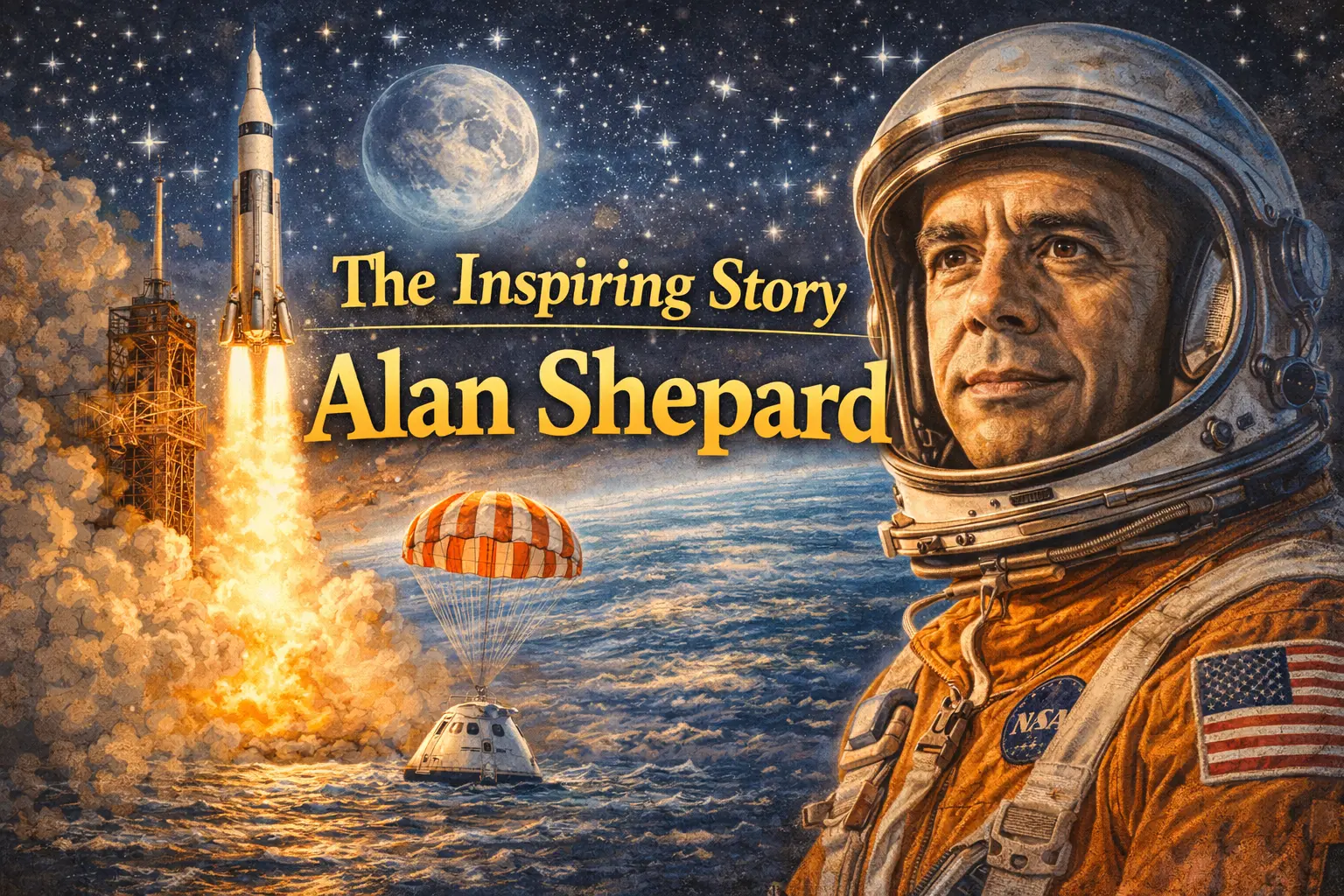
ational Astronaut Day isn’t just a random date on the calendar; it marks a pivotal moment in history. On May 5, 1961, Alan Shepard became the first American to travel into space aboard the Freedom 7.
His journey was a testament to perseverance. Before his historic flight, Shepard faced numerous setbacks. He dealt with mission cancellations and even a frustrating ear infection that grounded him for years. Yet, he never gave up, eventually commanding the Apollo 14 mission and even hitting golf balls on the moon!
By sharing Shepard’s story with children while they craft, we teach them that the path to the stars (or any big dream) is rarely a straight line—it requires grit and determination.
Diversity in Space: Heroes of All Races
One of the most beautiful aspects of modern space exploration is that it belongs to everyone. Astronauts from various nationalities and ethnicities have contributed to our knowledge of the cosmos.
- Guion Bluford: In 1983, he made history as the first African-American astronaut to travel to space.
- Ellen Ochoa: The first Hispanic woman in space, who also served as the Director of the Johnson Space Center.
- Mae Jemison: The first African-American woman to travel into space.
Our crafts today celebrate this diversity. When children see “space heroes” that look like them, the dream of becoming an astronaut feels within reach.
15 Amazing Astronaut Crafts for Kids
1. The “Personalized” Astronaut Cardstock Craft
This is a favorite because it puts the child in the suit!
- How to make it: Cut out an astronaut suit shape from white cardstock. In the “helmet” area, glue a small circular photo of your child’s face.
- The Lesson: It helps kids visualize themselves in a STEM (Science, Technology, Engineering, and Mathematics) career.
2. Cardboard Tube Rocket Pack
Every astronaut needs a way to get around!
- Materials: Two large soda bottles or mailing tubes, silver spray paint, and orange felt for flames.
- Activity: Attach straps so the kids can wear the “jetpack” and engage in active, imaginative play.
3. Footprint Space Shuttle
For the younger “space cadets,” this is a wonderful sensory craft.
- Process: Paint the bottom of your child’s foot with white washable paint and press it onto black paper. Use markers to turn the footprint into the body of a shuttle, adding “NASA” lettering and fire at the heel.
4. Inclusive Astronaut Paper Dolls
Create a series of paper dolls with different skin tones.
- The Goal: Decorate their suits with flags from different countries to represent the International Space Station (ISS) and the global effort of space exploration.
5. Foil-Wrapped Moon Rocks
Wrap crumpled paper balls or small stones in aluminum foil.
- Educational Twist: Talk about why astronauts bring rocks back to Earth for study. These “rocks” can be hidden around the room for a “Lunar Scavenger Hunt.”
6. Toilet Paper Roll Astronauts
Recycle your cardboard tubes!
- Details: Paint the tube white, add a “visor” made of silver paper, and use pipe cleaners for arms. These little figures are perfect for tabletop space missions.
7. Paper Plate Space Helmets
Cut the center out of a paper plate and attach a large piece of clear plastic wrap or a transparency sheet.
- Play: Kids can wear these (be sure to provide plenty of breathing room!) to practice their “slow-motion moon walk.”
8. Galaxy Slime in a Jar
Astronauts have to deal with weird physics in microgravity.
- Craft: Mix clear glue, glitter, and blue/purple food coloring to create “Galaxy Slime.” It’s a great way to discuss how liquids behave differently in space.
9. Straw Rockets
This is a simple physics experiment.
- How to: Tape a small paper rocket to one end of a pipette or a sealed straw. Slide it over a regular straw and blow hard to see how “thrust” works.
10. Coffee Filter Earth
Since astronauts spend a lot of time looking back at our beautiful planet, create a coffee filter Earth using blue and green markers and a spray of water to watch the colors bleed together.
11. Astronaut Training “Obstacle Course”
Technically a “movement craft,” have kids build a course out of cardboard boxes (crawling through “tunnels”) to simulate training for the rigors of space.
12. Constellation Marshmallow Art
Use toothpicks and mini-marshmallows to recreate famous constellations like the Big Dipper. Astronauts use stars for navigation, just like ancient sailors.
13. Puffy Paint Moon
Mix shaving cream and white glue to create “puffy paint.” Apply it in a circle on black paper.
- Texture: Use the bottom of a cup to press “craters” into the wet paint. When it dries, it feels like the bumpy surface of the moon.
14. Solar System Button Map
Use different sized and colored buttons to represent the planets.
- Context: Discuss where an astronaut would have to travel to reach Mars versus the Moon.
15. Astronaut Coloring Pages
For a low-prep activity, printable coloring pages are a lifesaver. Look for sheets that feature various astronauts working on the ISS or exploring the lunar surface. It’s a calm way to end a day of space-themed excitement.
Why Space Education is Important for Kids
Engaging in astronaut crafts isn’t just about fun; it’s about fostering a growth mindset. Space exploration is difficult, dangerous, and requires immense teamwork. By learning about National Astronaut Day, kids learn:
- Resilience: Like Alan Shepard, they learn to try again after a setback.
- Global Citizenship: They see that space is a place where different nations work together for the common good of humanity.
- Scientific Inquiry: Crafting leads to questions. How do they eat? How do they sleep in zero-G? These questions are the seeds of future scientists and engineers.
Comparison of Astronaut Missions
| Mission | Famous Astronaut | Key Achievement |
| Freedom 7 | Alan Shepard | First American in space. |
| Apollo 11 | Neil Armstrong | First human to walk on the moon. |
| STS-8 | Guion Bluford | First African-American in space. |
| STS-7 | Sally Ride | First American woman in space. |
Tips for a Successful Crafting Session
- Encourage Questions: Have a “Space Fact” book nearby to answer the inevitable “Why?” and “How?” questions.
- Celebrate the Mess: Space is vast and chaotic—it’s okay if the glitter gets everywhere!
- Focus on Inclusion: Ensure you have various skin-tone markers or construction paper so every child can make an astronaut that represents them.
Final Thoughts
National Astronaut Day on May 5th is a reminder that the sky is not the limit—it’s just the beginning. Through these 15 astronaut crafts, you are doing more than just occupying a rainy afternoon; you are fueling the dreams of the next generation of explorers. Who knows? The child making a paper-plate helmet today might be the one stepping onto Mars in twenty years!