
rsity. This craft explores the creatures that live inside the trunks of trees.
- The Materials: A brown paper bag or a cardboard tube, and small cut-outs of forest animals (owls, squirrels, or woodpeckers).
- The How-To: Cut a small circle (a “hollow”) in the middle of your cardboard tube. Decorate the tube with textured lines to mimic bark.
- The Detail: Place a small animal figurine or a paper drawing inside the hole. This teaches kids that a tree isn’t just a plant; it’s a bustling apartment complex for wildlife!
3. Leaf Rubbing Nature Journals
This is a classic activity that combines art with botany. It’s a great way to document a real trip to a local park or woods.
- The Materials: Freshly fallen leaves, white paper, and crayons (with the wrappers removed).
- The Process: Place a leaf “vein-side up” under a sheet of paper. Rub the side of a crayon firmly over the paper.
- The Result: The intricate skeletal structure of the leaf will magically appear. Kids can label the leaves and create their very own forest field guide.
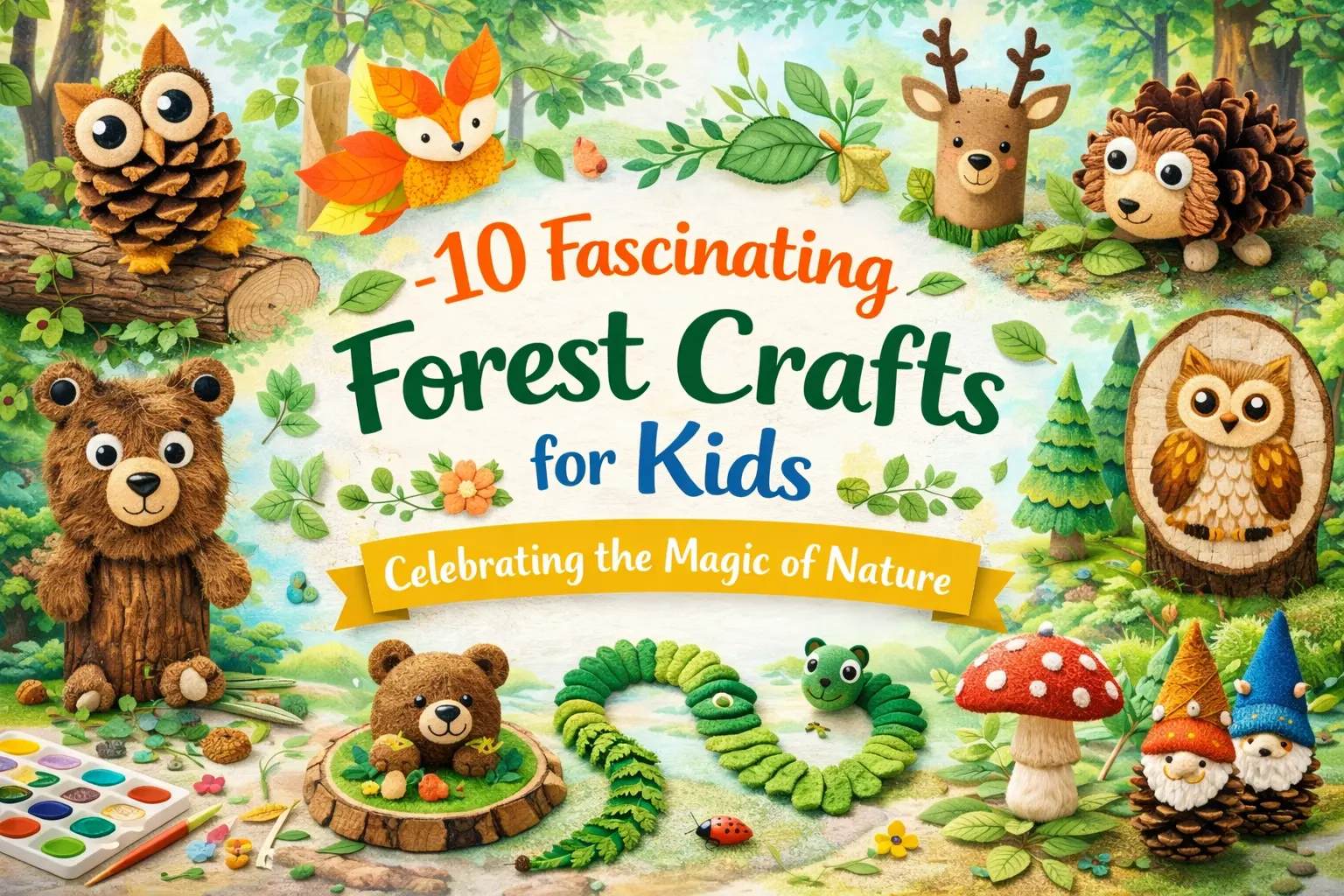
4. Pinecone Woodland Owls
Pinecones are nature’s perfect craft material. They already have a “feathery” texture that makes them ideal for bird crafts.
- The Materials: Large pinecones, scraps of felt, and googly eyes.
- The How-To: Use felt to cut out small wings and a beak. Glue them onto the pinecone.
- The Detail: If you have cotton balls, you can pull them apart and tuck the fluff between the pinecone scales to make a “Snowy Owl.”
5. Cardboard Box “Forest Floor” Diorama
The forest floor is a busy place filled with moss, fungi, and insects. A diorama allows kids to build a miniature world.
- The Materials: A shallow cardboard box (like a shoebox lid), twigs, pebbles, and dried moss.
- The Activity: Use the twigs to create “fallen logs” and the pebbles to create a “dry creek bed.”
- The Science: Talk about decomposition—how old leaves and wood turn back into soil to help new trees grow.
6. Fork-Painted Forest Fires (Awareness Craft)
Part of learning about forests is learning how to protect them. This craft can be used to discuss forest safety and conservation.
- The Materials: Red, orange, and yellow paint, a plastic fork, and black paper.
- The Process: Dip the tines of the fork into the paint and “scrape” them upward on the paper to create the appearance of flickering flames.
- The Conversation: Draw a green tree in the center and discuss how we can prevent fires to keep the forest animals safe.
7. Bark-Textured Rubbing Art
Every tree has a “fingerprint” in its bark.
- The Materials: Large sheets of paper, painters’ tape, and thick charcoal or dark crayons.
- The Process: If you can go outside, tape the paper directly onto a tree trunk. Have the child rub the crayon over it to capture the unique texture of the bark.
- The Comparison: Compare a rough oak bark rubbing to a smoother birch bark rubbing.
8. Recycled Cardboard “Tree of Life”
This large-scale project shows how the canopy, trunk, and roots are all connected.
- The Materials: Large flattened cardboard boxes and green tissue paper.
- The How-To: Draw a massive tree across several pieces of cardboard. Cut it out and paint the trunk brown.
- The Detail: Use scrunched-up green tissue paper for the leaves. This is a great collaborative project for siblings or a classroom to show that “it takes a forest” to sustain the planet.
9. Twig-Framed Forest Memories
Frame your favorite nature photo or drawing using actual pieces of the forest.
- The Materials: Four sturdy twigs of equal length, twine, and glue.
- The How-To: Use the twine to lash the corners of the twigs together to form a square or rectangle.
- The Finish: Tape a picture of a forest animal or a leaf rubbing to the back of your twig frame.
10. Mushroom Spore Print Art
Mushrooms are the “hidden” stars of the forest. This craft mimics the beautiful patterns found under a mushroom cap.
- The Materials: Dark construction paper and white chalk or white paint.
- The Process: Draw a large mushroom shape. Under the “cap,” draw hundreds of tiny radiating lines (the gills).
- The Learning: Explain how mushrooms spread “spores” to grow more fungi, acting as the forest’s natural recyclers.
The Importance of “Forest School” at Hom
Engaging in forest crafts does more than just occupy a Saturday afternoon. It fosters environmental stewardship. When a child spends time “creating” a tree or an owl, they develop an emotional connection to the real thing. This connection is the first step toward wanting to protect our planet’s natural resources.
Safety Tip: When collecting items from the forest for your crafts (like pinecones or twigs), always remind children to “take only memories (and fallen items), and leave only footprints.” Avoid picking live wildflowers or stripping bark from living trees.
Conclusion
The International Day of Forests is a reminder that we are part of a grand, living system. Through these 10 fascinating crafts, children can explore the textures, colors, and residents of the woods right from their crafting table. Whether it’s a 3D standing tree or a pinecone owl, each project is a seed planted for a future of environmental awareness.