
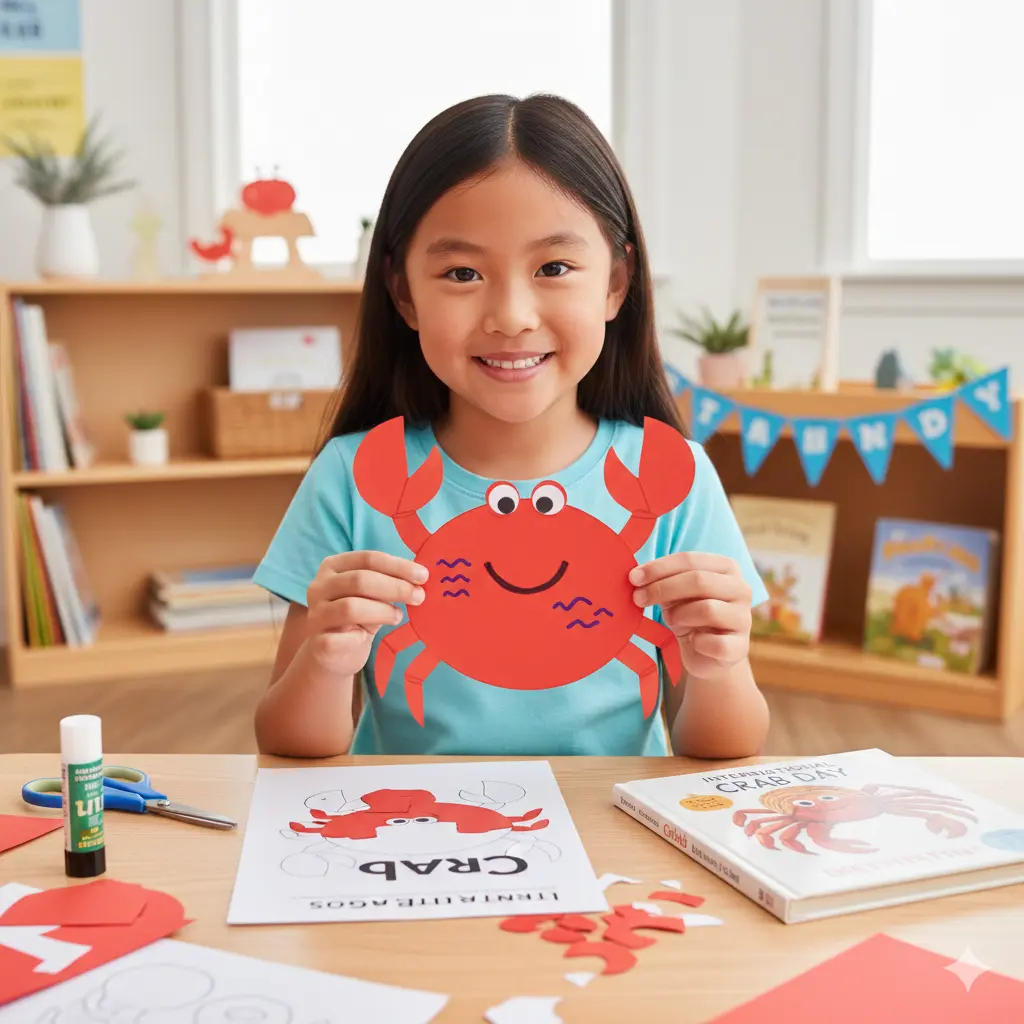
Crabs are unlike many other animals children see daily. They walk sideways, carry their homes on their backs (in the case of hermit crabs), and have impressive claws for protection and feeding. Learning about crabs introduces children to the concept of marine biology and the importance of our ocean ecosystems.
By engaging in a crab-themed craft, children can explore:
- Symmetry: Notice how a crab has an equal number of legs on both sides.
- Colors: While we often think of crabs as red, they can be blue, ghost-white, or even bright orange!
- Textural Awareness: Discussing a crab’s “hard shell” versus its “soft body” helps kids understand animal defenses.
Must-Read Crab Books for Little Explorers
Reading aloud is the best way to set the stage for a crafting session. These books feature crabs as heroes, teaching lessons about friendship, courage, and finding one’s home.
- A House for Hermit Crab by Eric Carle: A beautiful tale of a crab who outgrows his shell and finds new friends to help him decorate his new one.
- Don’t Worry, Little Crab by Chris Haughton: A heartwarming story about overcoming fear and taking the first step into the big, wide ocean.
- Clem and Crab by Fiona Lumbers: A lovely story about a girl who finds a crab stuck in plastic litter, highlighting the importance of keeping our beaches clean.
- The Hermit Crab by Carter Goodrich: The story of a shy crab who unexpectedly becomes a hero.
- Get Well, Crabby! by Jonathan Fenske: A funny, easy-to-read book perfect for beginning readers who enjoy a bit of humor.
DIY Super Cute Crab Papercraft Guide
This craft is designed to be “low-prep but high-fun.” It allows children to practice their scissor skills and placement logic.
Supplies Required:
- Colored Craft Papers: Red, orange, or blue are great for the body; white and black for the eyes.
- Pencil: To trace the templates.
- Scissors: Child-safe safety scissors.
- Craft Glue: A glue stick is usually less messy for paper crafts.
- Sharpies or Markers: For adding little details like a smile or shell patterns.
Step-by-Step Instructions:
- Template Preparation: Download and print the crab papercraft template. This should include the main circular body, two large claws (pincers), several small legs, and the eye stalks.
- Trace and Cut: Place your template pieces onto your chosen colored craft paper. Trace around them with a pencil. Carefully cut out each piece.
- Tip: If you want a “Rainbow Crab,” let your child pick a different color for every leg!
- Assemble the Body and Legs: Lay the large circular body flat. Flip it over and glue the small legs to the back of the circle so they peek out from the sides. Most crabs have eight walking legs and two claws!
- Attach the Claws: Glue the large pincers to the top two legs or directly to the sides of the body. Make them look like they are ready to give a “crab pinch!”
- Give Him Vision: Glue the small white circles onto the eye stalks, then add the stalks to the top of the body. Use a black Sharpie to draw the pupils. Placing the pupils in different directions can give your crab a silly or surprised expression.
- The Final Smile: Use a black marker to draw a wide, happy smile on your crab’s face. You can also add little “V” marks on the body to represent the texture of a shell.
Fun Facts About Crabs for Kids
While the glue dries, keep the learning going with these “claw-some” facts:
- The Side-Shuffle: Crabs walk and run sideways because of how their legs are attached. This allows them to move quickly into small crevices to hide from predators.
- Old Timers: Crabs have been around for a very long time—since the Jurassic period, about 200 million years ago!
- Regrowth: If a crab loses a claw or a leg in a fight, it can actually grow it back! This is called regeneration.
- Big and Small: The Pea Crab is tiny (about the size of a pea), while the Japanese Spider Crab can have a leg span of 12 feet!
- Breathe Deep: Even though they live on land or in water, crabs have gills. They need to keep their gills moist to breathe.
Tips for Parents and Educators
- Beach Scene Background: Once the crab is finished, glue it onto a blue piece of paper. Use real sand or crushed cereal to create a “beach” at the bottom of the page.
- Fine Motor Practice: If your child is struggling with the small legs, you can use accordion-folded strips of paper instead. This adds a fun “springy” movement to the crab.
- Themed Snack: Pair this craft with a snack of “Crab Croissants” (croissants with little googly eyes on toothpicks) for a full International Crab Day celebration.
Conclusion
This Super Cute Crab Papercraft is a wonderful way to celebrate the wonders of the sea. It transforms simple paper into a character with personality, helping children connect with the stories they read and the world around them. Whether your crab is a shy hermit or a bold blue crab, it’s sure to bring a smile to your child’s face.