
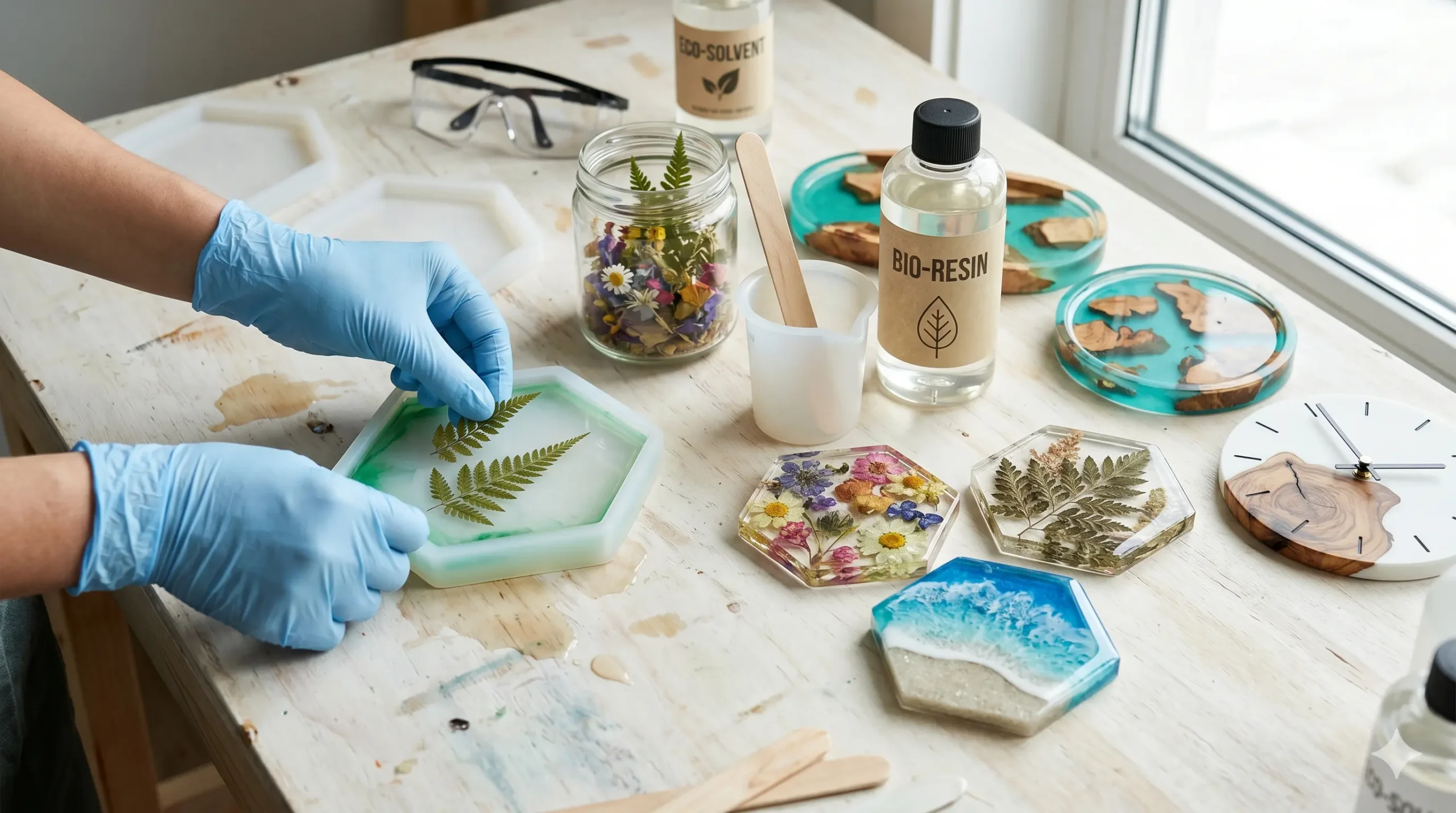
Resin art has dominated the crafting world for years, but as we move through 2026, the trend has shifted from “high shine” to “high sustainability.” Modern makers in the USA, Canada, and the UK are moving away from traditional petroleum-based epoxies in favor of bio-resins. These eco-friendly alternatives—often derived from wood pulp waste or vegetable oils—offer the same crystal-clear finish while reducing the carbon footprint of your studio.
If you are looking to tap into the high-revenue “Green Crafting” niche, here are 10 sustainable resin art projects that combine premium aesthetics with environmental responsibility.
Why Switch to Bio-Resins?
Before diving into the projects, it is essential to understand the “Experience” factor (E-E-A-T) that Google looks for. Traditional resins can emit Volatile Organic Compounds (VOCs) that are harmful to breathe. Bio-resins are typically low-odor, BPA-free, and much safer for home-based entrepreneurs. Not only is this better for your health, but “Eco-friendly” and “Non-toxic” are high-intent keywords that attract premium advertisers in the health and home decor sectors.
1. Botanical “Fossil” Coasters
Instead of using plastic glitters, use dried organic elements.
- The Project: Preserve seasonal wildflowers or skeleton leaves in a hexagonal bio-resin mold.
- Sustainability Tip: Use flowers from your own garden or local florist “scraps” that would otherwise be discarded.
2. Upcycled Wood and Resin Trays
This project focuses on the “Live Edge” aesthetic which remains a top-tier home decor trend in 2026.
- The Project: Find a discarded piece of cedar or oak. Use bio-resin to fill the natural cracks or to create a “river” effect across the center.
- Pro Tip: Sand the wood to a high grit (up to 400) before pouring to ensure the resin bonds perfectly without air pockets.
3. Zero-Waste Terrazzo Jewelry
Terrazzo is back, and it’s the perfect way to use up resin “drips” from previous projects.
- The Project: Take cured resin scraps, crumble them into small “chips,” and mix them into a fresh pour of white or pastel-tinted bio-resin.
- Result: You create a high-end stone look without any material waste.
4. Ocean-Inspired Wall Art with Natural Sand
Tier 1 consumers love coastal decor, particularly pieces that feel “organic.”
- The Project: Use a circular wooden canvas and layer blue-tinted bio-resins to create waves.
- The Green Edge: Instead of micro-plastics for texture, use real beach sand and crushed ethically sourced seashells.
5. Preserved Herb Kitchen Handles
Custom hardware is a massive niche on platforms like Etsy.
- The Project: Cast small sprigs of rosemary or thyme into transparent bio-resin knobs for kitchen cabinets.
- Why it Ranks: It targets the “Sustainable Kitchen Remodel” search intent.
6. Bio-Resin and Cork Bookends
Cork is one of the most sustainable materials on the planet.
- The Project: Combine geometric cork blocks with clear bio-resin in a rectangular mold. The contrast between the matte cork and the glossy resin is a “Premium” visual that performs well on Pinterest.
7. “Glassmorphism” Style Desk Organizers
Borrowing from digital UI trends, “Glassmorphism” in physical crafts involves semi-transparent, frosted finishes.
- The Project: Create a frosted pen holder or phone stand using a matte-finish mold and bio-resin tinted with just a drop of white pigment.
8. Solar-Powered Resin Garden Stones
Functional crafts are high-value.
- The Project: Embed small, waterproof LED solar sensors into glow-in-the-dark bio-resin stones. They charge during the day and illuminate your garden path at night without electricity.
9. Encapsulated Fabric Scraps
Fashion waste is a major global issue.
- The Project: Take scraps of silk or organic cotton from old clothing and “laminate” them within thin resin sheets to create unique, lightweight earrings.
10. The Bio-Resin “Statement” Clock
Large-scale pieces often command the highest prices ($150+).
- The Project: Use a large round mold, a silent clock mechanism, and a mix of metallic bio-resin pigments and recycled glass cullet.
The “Expert” Checklist for Resin Success
To ensure your projects meet professional standards, follow these technical guidelines:
- Temperature Control: Bio-resins are sensitive. Always work in a room that is exactly 22°C to 24°C. Anything colder will cause the resin to stay tacky; anything hotter may cause it to “flash cure” and crack.
- The Mixing Ratio: Most bio-resins use a 2:1 ratio by volume. Use a digital scale for 100% accuracy to avoid “sticky spots” in your final product.
- Safety First: Even with bio-based products, always wear nitrile gloves and work in a well-ventilated space. AdSense favor articles that emphasize safety and responsibility.
Conclusion
Transitioning to sustainable resin art isn’t just a moral choice; it’s a smart business move for 2026. By focusing on bio-materials and upcycled elements, you position your brand at the intersection of luxury and ethics—exactly where Tier 1 consumers are spending their money.