
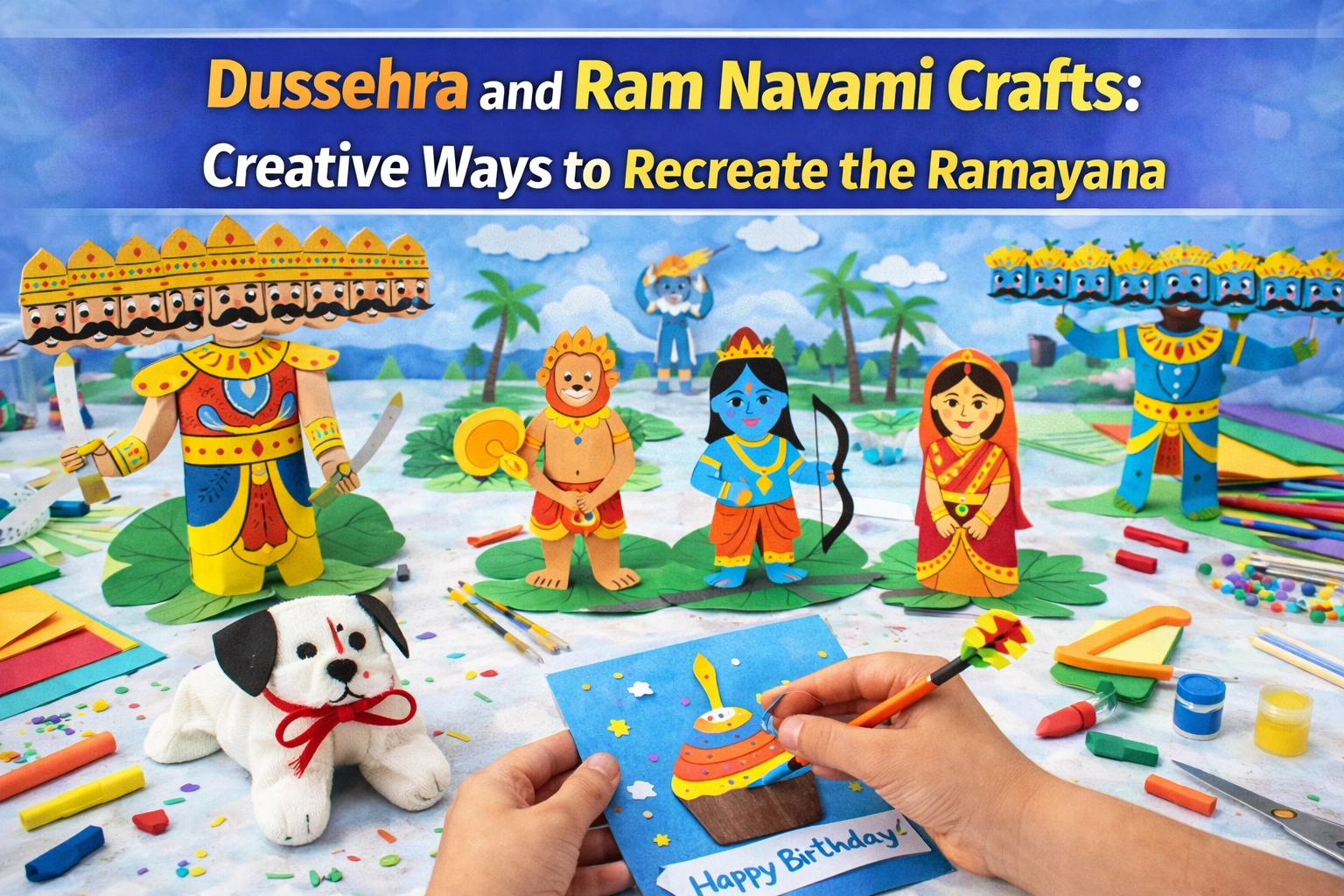
The vibrant festivals of Ram Navami, Dussehra, and Diwali are more than just holidays; they are a profound celebration of the victory of light over darkness and virtue over vice. Central to these celebrations is the epic of the Ramayana, the life story of Lord Rama. From his birth on Ram Navami to his triumph over the demon king Ravana on Dussehra, and finally his homecoming on Diwali, these stories provide a rich canvas for creativity.
For parents and educators, these festivals offer a unique opportunity to connect children with their cultural heritage through hands-on activities. “Dussehra” itself is derived from the Sanskrit word Dasha-hara, which literally translates to “removal of the ten,” referring to the defeat of the ten-headed Ravana. What better way to explain this symbolism than by building a ten-headed Ravana together?
In this guide, we will explore a variety of Dussehra and Ram Navami crafts that allow kids to recreate the Ramayana at home, fostering both artistic skills and a deep understanding of Indian traditions.
The Symbolism of the Ramayana in Crafts
Before diving into the glue and glitter, it is helpful to share the stories behind the characters. Crafting isn’t just about making an object; it’s about storytelling.
- Lord Rama: Represents the “Maryada Purushottam” or the supreme upright man.
- Hanuman: Symbolizes selfless service and strength.
- Ravana: His ten heads represent ten negative emotions (like ego, anger, and greed) that must be conquered.
By creating these figures, children learn that the “war” between good and evil is often an internal journey of self-improvement.
DIY Toilet Paper Roll Ravana: Step-by-Step Guide
One of the most popular activities for the 9th and 10th days of Navratri is making an effigy of Ravana. While large-scale effigies are burnt in public squares, you can make a safe, artistic version at home using simple recycled materials.
Materials Needed:
- 1 Empty toilet paper roll
- 2 Egg carton cups (for the eyes/facial structure)
- Golden-colored craft paper (for the crown and jewelry)
- Black and white craft paper
- Poster paints (White, Red, Black, and Peach)
- Glue, scissors, and a stapler
Instructions:
- Prepare the Base: Start by creating a peach skin tone. You can do this by mixing a large amount of white paint with a small drop of red. Paint the entire toilet paper roll this color and let it dry.
- The Eyes: Cut two cups from an egg carton. Trim the edges so they are shallow. Paint these white, and once dry, add a large black dot in the center of each for the pupils.
- The Iconic Nose: Using a small circle of peach-colored paper, cut a slit to the center, fold it into a cone shape, and staple it. This gives Ravana his prominent, 3D facial feature.
- Assembly: Glue the egg carton eyes and the cone nose onto the upper half of the toilet paper roll.
- Character Details: Cut a thick moustache and bushy eyebrows from the black craft paper. Stick them onto the face. Use your red paint to add a wide, menacing smile.
- The Royal Crown: Cut a crown shape from the golden paper. You can decorate it with sequins or “gems” made from markers. Staple or glue this to the top edge of the toilet roll.
- The Ten Heads: To truly represent Ravana, you can cut nine smaller faces from paper and attach them to a strip of cardboard behind the main toilet roll head.
Recreating the Epic: More Ramayana Craft Ideas
Beyond Ravana, there are several other projects that can help children build their own miniature Ramayana set.
1. Lord Rama’s Bow and Arrow (Dhanush)
Lord Rama is inseparable from his bow, Kodanda.
- How to make it: Use a sturdy piece of flexible cardboard or a long twig from the garden. String it with a piece of thick yarn. For the arrows, use popsicle sticks with paper “feathers” at the end and a silver foil tip.
- Lesson: Discuss the focus and aim required to achieve one’s goals.
2. Hanuman’s Gada (Mace)
Hanuman is a favorite among children due to his incredible strength and loyalty.
- How to make it: Crumple newspaper into a large ball and wrap it in golden foil or yellow paper. Attach this to a sturdy cardboard tube (like a kitchen roll holder).
- Lesson: Talk about the power of devotion and helping others.
3. Sita’s Flower Garden (Ashoka Vatika)
Recreate the scene where Sita stays in the beautiful Ashoka grove.
- How to make it: Use a shoebox lid to create a diorama. Use green tissue paper for grass and create small 3D flowers out of crepe paper.
- Lesson: Discuss patience and resilience in difficult times.
4. The Vanar Sena (Monkey Army) Finger Puppets
The monkeys were essential in helping Rama cross the ocean to Lanka.
- How to make it: Cut small circles of brown felt or cardstock that fit around a child’s finger. Add ears, eyes, and a long tail.
- Lesson: The importance of teamwork and community.
Interactive Learning: Coloring and Kits
If complex DIY projects feel overwhelming, there are wonderful alternatives to keep the festive spirit alive:
- Coloring Sheets: Many educational websites offer free downloadable coloring pages of Lord Rama, Sita, and Hanuman. This is a great “quiet time” activity for younger children.
- Canvas Kits: You can find pre-sketched canvas kits at local craft stores that focus on Indian mythology. These allow kids to practice their painting skills on a professional-feeling surface.
- DIY Rangoli: Use colored sand or flower petals to create a footprint of Lord Rama (Paduka) leading into your home, signifying his return.
Summary of Materials for Your Festive Craft Kit
| Category | Recommended Items |
| Recyclables | Toilet paper rolls, egg cartons, shoeboxes, newspapers. |
| Specialty Paper | Golden foil paper, neon cardstock, crepe paper. |
| Basics | Poster paints, glue sticks, safety scissors, markers. |
| Embellishments | Sequins, yarn, cotton wool, popsicle sticks. |
Conclusion: From Crafts to Celebrations
As we conclude this 9-day Navratri craft-a-thon, it is heartening to see how simple materials like paper and paint can bring ancient stories to life. These Dussehra and Ram Navami crafts are more than just decorations; they are bridge-builders between generations.
When children build their own Ravana or string their own Rama-bow, they aren’t just occupied for an afternoon—they are internalizing the values of courage, truth, and righteousness. These activities set the perfect stage for the upcoming “Festival of Lights,” Diwali, where the story reaches its glorious conclusion.