
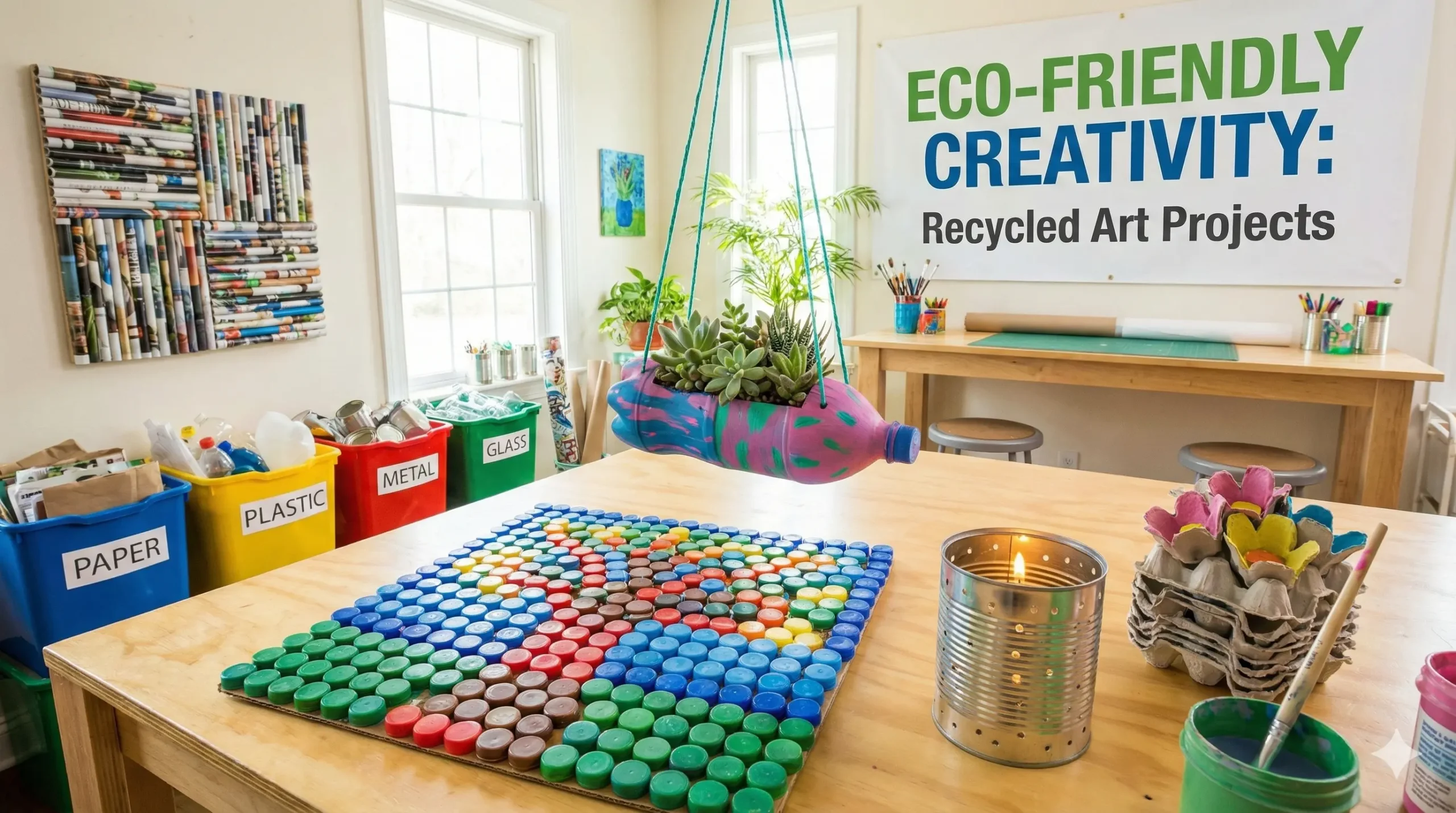
Have you ever noticed that the calendar is packed with special days dedicated to the environment during the spring and summer months? It feels as though nature herself is waking up, and we are reminded to take care of her. Just take a look at this impressive lineup of global observances:
- March 3: World Wildlife Day
- March 18: Global Recycling Day
- March 21: World Forestry Day
- March 22: World Water Day
- March 30: International Day of Zero Waste
- April 22: World Earth Day
- May 22: International Biodiversity Day
- June 5: World Environment Day
It is no coincidence that these dates cluster around the season of renewal. Spring represents hope, growth, and a fresh start. It is the perfect time to embrace the “Three Rs”—Reduce, Reuse, and Recycle.
While recycling your daily waste is essential, why stop there? We believe you can take “Reuse” to a whole new level by turning your “junk” into genuine artistic masterpieces. This concept, often called Upcycled Art, allows you to express creativity while keeping waste out of landfills.
In this guide, we have curated 15 incredible art projects using recycled materials. Gather your old newspapers, plastic bottles, and fabric scraps—we are about to make some eco-friendly magic!
Why Choose Recycled Art?
Before we dive into the projects, let’s understand the value of this practice. Creating art from waste isn’t just a fun afternoon activity; it teaches a valuable lesson about resourcefulness.
- Environmental Impact: It reduces the amount of waste sent to incinerators and landfills.
- Cost-Effective: You don’t need expensive art supplies. The materials are free!
- Creative Challenge: It forces the artist to think outside the box. How can a flat piece of cardboard become a 3D castle?
Part 1: Paper and Cardboard Creations
Paper is one of the easiest materials to recycle, but it’s even better to repurpose it into art.
1. Rolled Magazine Wall Art
Most of us have moved to digital reading, leaving stacks of old magazines gathering dust. Instead of tossing them, turn them into vibrant wall decor.
- ** The Project:** Tear out colorful pages from old magazines. Roll them into tight tubes (using a pencil to help shape them) and glue the ends.
- ** The Art:** Glue these colorful tubes onto a canvas or cardboard backing. You can arrange them horizontally, vertically, or in abstract patterns to create a textured, 3D mosaic.
2. Egg Carton Flower Wreaths
Egg cartons have a unique shape that mimics petals perfectly.
- ** The Project:** Cut out the individual cups from a cardboard egg carton. Snip the edges to shape them into four petals. Paint them in bright spring colors like yellow, pink, and purple.
- ** The Art:** Glue your “flowers” onto a cardboard ring to create a beautiful, everlasting spring wreath for your door.
3. Cardboard Cityscapes
With online shopping on the rise, every home has a surplus of delivery boxes.
- ** The Project:** Flatten the boxes and cut out silhouettes of buildings—skyscrapers, houses, and towers. Paint them black or dark blue.
- ** The Art:** Layer these cutouts against a painted sunset background (perhaps on another piece of cardboard) to create a stunning city skyline silhouette.
4. Newspaper Weaving Baskets
Newspaper is surprisingly strong when folded and woven.
- ** The Project:** Fold newspaper sheets into long, thick strips. Weave them together using a simple over-under pattern to create a base, then fold the strips upward to weave the sides.
- ** The Art:** Once finished, paint the basket with acrylics. It serves as a rustic, functional piece of art for holding keys or fruit.
5. Toilet Roll Wall Mandalas
The humble toilet paper roll is a staple of recycled crafting.
- ** The Project:** Flatten the rolls and cut them into thin rings. These rings naturally form a “petal” or “leaf” shape.
- ** The Art:** Glue the tips of the rings together to form flower shapes. You can expand outward, connecting multiple flower shapes to create a large, intricate lace-like mandala to hang on your wall.
Part 2: Plastic and Glass Transformation
Plastic takes hundreds of years to decompose. Let’s give it a permanent second life as art.
6. Plastic Bottle Hanging Planters
Give your garden a vertical upgrade.
- ** The Project:** Take large plastic soda bottles. Cut a rectangular opening in the side. Paint the exterior with fun designs—polka dots, stripes, or even animal faces (add ears!).
- ** The Art:** Fill with soil and small succulents. Hang them horizontally using twine. It’s a “living art” installation for your balcony.
7. Bottle Cap Mosaic Murals
Plastic bottle caps are colorful and durable, making them perfect for mosaics.
- ** The Project:** Collect caps of various colors. Draw a design on a large piece of plywood—perhaps a fish, a tree, or an abstract swirl.
- ** The Art:** Glue the caps onto the wood to fill in the color, just like pixel art. This is a fantastic group project for schools or families.
8. Bubble Wrap Printmaking
Don’t pop it just yet! Bubble wrap makes for an incredible texture tool.
- ** The Project:** Wrap a piece of bubble wrap around a rolling pin or a block of wood. Dip it into paint.
- ** The Art:** Roll or stamp onto paper to create a “honeycomb” or “reptile skin” background. Use this textured paper to cut out shapes for collages or greeting cards.
9. Glass Jar Luminaries
Save your pasta sauce and pickle jars.
- ** The Project:** Clean the jars thoroughly. Coat the outside with a mixture of glue and tissue paper (decoupage) or simply paint silhouettes on them.
- ** The Art:** Place a tealight candle inside. The light shines through the colored tissue or around the painted silhouettes, creating a magical stained-glass effect.
10. CD Mosaic Frames
Old CDs and DVDs have a holographic surface that reflects light beautifully.
- ** The Project:** Carefully cut old discs into irregular shards (wear safety glasses!).
- ** The Art:** Glue these shiny shards onto an old picture frame or a mirror border. When the light hits it, it creates a dazzling, iridescent spectrum of colors.
Part 3: Fabric and Nature
Textiles and organic waste can be surprisingly artistic.
11. Vegetable Stamping Art
Vegetable scraps are usually destined for the compost bin, but they are nature’s stamps.
- ** The Project:** Cut off the base of a celery bunch (it looks like a rose!). Cut okra (it looks like a flower). Use potato halves carved into shapes.
- ** The Art:** Dip these veggie scraps into paint and stamp them onto paper or fabric. You can create beautiful floral patterns using nothing but “kitchen waste.”
12. Old T-Shirt Macramé
Fast fashion creates a lot of waste. Repurpose those old tees.
- ** The Project:** Cut old t-shirts into continuous strips to create “t-shirt yarn.”
- ** The Art:** Use this soft, stretchy yarn to macramé plant hangers, weave rugs, or create braided wall hangings. The result is a modern, boho-chic art piece.
13. Sunset Cushion Painting
If you have old, faded cushion covers, don’t throw them out—use them as a canvas.
- ** The Project:** Take a plain cotton cushion cover. Using fabric paints, create a gradient sunset. Start with yellow at the bottom, blending into orange, pink, and purple at the top.
- ** The Art:** Once dry, paint black silhouettes of trees or birds in the foreground. You now have functional art for your sofa!
14. Tin Can Lanterns
Metal cans are durable and heat-resistant.
- ** The Project:** Clean a tin can and fill it with water, then freeze it (this prevents the can from denting in the next step). Once frozen, use a hammer and nail to punch holes in the side of the can in a specific pattern—like a star or a moon.
- ** The Art:** Melt the ice, dry the can, and paint it. Place a candle inside. The light will stream through the punched holes, projecting your design onto the walls.
15. Pebble and Stone Art
Okay, stones aren’t “trash,” but using found objects is very eco-friendly.
- ** The Project:** Collect smooth pebbles of different shapes and sizes.
- ** The Art:** Arrange them on a sturdy backing board to create a scene. A large round stone can be a body, a smaller one a head. You can make “stone families,” birds on a branch, or footprints. Glue them down for a rustic, 3D stone picture.
Tips for Successful Recycled Art
- Clean Everything: Before starting, ensure all bottles, cans, and jars are washed and dried. Food residue can lead to mold or smells in your art.
- Safety First: When cutting plastic or metal, edges can be sharp. Use sandpaper to smooth down rough edges, especially if kids are involved.
- Sort Your Stash: Keep a designated box for “potential art supplies.” Sort by material (paper, plastic, metal) so you can easily see what you have to work with.
Conclusion
Art is not defined by the price of the canvas or the brand of the paint. It is defined by the imagination of the artist. By choosing to create art using recycled materials, you are making a statement. You are saying that beauty can be found anywhere, even in things others have discarded.