
One spot where most parents stumble on their parenting journey is getting kids to brush! Whether you are trying to wrangle a squirming toddler to clean their gums or teaching your independent 6-year-old to brush properly by themselves, the struggle is real. Both scenarios are equally challenging and, let’s be honest, can result in quite a few tantrums, tears, and toothpaste-covered bathroom sinks.
However, oral hygiene is a non-negotiable part of health. It must be done. The key to turning this daily battle into a breeze is to make it fun, educational, and interactive. Lectures about cavities might fly over a toddler’s head, but a visual, hands-on activity? That sticks.
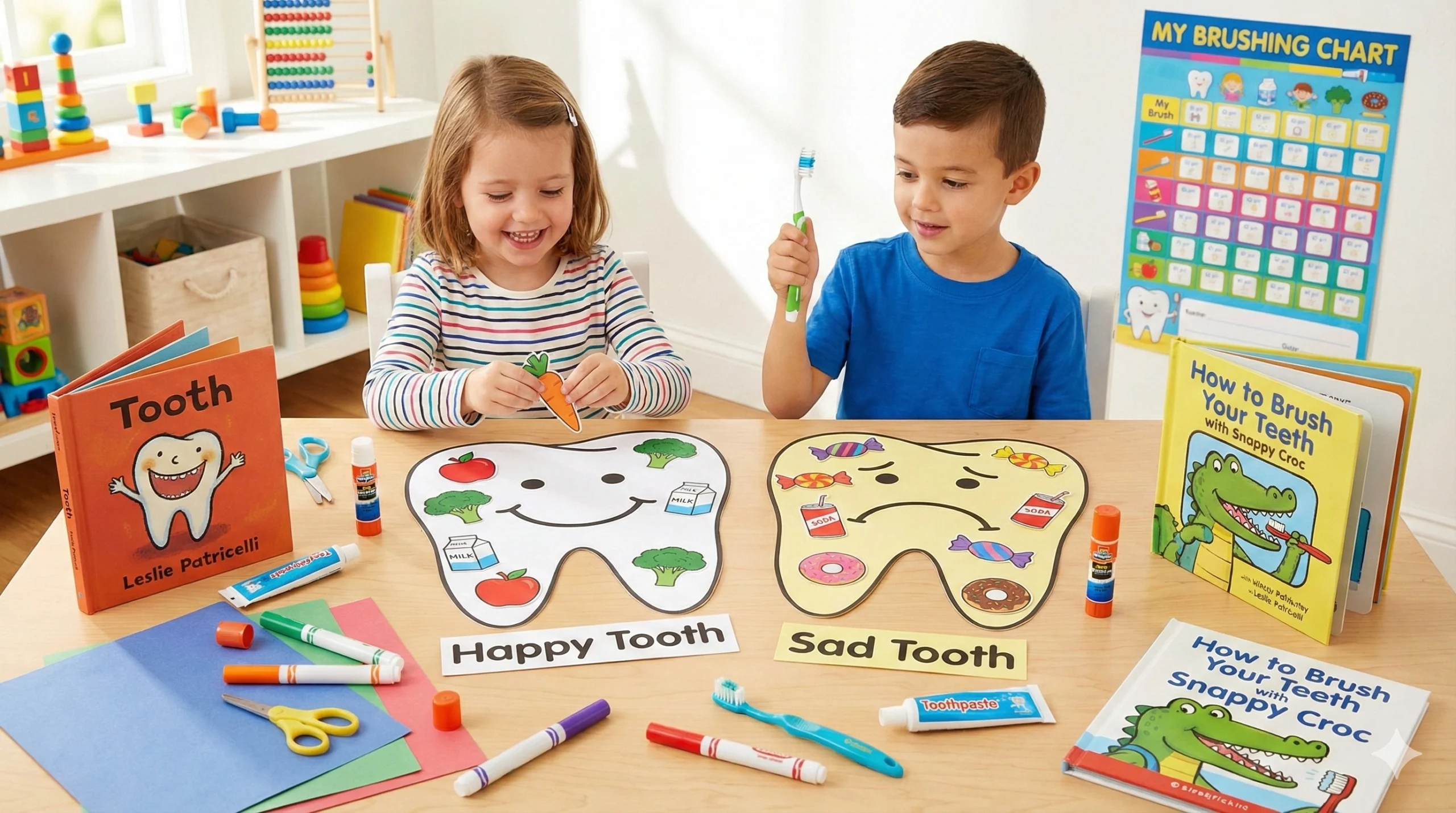
In this guide, we will explore the Happy Tooth Sad Tooth Activity, a fantastic crafting exercise that visually demonstrates the effects of food choices on dental health. We will also dive into supplementary resources like books, videos, and tips to make brushing a joy rather than a chore.
Why Oral Health Education Matters Early
Before we jump into the craft, it is crucial to understand why we are doing this. Establishing good dental habits early does more than just prevent cavities in baby teeth; it sets the foundation for a lifetime of healthy smiles.
According to pediatric dentists, tooth decay is one of the most common chronic diseases in children. It can lead to pain, difficulty eating, and even problems with speech development. By introducing concepts like “sugar bugs” (bacteria) and “happy teeth” (healthy teeth) early on, you empower your child to take ownership of their body.
The Happy Tooth Sad Tooth Activity
They say the best way to learn is by doing! This activity is simple, requires minimal supplies, and sends a powerful message about nutrition and dental care.
What You Will Need
To get started, gather the following household supplies:
- Cardstock or Construction Paper: White (for the teeth), Pink (for the gums/background), and various colors for the food.
- Scissors: Child-safe scissors if your little one is helping to cut.
- Glue Stick: Less messy than liquid glue.
- Markers or Crayons: To draw faces on the teeth.
- Old Magazines or Grocery Flyers: This is for finding pictures of food (optional, but fun!).
- Two Large Craft Sticks (Popsicle Sticks): To turn the teeth into puppets (optional).
Step-by-Step Instructions
Step 1: Create the Teeth Draw two large tooth shapes on your white cardstock. They should look like molars—bumpy on top and with roots at the bottom. Cut them out.
Step 2: Give Them Personality Here is where the lesson begins.
- The Happy Tooth: On the first tooth, draw a big, bright smile and wide, happy eyes. This tooth represents a healthy mouth that is brushed regularly and fed nutritious food.
- The Sad Tooth: On the second tooth, draw a frowning mouth, maybe a teardrop, and perhaps some “cracks” or gray spots to represent decay. This tooth represents a mouth that eats too much sugar and forgets to brush.
Step 3: Sort the Food This is the interactive part. You can either draw food items on small pieces of paper or cut them out of old grocery store flyers.
- Healthy Foods: Apples, carrots, broccoli, milk, cheese, water, strawberries.
- “Sometimes” Foods (Sugary/Acidic): Candy, soda, chocolate, donuts, lollipops, cookies.
Step 4: The Sorting Game Sit down with your child and mix up all the food cutouts. Ask them to pick one up and decide: “Does this food make the tooth happy or sad?”
- If they pick an apple, they glue it onto the Happy Tooth. Explain that crunchy fruits and veggies act like natural scrubbers for teeth.
- If they pick a lollipop, they glue it onto the Sad Tooth. Explain that sugar sticks to teeth and invites “sugar bugs” to make holes (cavities).
Step 5: Display Your Art Once the teeth are covered in their respective foods, hang them on the bathroom mirror or the refrigerator. It serves as a daily reminder!
Expanding the Lesson: Fun Books about Oral Health
Along with the craft, incorporating storytelling is a fantastic way to reinforce the message. Children relate to characters, and seeing a crocodile or a bear brush their teeth normalizes the behavior. Here are some highly recommended titles:
- “Tooth” by Leslie Patricelli: Known for her bold, colorful board books, Patricelli captures the toddler experience perfectly. This book is great for the very young, focusing on the basics of having teeth.
- “How to Brush Your Teeth with Snappy Croc” by Jane Clarke: This interactive book allows kids to “help” Snappy Croc brush. It turns the routine into a game.
- “Brush, Brush, Brush!” by Alicia Padron: Using rhyme and rhythm, this book makes the physical act of brushing feel like a dance.
- “Sugarbug Doug: All About Cavities, Plaque, and Teeth” by Dr. Ben Magleby: Written by a dentist, this book personifies the bacteria (Sugarbug Doug) in a way that is educational without being too scary. It explains why sugar is bad in a way kids understand.
- “Melvin the Magnificent Molar” by Julia Cook: This book dives a bit deeper, explaining what teeth do and why they are important for smiling, chewing, and talking.
- “The Tooth Book: A Guide to Healthy Teeth and Gums” by Edward Miller: This is a comprehensive guide that covers everything from losing baby teeth to visiting the dentist.
5 Creative Techniques to Make Brushing Fun
If the craft and books aren’t enough to quell the bathroom rebellion, try adding these techniques to your arsenal:
1. The “Teddy Bear” Method
Toddlers love to mimic. Bring a favorite stuffed animal or doll into the bathroom. Pretend to brush the toy’s teeth first, explaining, “Look, Teddy is brushing the sugar bugs away so his teeth stay strong!” Then, ask your child to show Teddy how they do it.
2. The DJ Toothbrush
Two minutes can feel like an eternity to a child. Use music to keep time. There are many “brushing songs” available online, or you can simply play their favorite upbeat track. When the music stops, brushing is done!
3. Let Them Lead (Within Reason)
Independence is a big driver for kids. Let them pick out their own toothbrush (maybe one with a favorite superhero or glitter) and their own toothpaste flavor. While you should always do a final “check-up” brush to ensure cleanliness, letting them start the process gives them a sense of control.
4. Educational Videos
Screen time can be used for good! There are countless videos on kid-friendly platforms that explain the mechanics of brushing. Seeing a cartoon character deal with plaque or visit the dentist can demystify the process and reduce anxiety.
5. The Reward Chart
Create a simple sticker chart. Every morning and night they brush without a fuss, they get a sticker. After a certain number of stickers (e.g., filling a week), offer a small non-food reward, like a trip to the park, a new book, or extra playtime.
The Science of Snacking: What Parents Need to Know
The Happy Tooth Sad Tooth Activity touches on diet, but it is worth expanding on for parents. It isn’t just about avoiding candy.
- Frequency Matters: It is actually better for teeth to eat a sugary treat all at once rather than snacking on it throughout the day. Constant snacking keeps the pH level in the mouth acidic, which erodes enamel.
- Sticky is Tricky: Dried fruits (like raisins or fruit leathers) are often marketed as healthy, but they are sticky and high in sugar. They cling to teeth just like gummy bears do.
- Water is King: Encouraging your child to drink water after meals helps rinse away food particles and neutralize acids, especially if they can’t brush immediately.
Conclusion
Teaching oral hygiene doesn’t have to be a battle of wills. By integrating the Happy Tooth Sad Tooth Activity into your routine, you transform a chore into a game of discovery. You are not just teaching them to brush; you are teaching them biology, nutrition, and self-care.
So, grab your scissors and glue, pick up a few of those colorful books, and get ready to turn those dental frowns upside down. With consistency, creativity, and a little bit of fun, your child will be proud to show off their “Happy Teeth” for years to come.