
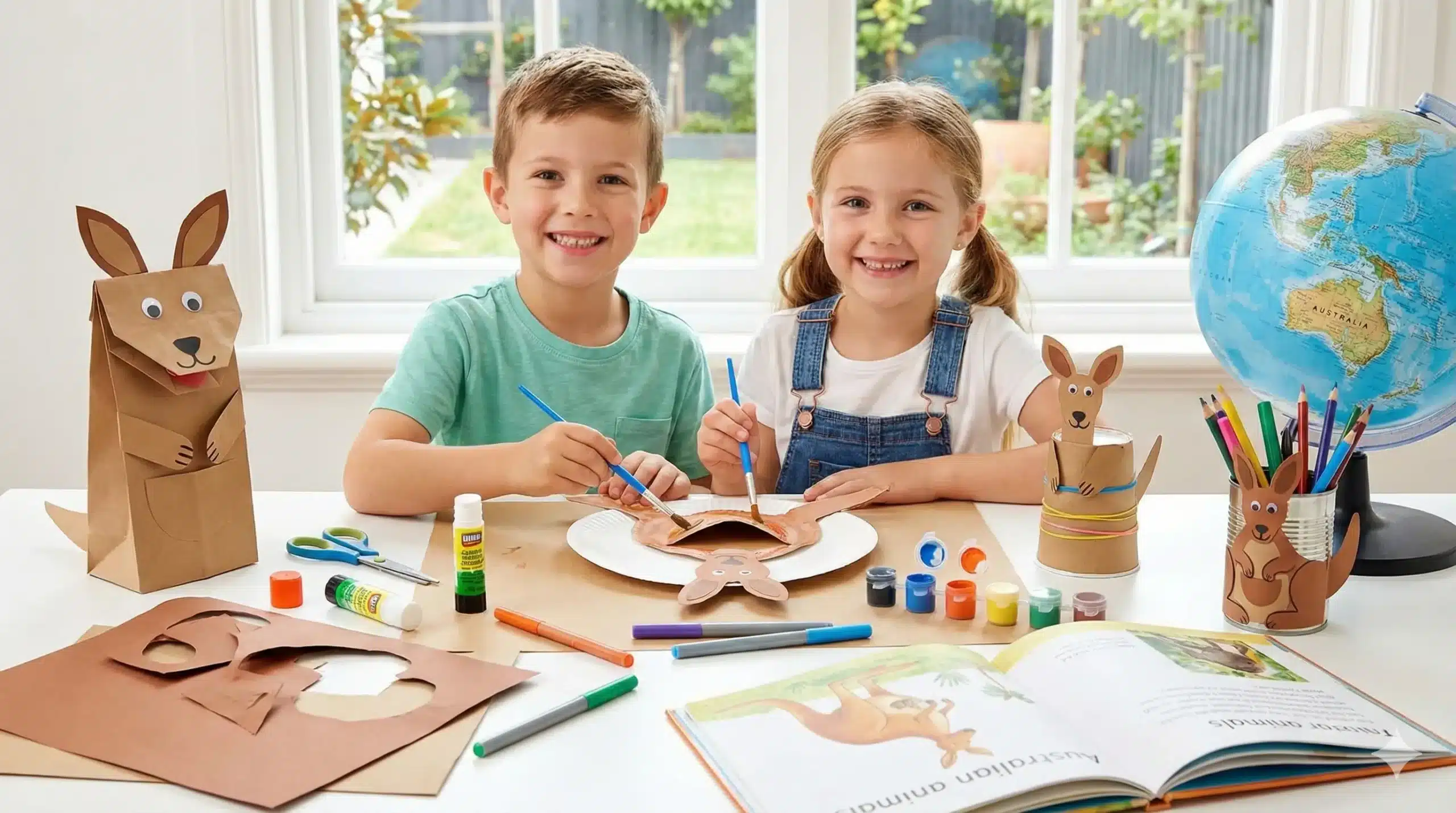
If the animal kingdom had its own Olympics, kangaroos would undoubtedly take home the gold medal for boxing—and the high jump! With their powerful legs, iconic pouches, and energetic personalities, kangaroos are one of the most fascinating creatures on Earth. Whether you are celebrating Australia Day, World Kangaroo Day (October 24th), or simply learning about marsupials in the classroom, there is no better way to engage children than with hands-on creativity.
Crafting is not just about glue and glitter; it is a powerful tool for developing fine motor skills, patience, and imagination. In this guide, we have curated 10 knockout kangaroo crafts for kids. These projects range from simple cut-and-paste activities for preschoolers to dynamic “jumping” toys for older children.
Let’s hop right into the world of these amazing marsupials!
Fun Facts: Did You Know?
Before you start gathering your supplies, share these fun facts with your kids to make the crafting experience even more educational.
- They are Marsupials: Kangaroos belong to a family of animals called marsupials. This means they carry their babies (called joeys) in a special pouch on their bodies.
- The “Mob” Life: Kangaroos are very social animals. They live in groups called a “mob,” a “troop,” or a “court.”
- Built to Box: Male kangaroos often “box” using their front paws and massive hind legs to show who is the strongest. They use their thick tail as a third leg to balance while kicking!
- Left-Handed Legends: Scientists have discovered that most kangaroos are actually left-handed! They use their left paw for grooming and eating more often than their right.
- They Can’t Walk Backwards: Due to their large feet and heavy tail, kangaroos can only move forward. This unique trait is why they appear on the Australian Coat of Arms—symbolizing a nation that is always moving forward.
1. The Classic Paper Bag Kangaroo Puppet
This is a timeless craft that doubles as a toy. It’s perfect for storytelling or putting on a puppet show about the Australian Outback.
What You Need:
- Brown paper lunch bag.
- Brown and pink construction paper.
- Scissors and glue stick.
- Black marker.
How to Make It:
- Create the Head: Use the bottom flap of the folded paper bag as the face. Cut out two long, oval-shaped ears from brown paper and smaller pink ovals for the inner ears. Glue them to the top of the flap.
- The Pouch: Cut a semi-circle from a lighter shade of brown paper and glue it to the lower part of the bag (the body).
- The Joey: Cut a tiny kangaroo head out of brown paper. Glue it peeking out of the top of the pouch you just created.
- Final Touches: Draw eyes, a nose, and whiskers on the face flap. Now, slide your hand inside, and you have a talking kangaroo mom!
2. Paper Plate Mama & Joey
This craft uses the texture of paper plates to create a sturdy 3D pouch that kids can actually use to store small items.
What You Need:
- Two paper plates.
- Brown paint.
- Stapler.
- Googly eyes.
How to Make It:
- Prepare the Plates: Cut one paper plate in half. Leave the second plate whole.
- Paint: Paint the back of the whole plate and the back of the half-plate brown. Let them dry completely.
- Assemble the Body: Place the half-plate on top of the whole plate, matching the rounded bottom edges. Staple around the rim to create a “pocket” or pouch.
- Add Details: Cut a head, tail, and legs from cardstock and glue them to the main plate.
- Interactive Play: Make a small paper baby kangaroo (joey) separate from the main craft. Your child can now practice putting the joey in and taking it out of the safety of the mother’s pouch.
3. Jumping Cup Kangaroo
One of the coolest features of a kangaroo is its hop. This STEM-inspired craft actually jumps!
What You Need:
- Two paper cups.
- Two rubber bands.
- Brown cardstock.
- Scissors and glue.
How to Make It:
- The Base: Take one paper cup and decorate it to look like a kangaroo body (add paper arms and a face).
- The Mechanism: Cut four small slits in the rim of the cup—two on opposite sides.
- String it Up: Cut the rubber bands to open them. Stretch them across the opening of the cup in an “X” shape, sliding the ends into the slits and knotting them so they stay tight.
- The Launch: Take the second paper cup and place it upside down on the table. Place your kangaroo cup over it. Push down and let go—the rubber bands will cause the top cup to launch into the air!
4. Cardboard Roll 3D Kangaroo
Don’t throw away those empty toilet paper rolls! Upcycle them into a standing kangaroo figure.
What You Need:
- Empty toilet paper roll.
- Brown paint or brown construction paper.
- Black Sharpie.
How to Make It:
- Cover the Roll: Paint the cardboard tube brown or wrap it in brown paper.
- The Limbs: Cut out two “L” shaped legs for the large hind feet and glue them to the bottom so the kangaroo stands up.
- The Tail: Cut a long strip of cardboard for the tail. Glue it to the back to act as a “kickstand” to help the tube balance.
- The Pouch: Draw a semi-circle on the tummy or glue a small piece of paper there. This is a great desk buddy for kids.
5. Kangaroo Pouch Pencil Holder
Combine crafting with organization. This project creates a functional item for your child’s study desk.
What You Need:
- A clean tin can (make sure edges are smooth) or a plastic cup.
- Brown felt or foam sheets.
- Strong craft glue (Tacky glue).
How to Make It:
- Wrap the Can: Cut a piece of brown felt to wrap around the entire can/cup and glue it in place.
- Make the Pouch: Cut a smaller semi-circle of felt. Glue the curved edge onto the front of the can, leaving the top edge open. This forms a small pocket for erasers or paper clips.
- Features: Glue on ears sticking up from the top rim and add a cute button nose. The main part of the can holds pencils, while the “pouch” holds the tiny treasures.
6. Sunset Silhouette Art
This is an art project rather than a construction craft, perfect for older kids who want to experiment with painting techniques.
What You Need:
- White watercolor paper.
- Watercolor paints (red, orange, yellow).
- Black construction paper.
How to Make It:
- The Background: Have your child paint the white paper with horizontal stripes of red, orange, and yellow, blending them where they meet to create an “Outback Sunset.” Let it dry.
- The Silhouette: While the paint dries, trace a kangaroo outline onto black paper. (You can find free templates online or draw a simple shape: big tail, small head, big feet).
- Contrast: Cut out the black kangaroo and glue it onto the colorful sunset background. The stark contrast makes for a beautiful piece of wall art.
7. DIY Kangaroo Mask
Let the kids become the kangaroo with this fun role-play mask.
What You Need:
- Paper plate or stiff cardstock.
- Popsicle stick or elastic string.
- Crayons.
How to Make It:
- Shape the Face: If using a plate, cut out eye holes. If using cardstock, cut a large kangaroo head shape.
- Decorate: Color the mask brown/orange. Add whiskers and a black nose.
- Handle or Strap: Glue a popsicle stick to the bottom to hold it like a masquerade mask, or punch holes in the sides and tie an elastic string to wear it hands-free. Now, start hopping!
8. Simple Origami Kangaroo
For children who love puzzles and folding, this simple origami project is excellent for cognitive development.
What You Need:
- Square origami paper (brown on one side, white on the other).
- Black marker.
How to Make It: Note: Origami is best taught visually, but here is the basic concept.
- Start with a “kite base” fold.
- Fold the bottom point up to create the body.
- Fold the top point down to create the head.
- Pull the nose out slightly (a reverse fold) to give it a snout.
- Draw two little eyes. This creates a simple, abstract kangaroo that can sit on a flat surface.
9. Kangaroo Headband
Similar to the mask, but less restrictive. This is great for birthday parties or classroom activities where you want to take a group photo.
What You Need:
- Long strip of brown construction paper (to fit around the head).
- Stapler or tape.
- Brown and pink paper for ears.
How to Make It:
- The Band: Measure the strip of paper around the child’s head and staple it to form a crown/loop.
- The Ears: Cut two large, tall kangaroo ears. They should be significantly longer than cat or dog ears.
- Attach: Staple or glue the ears to the front of the headband.
- Wear: When the kids wear them, encourage them to communicate like kangaroos—by stomping their feet (gently!) and clicking.
10. “Tracking the Mob” Footprint Art
This is a sensory craft that focuses on the unique footprints kangaroos leave behind.
What You Need:
- White paper.
- Black washable paint.
- A potato (cut in half) or a sponge.
How to Make It:
- The Stamp: Carve a potato or cut a sponge into a long, thin oval shape (representing the kangaroo’s long foot). Carve/cut a smaller circle for the toe.
- The Track: Dip the stamp in black paint and press it onto the paper. Kangaroo tracks are unique because the long foot and the tail often leave marks.
- The Scene: Use the stamps to create a “path” across the paper, showing where the kangaroo hopped. You can even add a drag line for the tail!
Conclusion
Exploring the world of Australian wildlife through art is a fantastic way to bond with your children. These 10 knockout kangaroo crafts offer a variety of ways to play, from the engineering challenge of the jumping cup to the artistic expression of the sunset silhouette.
Next time you are stuck inside on a rainy day, or if you are preparing for a geography lesson about Australia, grab your scissors and glue. You might just find that creating your own “mob” of kangaroos is the most fun you’ve had all year!
Frequently Asked Questions (FAQ)
Q: What is the best age for these kangaroo crafts? A: These crafts are designed for a wide age range. The Paper Bag Puppet and Footprint Art are perfect for toddlers and preschoolers (ages 3-5). The Jumping Cup and Origami crafts are better suited for elementary-aged children (ages 6-10) who have better fine motor control.