
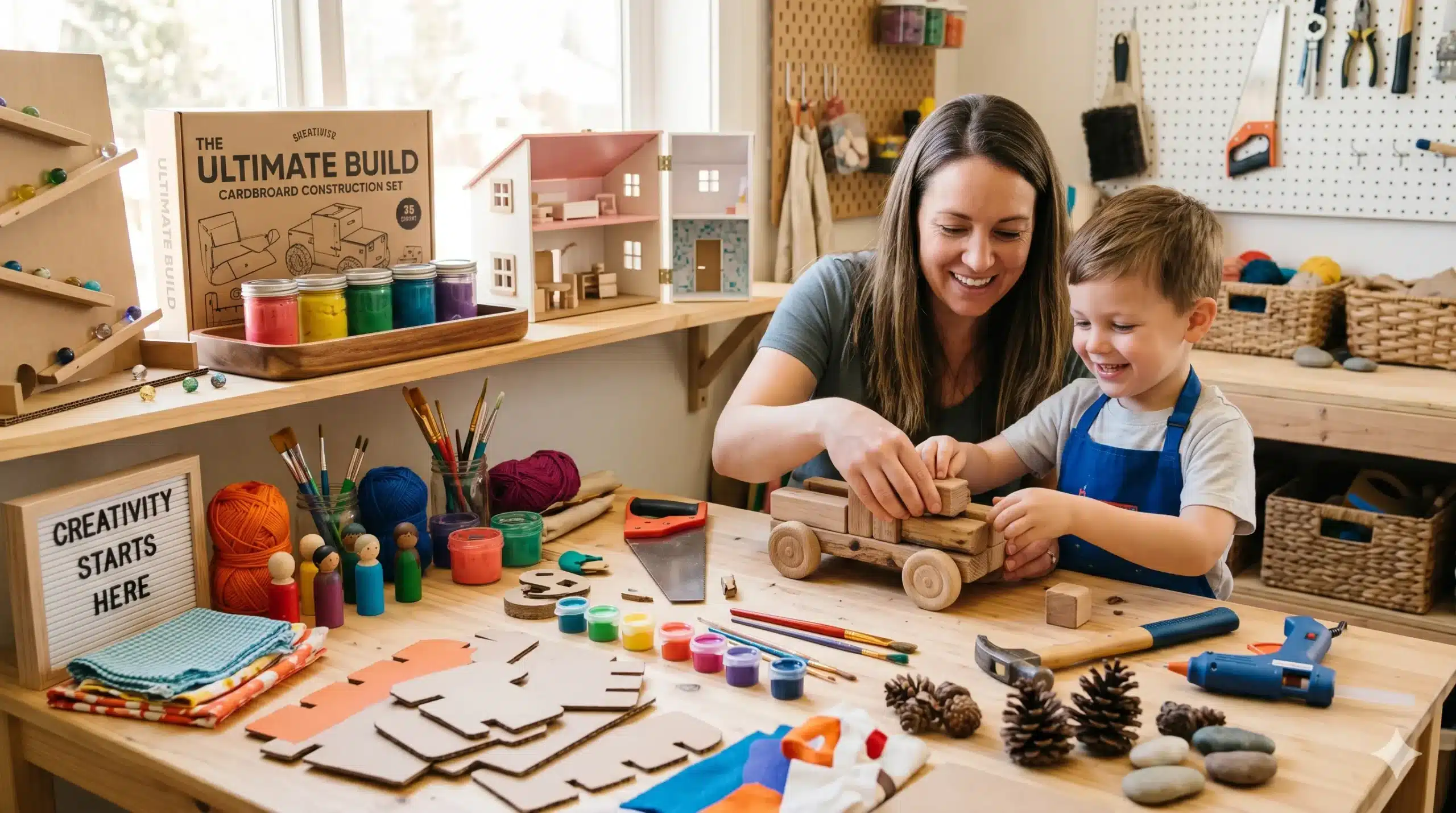
In an era dominated by glowing screens and plastic toys that perform only one function, there is a quiet, powerful revolution happening on kitchen tables and workshop floors. DIY playthings are more than just a budget-friendly alternative to store-bought items; they are cognitive catalysts. When a child plays with something they helped build—or something born from raw materials—the play is deeper, the ownership is stronger, and the imagination is unconstrained.
This guide explores how to craft high-quality, durable, and deeply engaging “playing things” that bridge the gap between simple crafts and heirloom toys.
The Philosophy of “Open-Ended” DIY
Before gathering materials, it is essential to understand the “Loose Parts” theory. High-quality DIY toys shouldn’t just mimic a specific brand-name gadget; they should provide a platform for multiple types of play. A cardboard box that is painted to look exactly like a specific red car is a car today, but a cardboard box left as a “vessel” can be a boat, a spaceship, or a dragon’s den tomorrow.
Why DIY Matters:
- Sustainability: Reducing plastic waste by repurposing wood, fabric, and cardboard.
- Skill Acquisition: Children observe (and eventually practice) measuring, cutting, and joining.
- Emotional Investment: Objects created with a caregiver carry a higher “play value” and are treated with more care.
1. The “Ultimate Build” Cardboard Construction Set
Cardboard is the “designer’s gold” of the DIY world. However, the difference between a flimsy box and a high-quality play system lies in the connectors.
The Project: Engineering Strips and Slots
Instead of building one static house, create a modular construction kit.
- Materials: Heavy-duty double-walled corrugated cardboard, a utility knife (adult use), and a circle punch.
- The Method: Cut the cardboard into uniform shapes: long strips (3×12 inches), large triangles, and circles.
- The Secret Sauce: Cut 1-inch deep notches (the width of the cardboard) every few inches along the edges of every piece.
- The Result: These pieces can be slotted together to build geodesic domes, towers, or abstract sculptures. By adding a coat of primary-colored tempera paint, you transform “trash” into a professional-grade engineering kit that rivals expensive magnetic tiles.
2. Sensory Mastery: The “Forever” Playdough and Sculpting Station
Most store-bought dough dries out within days. A high-quality DIY version uses kitchen chemistry to create a texture that is supple, non-toxic, and long-lasting.
The Recipe for Professional Grade Dough
To achieve the perfect elasticity, we use a classic cooked stovetop method involving Cream of Tartar, which acts as a preservative and texture agent.
Pro Tip: For a “high-end” sensory experience, skip the artificial scents. Use essential oils like lavender for calming play or peppermint for focus.
| Ingredient | Quantity | Purpose |
| All-purpose flour | 2 Cups | The base |
| Salt | 1/2 Cup | Preservation & Texture |
| Cream of Tartar | 2 Tablespoons | Elasticity |
| Vegetable Oil | 2 Tablespoons | Moisture |
| Boiling Water | 1.5 Cups | Activation |
The Setup: Don’t just give them the dough. Build a “Sculpting Station” using a wooden tray, a small rolling pin, and “nature finds” like pinecones, dried pasta, and smooth river stones. This moves the activity from “messy play” to “artistic expression.”
3. The Miniature World: The Fold-Away Dollhouse or Garage
Many parents avoid large play structures because of the footprint. The solution is a trifold play board made from repurposed wooden binders or heavy foam core.
Architecture in Miniature
- The Base: Use three panels joined by duct tape or small brass hinges so they can fold flat.
- The Interior: Instead of gluing furniture down, use contact paper or fabric scraps to create “zones” (a grassy area, a tiled floor, a rug).
- The “Actors”: Create “Peg People” using wooden clothespins or turn-of-the-century style wooden pegs. Paint them with simple faces and felt capes.
By keeping the scale small, children develop fine motor precision and can take their “world” with them on car rides or to a grandparent’s house.
4. Scientific Play: The DIY “Light Table”
Light tables are staples in Reggio Emilia-inspired classrooms, often costing hundreds of dollars. You can create a high-quality version for under $20 that introduces children to the physics of light and transparency.
The Build
- The Container: Use a shallow, clear plastic storage bin with a frosted lid.
- The Light: Battery-operated LED puck lights or a string of cool-burning LED Christmas lights.
- The Diffusion: If the lid isn’t frosted, line the inside with white tissue paper or parchment paper.
How to Play: Provide translucent items like colorful plastic cups, “gem” stones from the floral aisle, and x-rays (if available). This setup encourages the study of color mixing (e.g., placing a blue transparency over a yellow one) and geometric patterns.
5. Kinetic Fun: The Gravity Wall
For children who love movement and “how things work,” a Gravity Wall is the pinnacle of DIY engineering. This project turns a vertical surface (like a fence or a playroom wall) into a physics laboratory.
Components:
- The Track: PVC pipe halves, pool noodles cut lengthwise, or cardboard mailing tubes.
- The Connectors: Velcro strips or magnets (if building on a refrigerator).
- The Projectile: Ping pong balls or marbles.
The Challenge: Ask the child to create a path that takes the longest amount of time for the ball to reach the bottom. This introduces the concept of potential and kinetic energy without a single textbook in sight.
Safety and Longevity: The DIY Standards
When making your own toys, “high quality” also means “high safety.” Always follow these three rules:
- The Choke Tube Test: If a DIY component fits through a toilet paper roll, it is a choking hazard for children under three.
- Sanding is Mandatory: If working with wood, sand until it feels like silk. Use food-grade mineral oil to seal the wood rather than harsh varnishes.
- Adhesive Integrity: Hot glue is great for prototypes, but for “playable” things, use wood glue or heavy-duty construction adhesives to ensure parts don’t snap off during vigorous play.
Conclusion: The Gift of Agency
The most valuable thing a child receives from a DIY toy isn’t the object itself—it’s the realization that the world is malleable. When a child sees a parent turn a cereal box into a castle or a handful of flour into sculpting clay, they learn that they are not just consumers of entertainment, but creators of it.