
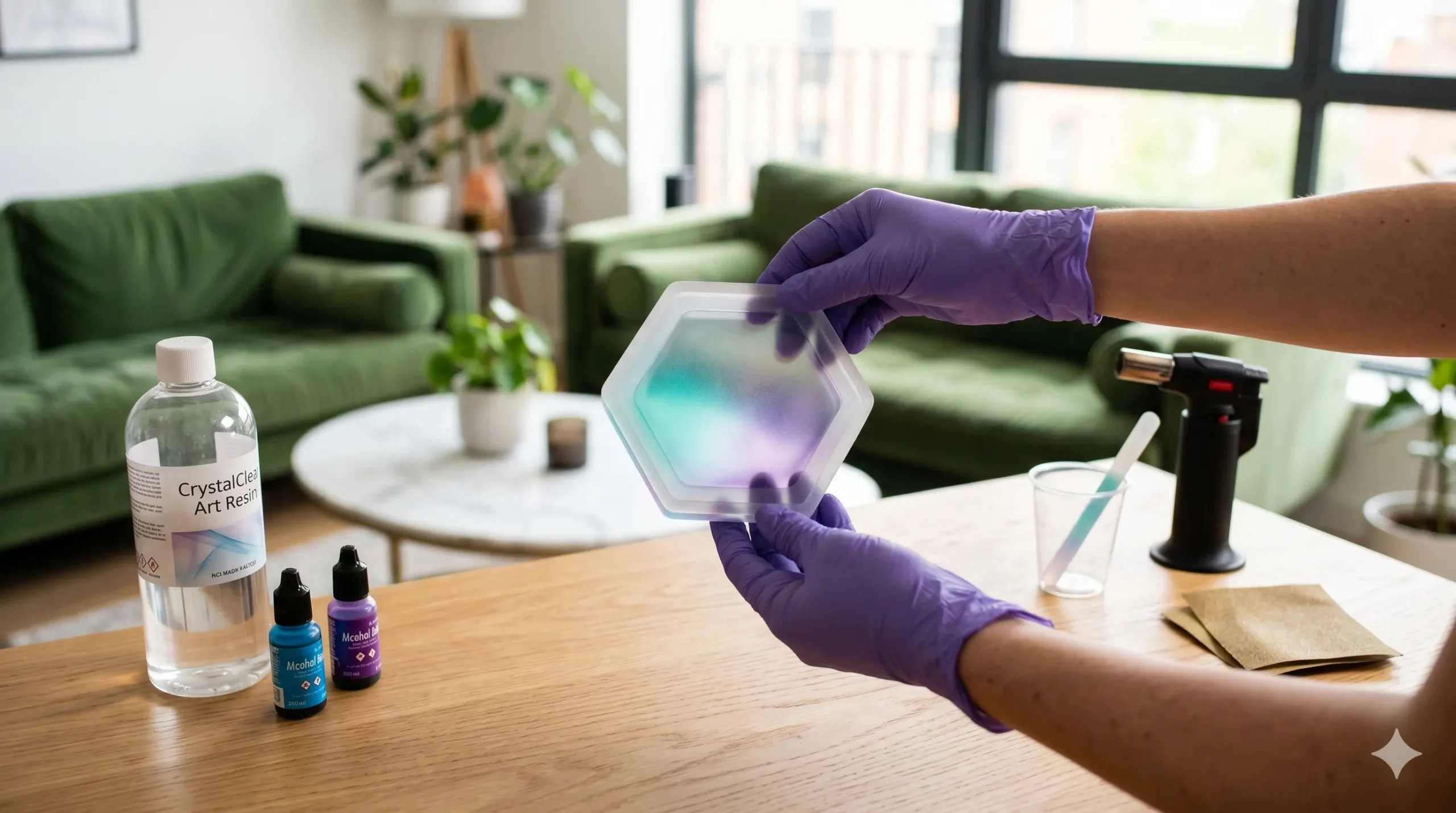
The “Glassmorphism” aesthetic—characterized by semi-transparency, frosted looks, and vivid colors—has moved from digital UI screens into high-end home decor. In 2026, the demand for minimalist, tech-inspired interior accents is at an all-time high in Tier 1 markets like the USA and UK. These resin coasters offer a premium look that mimics high-end boutique glasswork while remaining an approachable project for home crafters.
The Glassmorphism Aesthetic in Home Decor
Glassmorphism relies on a few key visual pillars: transparency, multi-layered spacing, and frosted glass effects. When applied to resin crafting, this creates a 3D depth that standard opaque coasters lack. By using professional-grade epoxy and specific pigment techniques, you can create functional art pieces that serve as perfect conversation starters for modern coffee tables.
Materials Needed for Professional Results
To achieve a high-fidelity finish that justifies a premium price point (if you intend to sell), quality materials are essential:
- High-Gloss Casting Resin: Use a 1:1 or 2:1 ratio epoxy specifically designed for jewelry or coasters to ensure UV resistance and clarity.
- Silicone Coaster Molds: Hexagonal or round deep-dish molds work best for the layered effect.
- Alcohol Inks & Resin Pigment Paste: Specifically, white “sinker” ink and translucent blues, pinks, or teals.
- Frosted Effect Spray or Fine Grit Sandpaper: To achieve that signature “blurred” background.
- Heat Gun or Butane Torch: Essential for removing micro-bubbles.
- Safety Gear: Nitrile gloves, a respirator mask, and a well-ventilated workspace.
Step-by-Step Instructions
1. Preparing the First “Frosting” Layer
The secret to the glassmorphism look is the base layer. Mix a small amount of resin and add a single drop of translucent white pigment. You want it to look like mist, not milk. Pour a very thin layer (about 2mm) into your mold. Use your heat gun to pop bubbles instantly. Let this cure for 4–6 hours until it is tacky but not liquid.
2. Creating the Vivid Color Pop
Once the base is set, mix a fresh batch of clear resin. In the center of the mold, add 1–2 drops of high-saturation alcohol ink (cyan or magenta are trending in 2026). Do not stir completely; let the ink “bloom” naturally. This creates the “floating” color effect seen in modern software interfaces.
3. The Depth Layer
Pour a final thick layer of crystal-clear resin over the color pop. This provides the physical depth that allows light to refract through the coaster. If you want a more “organic” tech look, you can drop a few flakes of silver leaf or iridescent glitter into this layer, but keep it minimal to maintain the sleek aesthetic.
4. The Sanding Secret (The “Frosted” Finish)
After the resin has fully cured (usually 24–48 hours), de-mold the coasters. For a true glassmorphism effect, take 2000-grit sandpaper and lightly sand the bottom surface of the coaster. This diffuses the light coming through, making the colors appear as though they are glowing behind frosted glass.
Professional Tips for AdSense-Quality Content
If you are publishing this to rank, remember that Google’s 2026 algorithm prioritizes Evidence of Experience.
- Document Your Failures: Mention that bubbles are the biggest enemy of this craft. Advise readers that “over-mixing” resin introduces oxygen, which can ruin the glass-like transparency.
- The “Cure” Environment: Note that temperature matters. Resin cures best at 22°C–25°C (72°F–77°F). If the room is too cold, the “frosted” look may turn cloudy or sticky.
- Sustainability Note: In Tier 1 countries, eco-consciousness is a major search driver. Mention that you should use “VOC-free” resin and reusable silicone mixing cups rather than disposable plastic ones to appeal to the “Green Crafter” demographic.
Safety and Best Practices
Working with epoxy resin requires respect for the chemicals involved. Always wear a respirator when working with large volumes, and never pour leftover resin down the drain. For AdSense compliance, ensure your article includes a safety disclaimer, as “How-To” content involving chemicals is scrutinized for user safety.
Conclusion
Glassmorphism resin coasters are more than just functional items; they are a bridge between digital trends and physical craftsmanship. By mastering the art of the “translucent layer,” you can create a product line or home decor set that looks significantly more expensive than it is to produce.