
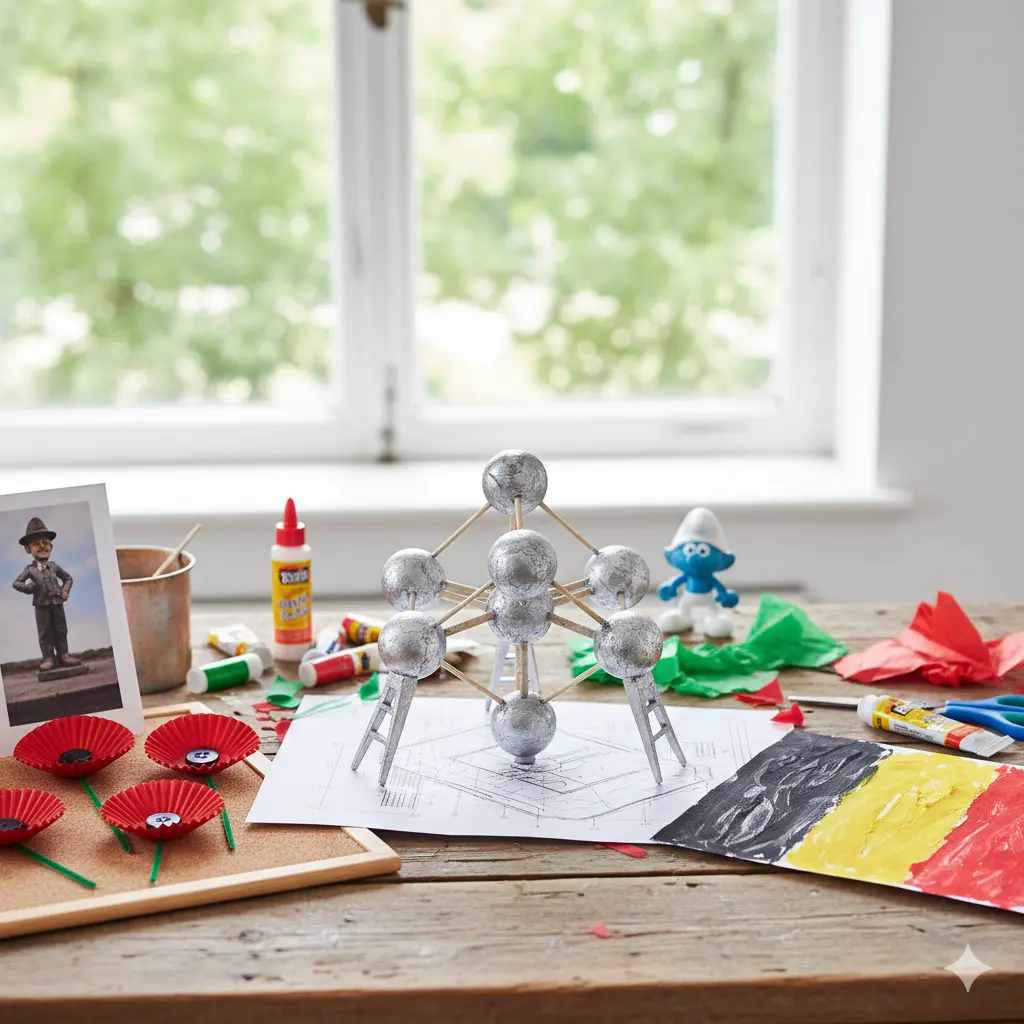
1. The Atomium Q-Tip Model
The Atomium is one of Brussels’ most famous landmarks, shaped like a unit cell of an iron crystal.
- The Craft: Use silver-painted Styrofoam balls and wooden skewers (or Q-tips for a mini version) to recreate the 9-sphere structure.
- Educational Tip: It’s a great way to combine art with a basic chemistry lesson about molecules!
2. “In Flanders Fields” Poppy Art
The red poppy is a powerful symbol of hope and resilience in Belgium.
- The Craft: Use red cupcake liners or tissue paper to create 3D poppies. Layer them, add a black button or pom-pom to the center, and attach a green pipe cleaner stem.
- The Lesson: This is a beautiful way to introduce the history of World War I and the poem by John McCrae.
3. Waffle Print Painting
Belgium is world-famous for its waffles. Instead of eating them (though you should definitely do that too!), use them as a tool!
- The Craft: Take a toy waffle or even a real, slightly stale one, dip it in brown or golden-yellow paint, and stamp it onto paper to create textured patterns.
- The Twist: Turn the “waffle prints” into a Belgian flag by painting three columns: Black, Yellow, and Red.
🇧🇪 A Quick Culture Guide
While the kids are crafting, you can share these fun conversation starters:
- The Chocolate King: Belgium produces enough chocolate to fill 40 Olympic-sized swimming pools every year.
- The Smurfs: Did you know the Smurfs were created by a Belgian cartoonist named Peyo in 1958? You could even add a “Smurf Village” craft to your lesson plan!
- Manneken Pis: The famous “Peeing Boy” statue has over 1,000 different outfits that he wears for special occasions throughout the year.