
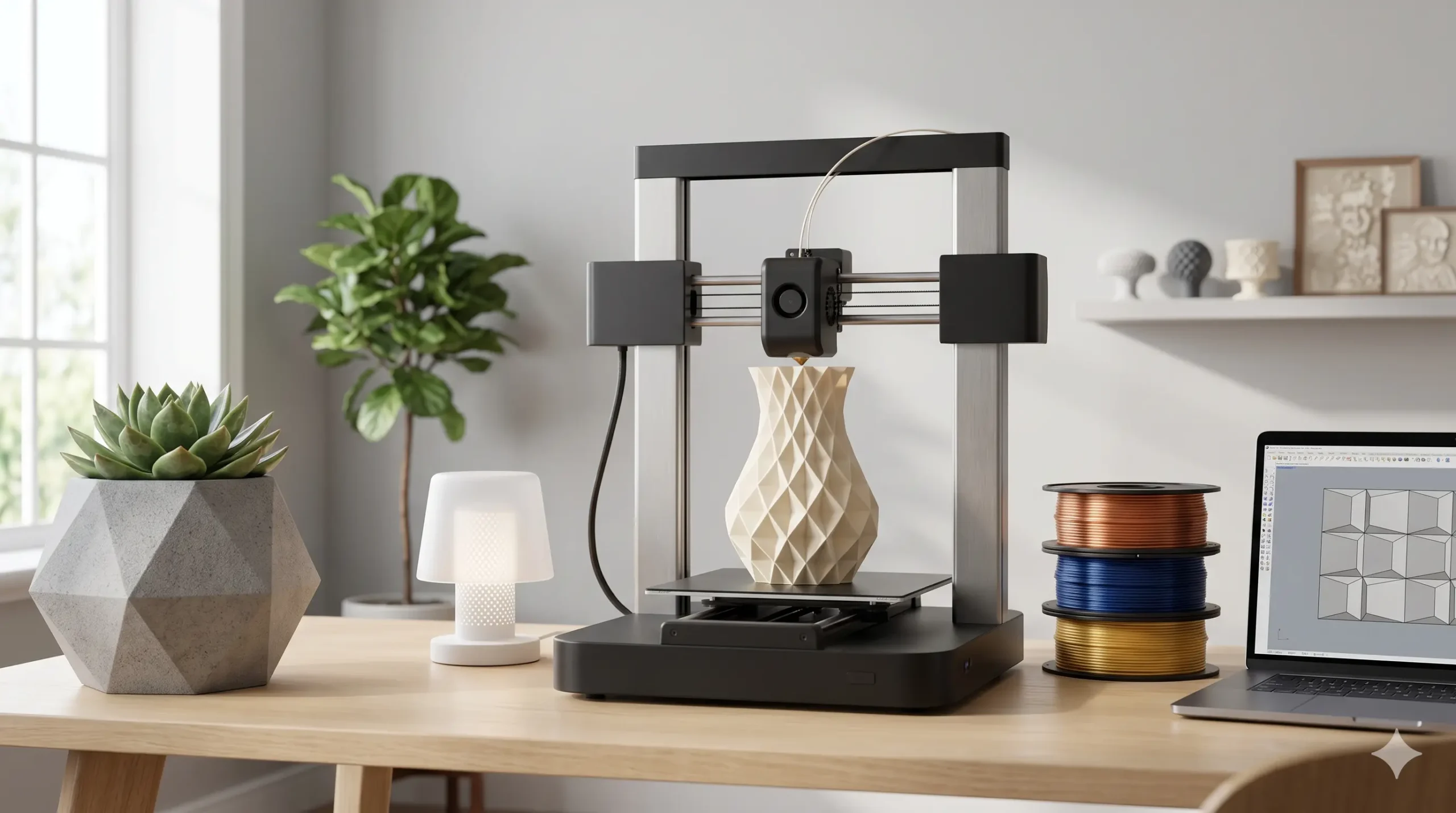
As we move deeper into 2026, the boundary between “technology” and “craftsmanship” has almost entirely disappeared. In Tier 1 markets like the USA, UK, and Australia, 3D printing is no longer just for engineers or hobbyist “makers” in garages. It has evolved into a sophisticated tool for interior design, allowing homeowners to create bespoke, high-fidelity decor that rivals premium boutique brands.
If you are looking to monetize your website through tech-focused AdSense categories or high-ticket affiliate programs for 3D printers and filaments, this guide explores how to master 3D printed home decor.
Why 3D Printing is the “Gold Mine” of Crafting in 2026
The shift toward Hyper-Personalization is the driving force behind the 3D printing boom. Consumers are moving away from mass-produced furniture in favor of “statement pieces” that reflect their specific aesthetic—whether that’s minimalist Scandi-style or the vibrant “maximalism” currently trending in London and New York.
For digital publishers, this niche is particularly lucrative. Keywords like “best 3D printer for home decor” or “sustainable 3D printing filaments” attract high-value advertisements from software companies (CAD tools) and hardware manufacturers.
Top 5 3D Printed Decor Trends to Try
1. Parametric Vases and Planters
Parametric design uses algorithms to create complex, fluid shapes that are impossible to manufacture using traditional ceramic molds.
- The Trend: Matte-finish vases with “gravity-defying” curves.
- Materials: Use Stone-filled PLA or Terracotta filament to give the 3D print a natural, weighted feel that looks like hand-thrown clay.
2. Lithophane Mood Lighting
A lithophane is a 3D-printed piece of art that only reveals its image when backlit.
- The Trend: Custom nightlights or window hangings featuring family portraits or intricate landscape photography.
- The Technical Edge: For best results, use white or cream “High-Detail” PLA and print at a layer height of 0.1mm for photographic clarity.
3. Architectural Hardware & Knobs
In 2026, “upcycling” has met “high-tech.” Instead of buying generic cabinet handles, makers are printing custom ergonomic pulls.
- The Trend: Handles printed in Carbon Fiber PLA or Metallic Silk filaments to mimic industrial steel or aged copper.
4. Modular Wall Art & Panels
Large-scale art is difficult to ship, but easy to print in sections.
- The Trend: Geometric “Hexagon” wall panels that can be arranged in various patterns to provide both visual interest and acoustic dampening.
5. “Glassmorphism” Lamp Shades
Using transparent filaments like PETG, you can create lamp shades that diffuse light with a frosted, high-end look.
- The Trend: Orbs with internal geometric lattices that cast complex shadows across a room.
Essential Equipment for Your Studio
To produce “High-Fidelity” decor, you need the right tools. In 2026, the industry has standardized several features that beginners should look for:
- Auto-Leveling Beds: Necessary for consistent first-layer adhesion.
- Enclosed Chambers: Essential if you plan to print with professional materials like ABS or ASA, which provide better heat resistance for outdoor decor.
- Multi-Material Units (MMU): These allow you to print in multiple colors or materials (like wood and gold) simultaneously.
SEO Strategy: The “Helpful Content” Checklist
To ensure your article ranks in Tier 1 countries and satisfies Google’s E-E-A-T (Experience, Expertise, Authoritativeness, and Trustworthiness) standards, follow these “AAE” rules:
- Safety First: Always include a note about Food Safety. Standard 3D prints are porous and can harbor bacteria; remind readers to use food-safe resins or sealers if they are printing kitchenware.
- Sustainability Focus: Mention Recycled PLA. Eco-conscious consumers in Canada and the UK are more likely to engage with content that prioritizes biodegradable or recycled materials.
- Accuracy in Technicals: Don’t just say “print it.” Mention specific settings like infill percentage (typically 15-20% for decor) and shell thickness for durability.
Monetization and Future Growth
The 3D printing niche allows for multiple revenue streams beyond AdSense. You can offer:
- Digital Downloads: Sell your own STL files (3D models).
- Affiliate Marketing: Partner with filament brands like Prusa, Bambu Lab, or MatterHackers.
- Consulting: As an “Expert Guide,” you can offer advice to other entrepreneurs looking to start their own 3D printing business.
Conclusion
3D printed home decor is the perfect intersection of art and engineering. By mastering the balance between high-tech materials and high-end design, you can create a high-authority resource that attracts a sophisticated, high-spending audience.