
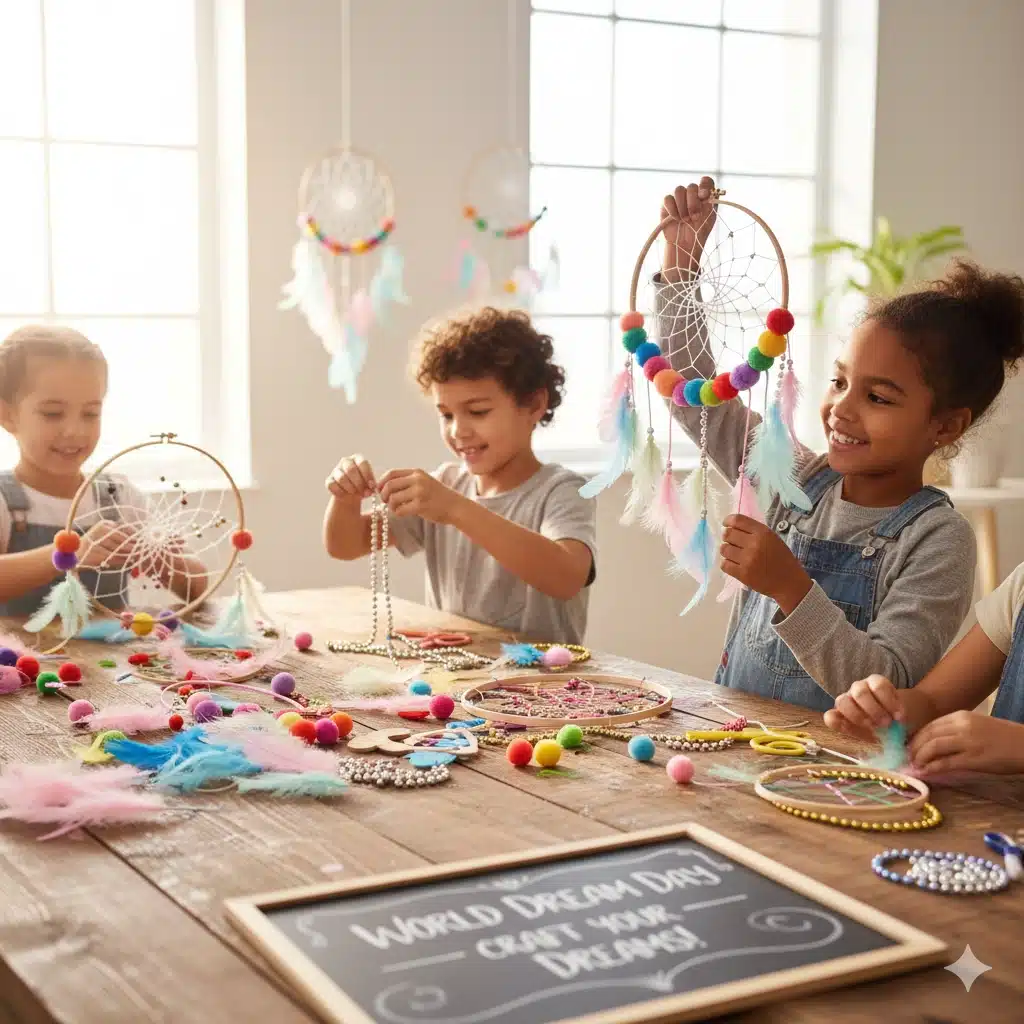
Dreams have always been a source of fascination, mystery, and wonder. Whether it’s a fantastical adventure or a quiet, peaceful scene, the images our minds conjure while we sleep can stay with us long after we wake. However, for many children, the fear of nightmares can make bedtime a stressful experience. This is where the beautiful tradition of the dreamcatcher comes in.
In this comprehensive guide, we will explore the history and cultural significance of these protective talismans, understand the legend behind them, and provide ten unique, kid-friendly DIY projects to celebrate World Dream Day on September 25th.
What is a Dreamcatcher? Understanding the Origin and Legend
The dreamcatcher is far more than just a decorative wall hanging; it is a protective talisman rooted in Native American culture, specifically the Ojibwe (Chippewa) people. Traditionally, these charms were crafted to protect infants and young children from malevolent spirits and nightmares that were believed to fill the night air.
The Legend of the Spider Woman
The story of the dreamcatcher often centers around the “Spider Woman,” a spiritual protector of the tribe. As the tribe expanded across the land, it became difficult for her to protect every child. To help her, mothers and grandmothers began weaving magical webs using willow hoops and sinew.
Another popular legend tells of a grandmother who protected a spider from her grandson’s broom. In gratitude, the spider spun a web in the window, telling the woman that the web would “catch” the bad dreams in its threads, allowing only the good dreams to slide down the feathers to the sleeper below. When the sun rose, the bad dreams trapped in the web would simply evaporate in the morning light.
Does a Dreamcatcher Actually Work?
While there is no scientific evidence to prove that a physical object can filter thoughts or subconscious images, the psychological benefit for children is immense. A dreamcatcher acts as a symbol of security. For a child struggling with “monsters under the bed” or bad dreams, the act of making and hanging a dreamcatcher provides a sense of agency and protection, often leading to a more restful night’s sleep through the power of suggestion and comfort.
Optimal Placement: Where to Hang Your Creation
To get the most out of your DIY dreamcatcher, placement is key:
- Above the Bed: The most traditional spot is directly over the headboard or hanging from the ceiling above the pillow.
- Windows and Doors: Since these are considered “entry points” for energy, hanging a dreamcatcher here is believed to filter the air before it reaches the sleeper.
- Cars and Porches: Many people hang smaller versions on rearview mirrors or balconies to act as a general symbol of protection and peace.
Essential Supplies for Your DIY Project
Before starting your craft, ensure you have these basic materials on hand:
- Hoops: Metal, wooden, or even plastic embroidery hoops. For a more natural look, you can use flexible willow branches.
- Stringing Material: Suede lace, colorful ribbons, hemp thread, or silk yarn.
- Decorative Elements: Feathers (symbolizing air), beads (representing the spider or trapped dreams), pompoms, and gemstones.
- Tools: Sharp scissors, liquid craft glue, and small binder clips (to hold the string in place while you weave).
10 DIY Dreamcatcher Projects for Kids
1. The Classic Paper Plate Dreamcatcher
Perfect for toddlers and preschoolers. Cut out the center of a paper plate, leaving only the rim. Punch holes around the inner edge and let the child thread colorful yarn across the middle in a random pattern. Add some hanging ribbons and plastic beads at the bottom.
2. Nature-Inspired Willow Hoop
Take a walk outside and find flexible green twigs. Bend them into a circle and secure them with twine. Use neutral-colored hemp to weave a simple web and decorate with found objects like pinecones or pressed leaves.
3. The “Pompom Party” Dreamcatcher
For a modern, vibrant look, use a metal hoop wrapped in neon yarn. Instead of traditional feathers, hang various sizes of colorful pompoms from the bottom. This version is a hit for decorating bright, contemporary playrooms.
4. CD Upcycled Dreamcatcher
Don’t throw away those old, scratched CDs! Use the center hole as the starting point. Paint the shiny side with glass paints or permanent markers, then weave yarn through the center hole and around the outer edges.
5. Beaded Spider Web
This project focuses on the “web” aspect. Use a wooden hoop and have the child string a bead onto the yarn every time they cross the center. By the time they are finished, the web will be shimmering with “dewdrops” (beads).
6. Heart-Shaped Love Catcher
Instead of a circle, bend a piece of wire into a heart shape. Wrap it in soft pink or red ribbon. This makes a wonderful gift for a sibling or a parent, symbolizing catching only the “sweetest” dreams.
7. Doily Dreamcatcher
If weaving a web is too difficult for younger children, use a vintage lace doily. Stretch the doily across a hoop and secure the edges. The intricate lace pattern acts as a ready-made “web” that looks sophisticated and classic.
8. The “Glow-in-the-Dark” Protector
Use glow-in-the-dark yarn or paint the beads with luminescent paint. This provides a gentle nightlight effect, giving children extra comfort when the lights go out.
9. T-Shirt Yarn Recycled Craft
Cut old, colorful t-shirts into thin strips. Use these stretchy strips to wrap the hoop and create thick, chunky tassels at the bottom. It’s eco-friendly and very soft to the touch.
10. The Starry Night Dreamcatcher
Use a dark navy blue hoop and silver embroidery thread for the web. Attach small metallic star charms to the web and use white feathers to mimic the clouds.
A Guide to Traditional Symbols
When making your dreamcatcher, the materials you choose can have specific meanings:
- One Bead: Represents the spider that wove the web.
- Multiple Beads: Represent the dreams that were caught during the night.
- Feathers: A “ladder” that allows the good dreams to gently slide down to the child.
- The Circle: Represents the circle of life and how the sun and moon travel across the sky.
Why Crafting is the Best “Dream Insurance”
Engaging in these DIY projects allows children to express their creativity while learning about cultural history. It encourages fine motor skills through threading and tying knots, and it fosters emotional intelligence by giving them a way to discuss their fears and hopes for the night.
| Material | Best For… |
| Yarn/Wool | Beginners; easy to grip and colorful. |
| Suede Lace | Older kids; provides a traditional, sturdy feel. |
| Pony Beads | Toddlers; large holes make threading simple. |
| Natural Feathers | Authenticity; adds a soft, kinetic element. |
Final Thoughts
World Dream Day is a beautiful reminder that our dreams—both the ones we have at night and the ones we have for our future—are worth protecting. These DIY dreamcatchers are more than just a weekend craft; they are symbols of peace, safety, and the enduring power of storytelling.
Happy Crafting! May your nights be filled with only the best adventures and your webs be strong enough to hold back the shadow
Dreams have always been a source of fascination, mystery, and wonder. Whether it’s a fantastical adventure or a quiet, peaceful scene, the images our minds conjure while we sleep can stay with us long after we wake. However, for many children, the fear of nightmares can make bedtime a stressful experience. This is where the beautiful tradition of the dreamcatcher comes in.
In this comprehensive guide, we will explore the history and cultural significance of these protective talismans, understand the legend behind them, and provide ten unique, kid-friendly DIY projects to celebrate World Dream Day on September 25th.
What is a Dreamcatcher? Understanding the Origin and Legend
The dreamcatcher is far more than just a decorative wall hanging; it is a protective talisman rooted in Native American culture, specifically the Ojibwe (Chippewa) people. Traditionally, these charms were crafted to protect infants and young children from malevolent spirits and nightmares that were believed to fill the night air.
The Legend of the Spider Woman
The story of the dreamcatcher often centers around the “Spider Woman,” a spiritual protector of the tribe. As the tribe expanded across the land, it became difficult for her to protect every child. To help her, mothers and grandmothers began weaving magical webs using willow hoops and sinew.
Another popular legend tells of a grandmother who protected a spider from her grandson’s broom. In gratitude, the spider spun a web in the window, telling the woman that the web would “catch” the bad dreams in its threads, allowing only the good dreams to slide down the feathers to the sleeper below. When the sun rose, the bad dreams trapped in the web would simply evaporate in the morning light.
Does a Dreamcatcher Actually Work?
While there is no scientific evidence to prove that a physical object can filter thoughts or subconscious images, the psychological benefit for children is immense. A dreamcatcher acts as a symbol of security. For a child struggling with “monsters under the bed” or bad dreams, the act of making and hanging a dreamcatcher provides a sense of agency and protection, often leading to a more restful night’s sleep through the power of suggestion and comfort.
Optimal Placement: Where to Hang Your Creation
To get the most out of your DIY dreamcatcher, placement is key:
- Above the Bed: The most traditional spot is directly over the headboard or hanging from the ceiling above the pillow.
- Windows and Doors: Since these are considered “entry points” for energy, hanging a dreamcatcher here is believed to filter the air before it reaches the sleeper.
- Cars and Porches: Many people hang smaller versions on rearview mirrors or balconies to act as a general symbol of protection and peace.
Essential Supplies for Your DIY Project
Before starting your craft, ensure you have these basic materials on hand:
- Hoops: Metal, wooden, or even plastic embroidery hoops. For a more natural look, you can use flexible willow branches.
- Stringing Material: Suede lace, colorful ribbons, hemp thread, or silk yarn.
- Decorative Elements: Feathers (symbolizing air), beads (representing the spider or trapped dreams), pompoms, and gemstones.
- Tools: Sharp scissors, liquid craft glue, and small binder clips (to hold the string in place while you weave).
10 DIY Dreamcatcher Projects for Kids
1. The Classic Paper Plate Dreamcatcher
Perfect for toddlers and preschoolers. Cut out the center of a paper plate, leaving only the rim. Punch holes around the inner edge and let the child thread colorful yarn across the middle in a random pattern. Add some hanging ribbons and plastic beads at the bottom.
2. Nature-Inspired Willow Hoop
Take a walk outside and find flexible green twigs. Bend them into a circle and secure them with twine. Use neutral-colored hemp to weave a simple web and decorate with found objects like pinecones or pressed leaves.
3. The “Pompom Party” Dreamcatcher
For a modern, vibrant look, use a metal hoop wrapped in neon yarn. Instead of traditional feathers, hang various sizes of colorful pompoms from the bottom. This version is a hit for decorating bright, contemporary playrooms.
4. CD Upcycled Dreamcatcher
Don’t throw away those old, scratched CDs! Use the center hole as the starting point. Paint the shiny side with glass paints or permanent markers, then weave yarn through the center hole and around the outer edges.
5. Beaded Spider Web
This project focuses on the “web” aspect. Use a wooden hoop and have the child string a bead onto the yarn every time they cross the center. By the time they are finished, the web will be shimmering with “dewdrops” (beads).
6. Heart-Shaped Love Catcher
Instead of a circle, bend a piece of wire into a heart shape. Wrap it in soft pink or red ribbon. This makes a wonderful gift for a sibling or a parent, symbolizing catching only the “sweetest” dreams.
7. Doily Dreamcatcher
If weaving a web is too difficult for younger children, use a vintage lace doily. Stretch the doily across a hoop and secure the edges. The intricate lace pattern acts as a ready-made “web” that looks sophisticated and classic.
8. The “Glow-in-the-Dark” Protector
Use glow-in-the-dark yarn or paint the beads with luminescent paint. This provides a gentle nightlight effect, giving children extra comfort when the lights go out.
9. T-Shirt Yarn Recycled Craft
Cut old, colorful t-shirts into thin strips. Use these stretchy strips to wrap the hoop and create thick, chunky tassels at the bottom. It’s eco-friendly and very soft to the touch.
10. The Starry Night Dreamcatcher
Use a dark navy blue hoop and silver embroidery thread for the web. Attach small metallic star charms to the web and use white feathers to mimic the clouds.
A Guide to Traditional Symbols
When making your dreamcatcher, the materials you choose can have specific meanings:
- One Bead: Represents the spider that wove the web.
- Multiple Beads: Represent the dreams that were caught during the night.
- Feathers: A “ladder” that allows the good dreams to gently slide down to the child.
- The Circle: Represents the circle of life and how the sun and moon travel across the sky.
Why Crafting is the Best “Dream Insurance”
Engaging in these DIY projects allows children to express their creativity while learning about cultural history. It encourages fine motor skills through threading and tying knots, and it fosters emotional intelligence by giving them a way to discuss their fears and hopes for the night.
| Material | Best For… |
| Yarn/Wool | Beginners; easy to grip and colorful. |
| Suede Lace | Older kids; provides a traditional, sturdy feel. |
| Pony Beads | Toddlers; large holes make threading simple. |
| Natural Feathers | Authenticity; adds a soft, kinetic element. |
Final Thoughts
World Dream Day is a beautiful reminder that our dreams—both the ones we have at night and the ones we have for our future—are worth protecting. These DIY dreamcatchers are more than just a weekend craft; they are symbols of peace, safety, and the enduring power of storytelling.
Happy Crafting! May your nights be filled with only the best adventures and your webs be strong enough to hold back the shadow